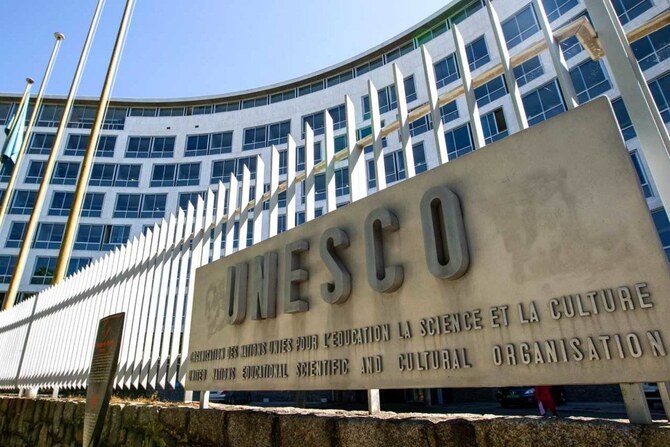
UNESCO ‘enhanced protection’ for 34 Lebanon heritage sites

Dozens of heritage sites in Lebanon were granted “provisional enhanced protection” by UNESCO on Monday, offering a higher level of legal shielding as fighting continues between Israel and Hezbollah militants. (Reuters/File Photo)
Short Url
Updated 18 November 2024
Follow

UNESCO ‘enhanced protection’ for 34 Lebanon heritage sites

  • Baalbek and Tyre ‘will receive technical and financial assistance from UNESCO’

PARIS: Dozens of heritage sites in Lebanon were granted “provisional enhanced protection” by UNESCO on Monday, offering a higher level of legal shielding as fighting continues between Israel and Hezbollah militants.
The 34 cultural properties affected “now benefit from the highest level of immunity against attack and use for military purposes,” the United Nations cultural body said in a statement.
Several Israeli strikes in recent weeks on Baalbek in the east and Tyre in the south — both strongholds of Iran-backed Hezbollah — hit close to ancient Roman ruins designated as World Heritage sites.
UNESCO said the decision “helps send a signal to the entire international community of the urgent need to protect these sites.”
“Non-compliance with these clauses would constitute ‘serious violations’ of the 1954 Hague Convention and... potential grounds for prosecution,” it added.
Hezbollah and Israel have been at war since late September, when Israel broadened its focus from fighting Hamas in the Gaza Strip to securing its northern border, even as the Gaza war plows on.
UNESCO’s move followed an appeal Sunday by hundreds of cultural professionals, including archaeologists and academics, to activate the enhanced protection.
Baalbek and Tyre “will receive technical and financial assistance from UNESCO to reinforce their legal protections, improve risk anticipation and management measures, and provide further training for site managers,” the body said.


In major policy shift on Syria, UN Security Council lifts sanctions on Hayat Tahrir Al-Sham

Updated 4 sec ago
Follow

In major policy shift on Syria, UN Security Council lifts sanctions on Hayat Tahrir Al-Sham

  • Move reflects evolving Syrian political landscape in the post-Assad era, ending a global freeze on assets, travel ban and arms embargo

NEW YORK CITY: The UN Security Council on Friday removed Al-Nusra Front, the militant group that evolved into Hayat Tahrir Al-Sham, from its so-called Daesh and Al-Qaeda Sanctions List.

The move signals a major shift in international policy toward Syria’s evolving political landscape in the post-Assad era, and ends a global freeze on assets, travel ban and arms embargo that have been imposed on the group since 2014.

Al-Nusra Front and Hayat Tahrir Al-Sham were led by Ahmad Al-Sharaa, formerly Abu Mohammed Al-Julani, who is now Syria’s president and was a leading figure in the offensive that toppled the Assad regime.

The consensus decision by the Security Council’s sanctions committee was announced by the UK, which holds the presidency of the Security Council this month and was acting in the absence of the chair of the committee. It followed a request by the new Syrian authorities to delist “Al-Nusrah Front for the People of the Levant.”

The decision means measures that were applied to Hayat Tahrir Al-Sham under Security Council Resolution 2734, adopted in 2024, no longer apply. As a result, UN member states are notrequired to freeze the group’s funds, restrict the movement of its representatives, or block the supply or transfer of arms and related materiel.

Al-Nusra Front was added to the sanctions list for its ties to Al-Qaeda and involvement in the financing and execution of militant activities during the war in Syria. The UN initially continued to treat the group’s successor organization, Hayat Tahrir Al-Sham, as a listed alias.

Al-Sharaa has said the group severed all prior transnational jihadist links and is now solely focused on local Syrian matters.