CAIRO: Israeli military strikes across the Gaza Strip killed 18 Palestinians on Monday, including six people who were killed in attacks on tents housing displaced families, medics said.
Four people, two of them children, were killed in an Israeli airstrike on a tent encampment in the coastal area of Al-Mawasi, designated as a humanitarian zone, while two were killed in temporary shelters in the southern city of Rafah and another in drone fire, health officials said.
In Beit Lahiya town in northern Gaza, medics said an Israeli missile struck a house, killing at least two people and wounding several others. On Sunday, medics and residents said dozens of people were killed or wounded in an Israeli airstrike on a multi-floor residential building in the town.
The Israeli military, which has been fighting Palestinian militant group Hamas in Gaza since October 2023, said it conducted strikes on “terrorist targets,” in Beit Lahiya.
An Israeli airstrike on a house in Gaza City killed five people and wounded 10 others, medics said. Later on Monday, an Israeli air strike killed four people in the Nuseirat camp in the central Gaza Strip, they added.
There has been no Israeli comment on Monday’s incidents.
In Nasser Hospital in Khan Younis, relatives of Palestinians killed in an Israeli airstrike on tents housing displaced families sat beside bodies wrapped in blankets and white shrouds to pay farewell before walking them to graves.
“My brother wasn’t the only one; many others have been martyred in this brutal way — children torn to pieces, civilians shredded. They weren’t carrying weapons or even know ‘the resistance’, yet they were ripped apart into fragments,” said Mohammed Aboul Hassan, who lost his brother in the attack.
“We remain steadfast, patient, and resilient, and by the will of God, we will never falter. We will stay steadfast and patient,” he told Reuters.
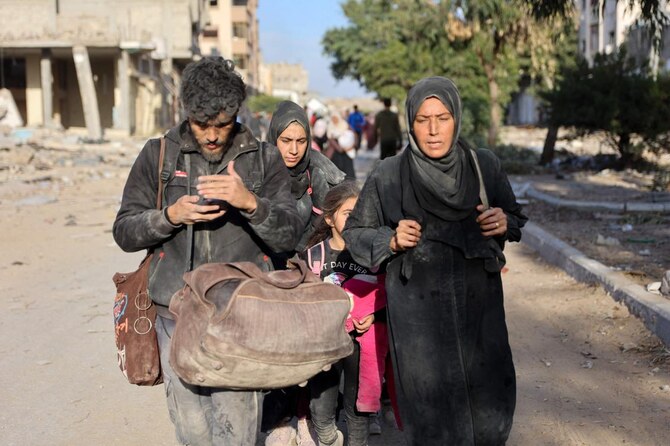
The Israeli army sent tanks and soldiers into Beit Lahiya and the nearby towns of Beit Hanoun and Jabalia, the largest of the Gaza Strip’s eight historic refugee camps, early last month in what it said was a campaign to fight Hamas militants waging attacks and prevent them from regrouping.
Hussam Abu Safiya, the director of the Kamal Adwan Hospital in Beit Lahiya, said the hospital was under siege by Israeli forces and the World Health Organization had been unable to deliver supplies of food, medicine and surgical equipment.
Cases of malnutrition among children were increasing, he said, and the hospital was operating at a minimal level.
“We receive daily distress calls, but we are unable to assist them due to the lack of ambulances, and the situation is catastrophic,” he said. “Yesterday, I received a distress call from women and children trapped under the rubble, and due to my inability to help them, they are now among the martyrs (dead).”
Israel said it had killed hundreds of militants in the three northern areas, which residents said was cut off from Gaza City, making it difficult and dangerous for them to flee. The armed wings of Hamas and militant group Islamic Jihad said they have killed many Israeli soldiers in anti-tank rocket and mortar fire attacks during the same period.
The Hamas-run Gaza health ministry says more than 43,800 people have been confirmed killed since the war erupted on Oct. 7, 2023. Hamas militants killed around 1,200 people in attacks on communities in southern Israel that day, and hold dozens of some 250 hostages they took back to Gaza, according to Israeli tallies.


![]()

Israeli strikes kill 18 Palestinians in Gaza, some in attacks on tents, say medics
Short Url
https://arab.news/2mr6r
Israeli strikes kill 18 Palestinians in Gaza, some in attacks on tents, say medics
- Israeli military targets include tents housing displaced families, say medics
- Victims were ‘ripped apart into fragments’, says survivor


Latest updates


© 2026 SAUDI RESEARCH & PUBLISHING COMPANY, All Rights Reserved And subject to Terms of Use Agreement.