


NEW YORK: Israel’s methods of warfare in Gaza, including the use of starvation as a weapon, mass civilian casualties and life-threatening conditions deliberately inflicted on Palestinians in the territory, are consistent with the characteristics of genocide, the UN Special Committee to Investigate Israeli Practices said in a report published on Thursday.
“Since the beginning of the war, Israeli officials have publicly supported policies that strip Palestinians of the very necessities required to sustain life: food, water and fuel,” the committee said.
Statements from Israeli authorities and the “systematic and unlawful” blocking of humanitarian aid deliveries to Gaza make clear “Israel’s intent to instrumentalize life-saving supplies for political and military gains,” it added.
The committee, the full title of which is the UN Special Committee to Investigate Israeli Practices Affecting the Human Rights of the Palestinian people and other Arabs of the Occupied Territories, was established by the UN General Assembly in 1968 to monitor the human rights situation in the occupied Golan heights, the West Bank, including East Jerusalem, and the Gaza Strip. It comprises the permanent representatives to the UN from three member states, currently Malaysia, Senegal and Sri Lanka, who are appointed by the president of the General Assembly.
Its latest report, which covers the period from October 2023 to July 2024, mostly focuses on the effects of the war in Gaza on the rights of Palestinians.
“Through its siege over Gaza, obstruction of humanitarian aid, alongside targeted attacks and killing of civilians and aid workers, despite repeated UN appeals, binding orders from the International Court of Justice and resolutions of the Security Council, Israel is intentionally causing death, starvation and serious injury, using starvation as a method of war and inflicting collective punishment on the Palestinian population,” the committee said.
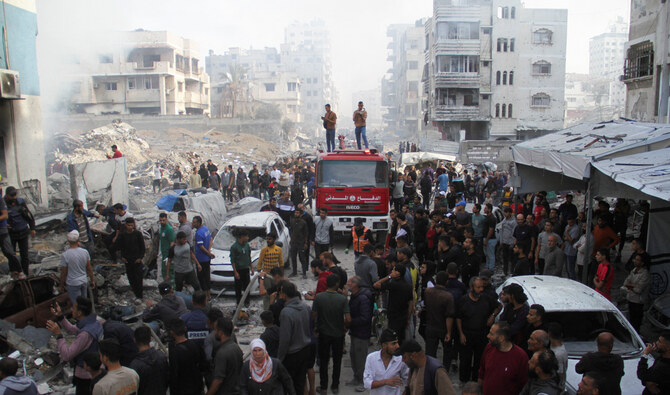
The “extensive” Israeli bombing campaign has wiped out essential services in Gaza and caused an “environmental catastrophe” that will have “lasting health impacts,” it adds.
By early 2024, the report says, more than 25,000 tonnes of explosives, equivalent to two nuclear bombs, had been dropped on Gaza, causing “massive” destruction, the collapse of water and sanitation systems, agricultural devastation and toxic pollution. This has created a “lethal mix of crises that will inflict severe harm on generations to come,” the committee said.
The report notes “serious concern” about Israel’s use of artificial intelligence technology to choose its targets “with minimal human oversight,” the consequence of which has been “overwhelming” numbers of deaths of women and children. This underscores “Israel’s disregard of its obligation to distinguish between civilians and combatants and take adequate safeguards to prevent civilian deaths,” it adds.
In addition, Israel’s escalating censorship of the media and targeting of journalists are “deliberate efforts” to block global access to information, the committee found, and the report states that social media companies have disproportionately removed “pro-Palestinian content” in comparison with posts inciting violence against Palestinians.
The committee also condemned the continuing “smear campaign” and other attacks on the reputation of the UN Relief and Works Agency for Palestine Refugees, and the wider UN.
“This deliberate silencing of reporting, combined with disinformation and attacks on humanitarian workers, is a clear strategy to undermine the vital work of the UN, sever the lifeline of aid still reaching Gaza, and dismantle the international legal order,” it said.
It called on all states to honor their legal obligations to stop and prevent violations of international law by Israel, including the system of apartheid that operates in the West Bank and East Jerusalem, and to hold Israeli authorities accountable for their actions.
“Upholding international law and ensuring accountability for violations rests squarely on member states,” the committee said.
Failure to do this weakens “the very core of the international legal system and sets a dangerous precedent, allowing atrocities to go unchecked.”
The committee will officially present its report to the 79th Session of the UN General Assembly on Monday.


