IMF, Saudi Arabia announce new annual conference tackling global economic challenges

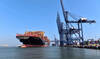
The first edition of the new conference series will be held in AlUla from Feb. 16-17, 2025. Shutterstock
Short Url
Updated 14 November 2024
Follow

IMF, Saudi Arabia announce new annual conference tackling global economic challenges

RIYADH: The International Monetary Fund and Saudi Arabia will jointly organize a high-level annual conference in AlUla to discuss global economic challenges, it has been announced.

The AlUla Conference for Emerging Market Economies will bring together a select group of finance ministers, central bank governors, and policymakers, along with leaders from the public and private sectors, representatives from international institutions, and members of academia.

According to a joint statement by Kristalina Georgieva, managing director of IMF and the Minister of Finance Mohammed Al-Jadaan, the first edition of this series will be held from Feb. 16-17, 2025.

“The world is confronting deeper and more frequent shocks, including from conflicts, geoeconomic fragmentation, pandemics, climate change, food insecurity, and the digital divide,” according to the statement.

They continued: “If not addressed adequately, these shocks put at risk emerging market economies’ hard-won improvements in living standards. Such setbacks would affect large segments of the world population and put at risk global growth and macro-financial stability.”

The gathering will offer a platform to exchange views on domestic, regional, and global economic developments and discuss policies and reforms to spur inclusive prosperity and build resilience supported by international cooperation.

Recent economic issues affecting the global landscape include rising inflation rates, driven by supply chain disruptions and increased demand for goods post-pandemic.

Supply chain delays continue to impact the availability of essential products, causing bottlenecks in manufacturing and increasing costs.

Additionally, geopolitical conflicts, such as the war in Gaza, have disrupted energy supplies and food exports, leading to global food insecurity and fuel price volatility.

Concerns over the using the Red Sea shipping lane increased dramatically at the end of 2023, when Houthi militants stepped up attacks on vessels in the wake of the escalation of the Israel-Hamas conflict.

The effects of these challenges pose significant risks to economic stability, especially for emerging markets that are more vulnerable to such global shocks.

The AlUla conference is the latest example of the growing relationship between Saudi Arabia and the IMF, with the organization in April establishing its first office in the Middle East and North Africa region in Riyadh.

The facility was launched during the Joint Regional Conference on Industrial Policy for Diversification, jointly organized by the IMF and the Ministry of Finance, on April 24.

The new office aims to strengthen capacity building, regional surveillance, and outreach to foster stability, growth, and integration, thereby promoting partnerships in the Middle East and beyond, according to the Saudi Press Agency.

The work hub will promote closer collaboration between the IMF and regional institutions, governments, and other stakeholders, according to the SPA report.

The IMF also expressed its gratitude to the Kingdom for its financial contribution aimed at supporting capacity development in member countries, including fragile states.


As world fractures, experts weigh in on the politics of AI at WGS

Updated 26 sec ago
Follow

As world fractures, experts weigh in on the politics of AI at WGS

  • e& group CEO Hatem Dowidar said there was increasing pressure to choose between the Chinese and US ecosystems

DUBAI: Across three days of rigorous debate at the World Government Summit in Dubai, experts from some of the world’s largest tech and telecommunication companies debated what the future political landscape of artificial intelligence development would be.

Speaking at the summit on Thursday, e& group CEO Hatem Dowidar said there was increasing pressure to choose between the Chinese and US ecosystems, which could have impacts on the sovereign capabilities of countries, like Gulf Cooperation Council member states, which thus far have stayed in the middle.

“I think the fracture and the pressure today is if you use this technology, you cannot use the other. You must separate them completely and this is something that never happened before,” Dowidar said.

He warned that whilst people around the world currently have access to both the leading large language models in the US and China, ChatGPT and Deepseek, this would not always be the case, and middle powers would need to develop their own capability to maintain their sovereignty.

“Europe is trying to find its own way as well, because Europe — having been caught now in the middle — they don’t have platforms, they don’t have the data center capability,” he said.

“So now, Europe is focusing a lot on building sovereign capability, sovereign data centers to run AI applications within Europe.”

Dowidar said the GCC had been ahead of the curve in this regard, having worked out early on that sovereign capability would be necessary in the new multipolar world and subsequently investing heavily in local infrastructure and capability.

“We were lucky here in the region that already — I would say a couple of years ago —we have kind of ironed out how this works,” he said.

“I think that everyone will try to see how they can either utilize the global platforms in a sovereign manner, or they end up trying to push to develop their own platforms.” 

This sentiment was echoed by Chamath Palihapitiya, the founder and managing partner of Social Capital, who said that China’s dedication to open-source models — whose code is released under a license granting users rights to view, study, modify, and redistribute it freely — could make Chinese AI more popular in the long run for nations looking to keep some level of sovereignty.

“I do think that there are a handful of American open-source models that are quite good. I think Nvidia’s models are excellent. But in fairness, the Chinese open-source models are just superb,” he told the summit on Wednesday.

“It’s going to be important for every country to make their own decisions about their own sovereignty, and in that realm, I think the open-source models provide the clearest path, because it just gives you total transparency to what’s happening underneath the hood.”

This was reiterated by Joseph Tsai, the chairman and co-founder of Alibaba Group, who said Chinese open-source systems would be favored by middle powers — but warned they had yet to find a way to be economically self-sufficient. 

“Because countries care about the sovereignty aspect and care about their data privacy, you can take an open-source model and deploy it on your own infrastructure … giving you ownership and control” he said.

“But it remains to be seen how economically all the model companies are going to make it sort of sustainable with an open-source approach … This is the biggest challenge for the Chinese firms.”