

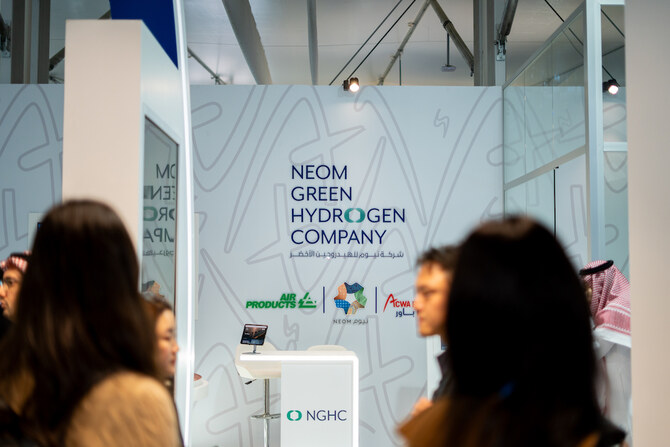

BAKU: The world’s largest green hydrogen plant, which is under construction in Saudi Arabia, is on-track to begin production in December 2026, the company’s CEO told Arab News.
NEOM Green Hydrogen Company is now 60 percent complete, according to CEO Wesam Al-Ghamdi.
Al-Ghamdi emphasized the ambition of the project, which he described as “being built at a scale no one has attempted before.”
The plant will rely entirely on solar and wind energy to power a 2.2 gigawatt electrolyzer, designed to produce hydrogen continuously, he said.
Green hydrogen, created through electrolysis powered by renewable energy, is seen as a critical component in reducing global carbon emissions, because it produces no greenhouse gases in the production process.
It has broad potential throughout industry, from heavy-duty transport to steel production, where conventional methods rely heavily on fossil fuels. As countries and companies face increasing pressure to decarbonize, green hydrogen is gaining traction as a viable alternative to fossil fuels, despite the challenges of cost and scale that currently limit widespread adoption.
In discussing NGHC’s competitive edge, Al-Ghamdi pointed to the cost advantages tied to NEOM’s renewable resources.
The plant’s reliance on Saudi Arabia’s abundant solar and wind energy reduces production expenses, which are crucial in making green hydrogen more commercially viable.
“We have the abundance of solar and wind, so we have that renewable power competitive advantage,” he said, explaining that the large-scale setup at NEOM allows for efficient production at a cost level that few projects can match globally.
Coupled with a 30-year offtake agreement in place with Air Products, NGHC has secured a pathway for its hydrogen output to reach international markets in ammonia form, making it easier to transport and distribute. This structure reflects a calculated move to meet projected demand from sectors such as heavy transport and industrial manufacturing.
Located within NEOM, NGHC’s project is strategically positioned in Saudi Arabia’s northwest Red Sea development zone, where consistent solar and wind resources provide a substantial cost advantage for energy production. The plant is part of Saudi Arabia’s broader Vision 2030 initiative, led by Crown Prince Mohammed bin Salman, which aims to reduce the Kingdom’s economic reliance on oil by expanding into new industries such as renewable energy, tourism, and technology.
Al-Ghamdi said that staffing the project is key to establishing Saudi expertise in the green energy sector. Currently, more than 60 percent of NGHC’s workforce is composed of Saudi citizens, a mix of experienced industry professionals and recent graduates.
Through partnerships with Saudi universities and special training initiatives, NGHC is working to fill the highly technical roles necessary to operate a facility of this scale.
“Our goal isn’t just to produce hydrogen but to build a foundation of expertise here in Saudi Arabia,” he said, adding that the project seeks to build a lasting skills base in the country.
NGHC has also developed a 10-year research and development partnership with Germany’s ThyssenKrupp to refine and optimize its electrolyzer technology.
The early installation of the project’s first electrolyzer, scheduled to go online ahead of the main facility launch, is expected to provide valuable insights into operational efficiencies.
By testing and optimizing the equipment well in advance of full-scale production, NGHC aims to streamline processes, reduce maintenance costs, and extend equipment life cycles as the plant moves toward its 2026 production target.
While global interest in hydrogen is accelerating, Al-Ghamdi sees NEOM’s project as especially well placed to capitalize on Saudi Arabia’s natural advantages.
“We have the scale, location, and the partnerships in place that give us a significant lead,” he said, describing NGHC as a potential model for Saudi Arabia’s broader push into renewable energy and a significant part of Vision 2030’s economic transformation goals.


