



RIYADH: Saudi Arabia has signed a joint executive program with Azerbaijan, Uzbekistan, and Kazakhstan to strengthen collaboration on renewable energy development and transmission.
The deal was signed on the sidelines of the 29th UN Climate Summit in Baku by Saudi Energy Minister Prince Abdulaziz bin Salman and his counterparts from the three nations, according to a press statement.
The initiative aims to foster a strategic partnership to assess regional power grid interconnection projects centered on renewable power.
Saudi Arabia, a leader in Middle Eastern clean energy, aims to meet 50 percent of its power needs from renewable sources by 2030.
“This signing is in implementation of bilateral memorandums of understanding previously signed between Saudi Arabia and Kazakhstan in the energy sector on Jun 12, 2023, as well as two energy cooperation agreements with Azerbaijan on May 24, 2023, and with the Republic of Uzbekistan on Aug. 17, 2022,” noted the Ministry of Energy.
The ministry highlighted that this partnership will enhance energy infrastructure efficiency and promote integration of renewable energy into the national grids of the partner nations.
The program will also explore joint investment opportunities, laying groundwork for regional grid interconnection projects to support renewable electricity generation and storage.
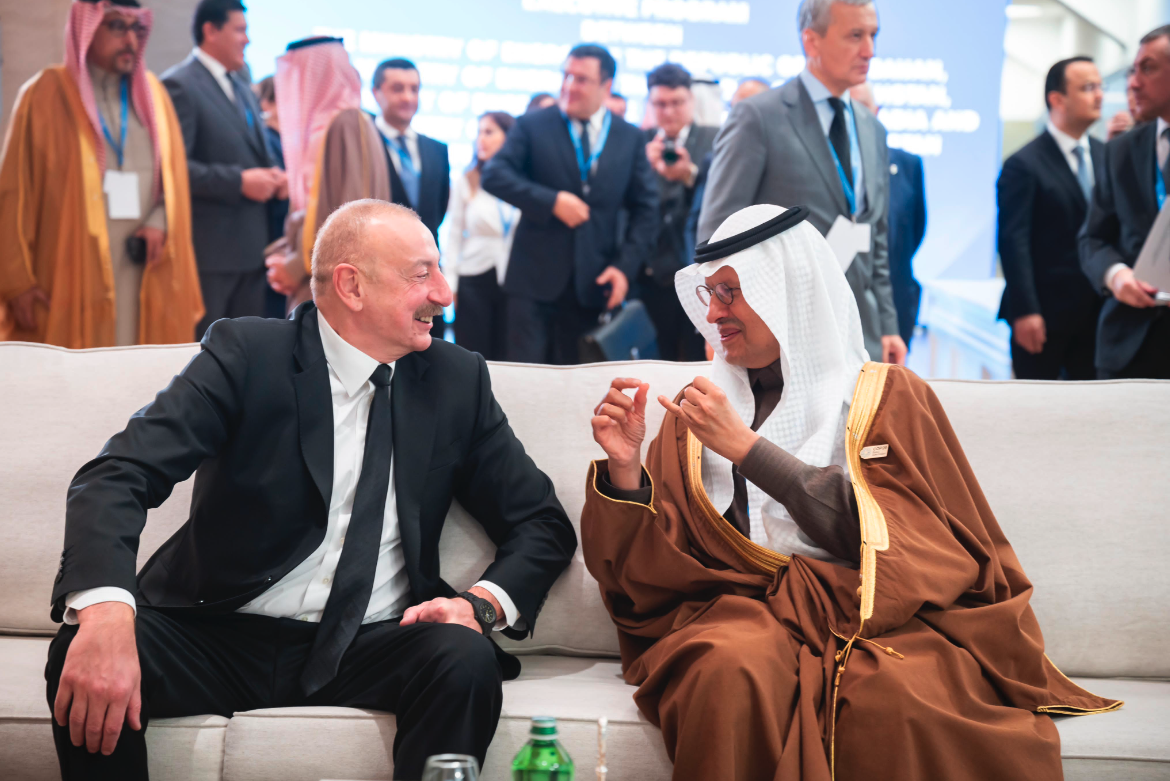
Azerbaijan President Ilham Aliyev talking with Saudi Energy Minister Prince Abdulaziz bin Salman. Saudi Ministry of Energy
ACWA Power, a major Saudi utility company, will oversee these renewable energy projects in Azerbaijan, Uzbekistan, and Kazakhstan.
“The signatory parties also agreed to adopt a mechanism for exchanging information and expertise, which includes knowledge-sharing among experts and specialists, organizing specialized conferences and seminars, as well as holding joint working sessions to strengthen close cooperation among the countries,” the statement added.
Also on the COP29 sidelines, ACWA Power signed agreements to bolster renewable initiatives, including a deal with Uzbekistan’s Ministry of Energy to develop battery energy storage systems with a capacity of up to 2 gigawatts per hour. This initiative is aimed at enhancing grid stability.
Additionally, ACWA Power entered into a memorandum of understanding with Azerbaijani firm SOCAR and Masdar to develop up to 3.5 GW of offshore wind projects in the Caspian Sea — the first of its kind for Azerbaijan.
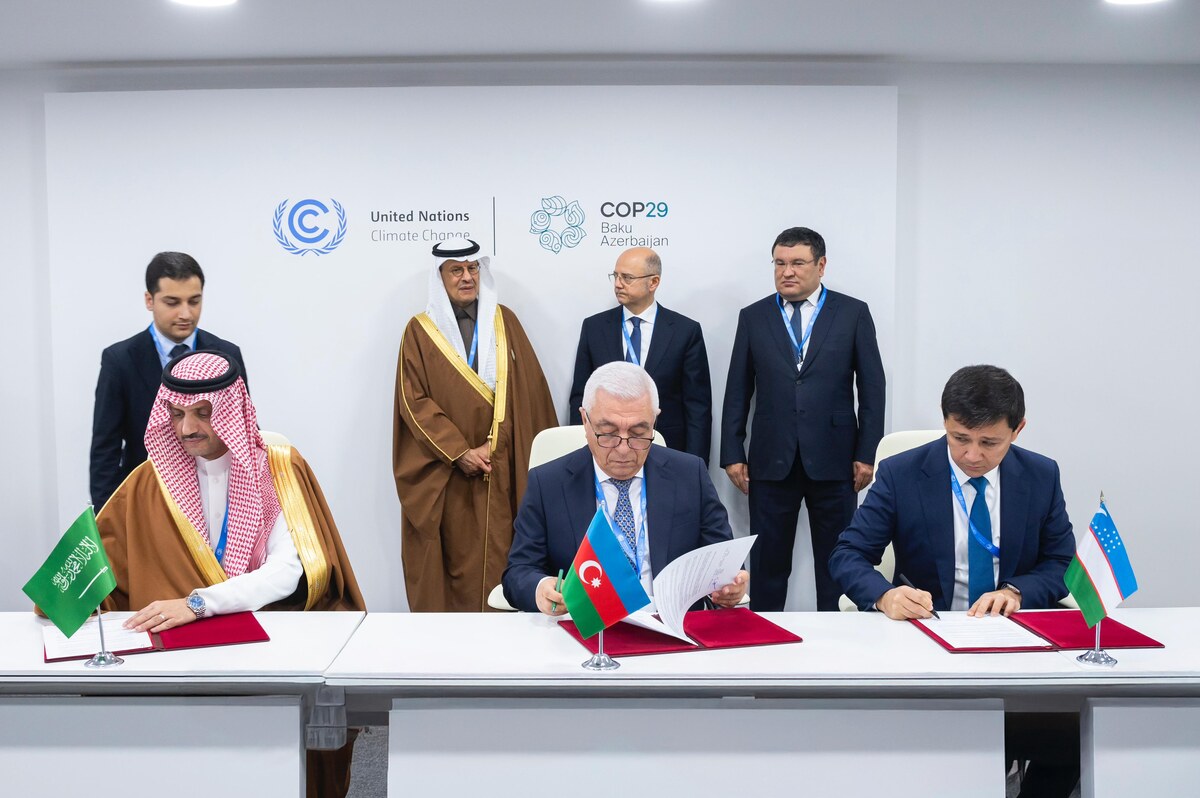
Energy Minister Prince Abdulaziz bin Salman watches as Saudi Electricity Co. signs an MoU. Saudi Ministry of Energy
Another deal struck on the sidelines of the summit saw Saudi Electricity Co. sign an MoU with network operators in Azerbaijan, Kazakhstan, and Uzbekistan to develop regional interconnection projects.
SEC also signed another MoU with AzerEnergy for cooperation in electricity transmission and integrating renewable energy sources into the power grid.
During COP29, Saudi Arabia and Azerbaijan signed a comprehensive roadmap outlining a timeline and action plan for priority energy projects, facilitating cooperative efforts in various fields.
“This roadmap aims to outline an action plan and establish a timeline for priority projects, facilitating procedures to achieve shared objectives,” said the Energy Ministry.
It added: “The roadmap includes cooperation in several vital areas, such as renewable energy, carbon capture, utilization, and storage, clean hydrogen, energy efficiency, and enhancing the sustainability and resilience of supply chains, in addition to trade in refined and petrochemical products.”


