

PM launches prevention program as over 33 million Pakistanis found to have diabetes

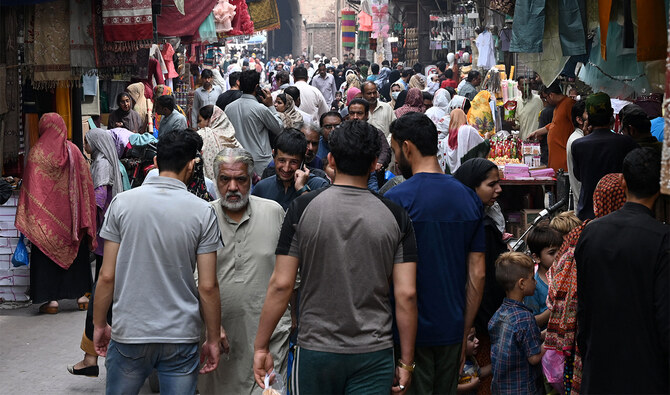
In this picture taken on April 16, 2023, people throng a market area during shopping ahead of the upcoming festival of Eid al-Fitr in Lahore. (AFP/File)
Short Url
Updated 14 November 2024
Follow

PM launches prevention program as over 33 million Pakistanis found to have diabetes

  • Additional 11 million adults in Pakistan have impaired glucose tolerance
  • Pakistan is on the list of countries with the largest diabetic populations

ISLAMABAD: Pakistani Prime Minister Shehbaz Sharif said on Thursday, National Diabetes Day, his government was launching a new program for the control and prevention of diabetes in a country where over 33 million people had the chronic disease. 

According to a new analysis in The Lancet journal released this week, the percentage of adults suffering from diabetes across the world has doubled over the past three decades, with the biggest rises coming in developing countries. 

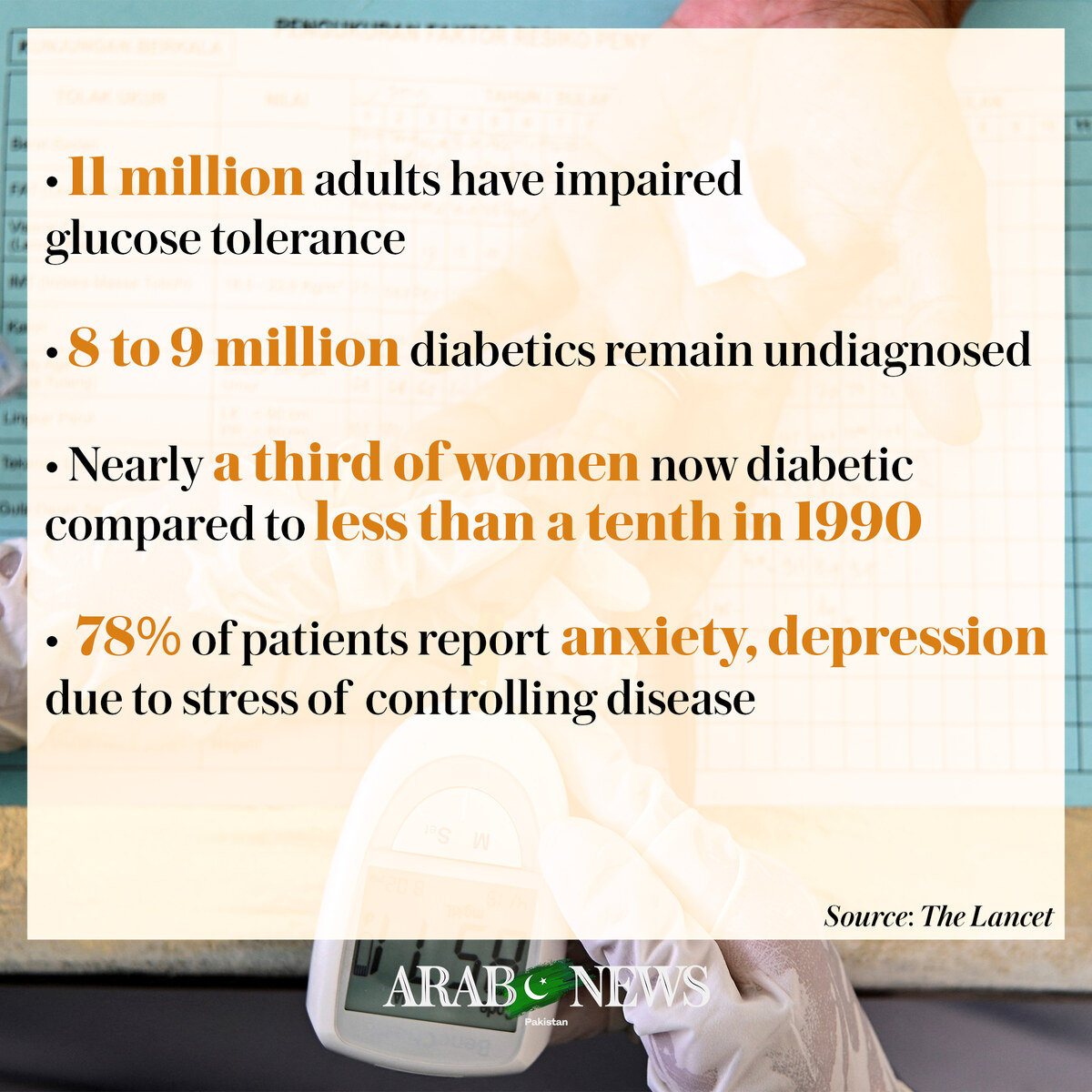
The serious health condition affected around 14 percent of all adults worldwide in 2022, compared to seven percent in 1990, the Lancet study said. Taking into account the growing global population, the team of researchers estimated that more than 800 million people are now diabetic, compared to less than 200 million in 1990.

“At the Federal level, we will be launching the ‘Prime Minister’s Program for Prevention and Control of Diabetes Mellitus’ under the Ministry of National Health Services, Regulations & Coordination,” Sharif said in a statement. 

“Objective of this program is controlling the disease in federal areas and improving capacities in all provinces for providing universal health coverage, diagnosis, and treatment for diabetic patients, along with raising awareness and behavioral change.”

With 33 million of its citizens having diabetes, Pakistan is on the list of countries with the largest diabetic populations. An additional 11 million adults in Pakistan have impaired glucose tolerance, while approximately 8 to 9 million with diabetes remain undiagnosed. 
“The major risk factors leading to diabetes in Pakistan are environmental and geographical reasons in addition to genetic variants, dietary, as well as inactive lifestyle,” Sharif said. 

“The Government of Pakistan is fully committed in controlling this escalation and delivering wellbeing to diabetic population.”

Diabetes is a chronic disease that occurs either when the pancreas does not produce enough insulin or when the body cannot effectively use the insulin it produces. Insulin is a hormone that regulates blood glucose.

Type 1 diabetes affects patients from a young age and is more difficult to treat because it is caused by an insulin deficiency. Type 2 mainly affects middle-aged or older people who lose their sensitivity to insulin.


India has told Pakistan to control ‘drone intrusions,’ Indian army chief says

Updated 5 sec ago
Follow

India has told Pakistan to control ‘drone intrusions,’ Indian army chief says

  • Indian army ‌chief General Upendra Dwivedi says at least eight drones ‌from Pakistani have been ​sighted since ‌Saturday
  • Ties between nuclear-armed neighbors have been frozen since May last year when both sides engaged in fierce fighting

NEW DELHI: India’s army chief said on Tuesday that the head of Pakistan’s ​military operations had been told to control what he said were drone intrusions from Pakistan into India, months after the nuclear-armed rivals engaged in their worst fighting in decades.

An Indian military source said there were five drone intrusions on Sunday evening on the frontier in the Jammu region of Indian Kashmir.

In another incident on Friday, a drone from Pakistan was suspected to have dropped two pistols, three ammunition magazines, 16 bullets and one grenade that were recovered following a search, the source ‌said.

Indian army ‌chief General Upendra Dwivedi said at least eight drones ‌had ⁠been ​sighted since ‌Saturday.

“These drones, I believe, were defensive drones, which want to go up and see if any action was being taken,” Dwivedi told reporters at an annual press conference ahead of Army Day on January 15.

“It’s possible they also wanted to see if there were any gaps, any laxity in the Indian army, any gaps through which they could send terrorists,” he said, adding that the directors of military operations of the two ⁠sides spoke by phone on Tuesday.

“This matter was discussed ... today and they have been told that this ‌is unacceptable to us, and please put a ‍stop to it. This has been conveyed ‍to them,” Dwivedi said.

Indian media reports cited army officials as saying the incursions ‍were by military drones.

There was no immediate reaction from Pakistan to his comments.

MAY CONFLICT WAS WORST IN DECADES

Ties between the nuclear-armed rivals have been frozen since a four-day conflict in May, their worst in decades, that was sparked after a militant
attack on Hindu tourists in ​Kashmir killed 26 men. New Delhi said the attack was backed by Pakistan, allegations which Islamabad denied.

The two sides used fighter jets, missiles, ⁠drones and heavy artillery, killing dozens on both sides before agreeing to a ceasefire.

In the past, there have been reports of civilian drone intrusions from Pakistan into Indian states along the border, with Indian security agencies telling local media that they had shot down drones that were seeking to drop light arms or drugs.

Pakistan has dismissed these accusations as baseless and misleading.

India also accuses Pakistan of helping what it says are “terrorists” to enter into the Indian side of Kashmir, where tens of thousands of people have been killed in a revolt against New Delhi’s rule that began in 1989 and lasted decades until the violence ebbed.

Pakistan denies the Indian accusations and says that it ‌only provides political and diplomatic support to Kashmiris fighting against New Delhi.