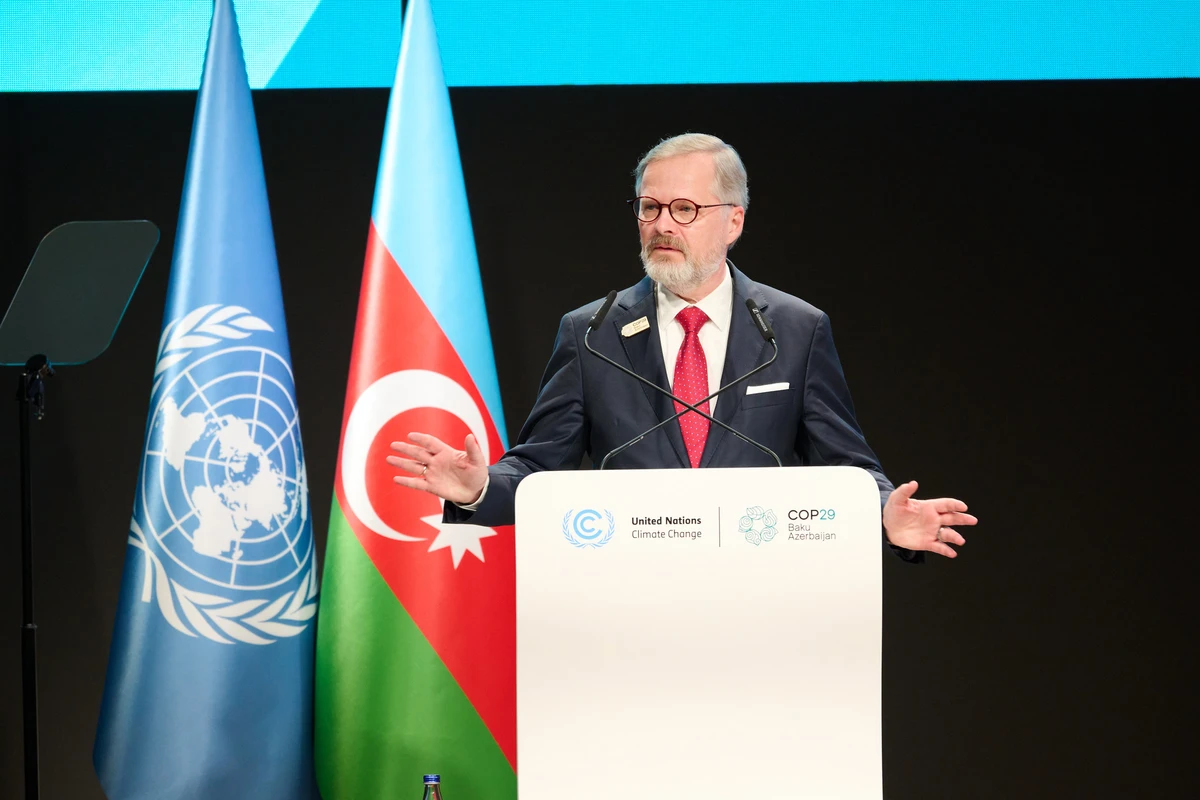
- Czech Republic’s Prime Minister Petr Fiala emphasized the importance of nuclear power for the future
- Italian Prime Minister Giorgia Meloni called for united global effort to combat climate change for future generations
RIYADH: Nuclear power is essential to achieving global climate goals as it provides a clean and safe energy source, world leaders stated at COP29 in Baku.
Speaking on the second day of the summit’s High-Level Segment, the Czech Republic’s Prime Minister Petr Fiala emphasized the importance of nuclear power for the future, adding that his country is prepared to assist other nations in advancing this form of energy.
“We will discontinue coal, and we will push for renewables and nuclear power. Nuclear power is essential to meet our climate goals, as it produces extremely clean energy and is also very safe. The Czech Republic has over 50 years of experience in nuclear power, and we are ready to assist any country,” said Fiala.
He also warned that climate change could worsen critical global issues, including health, poverty, and hunger, advocating for collective resilience.
“We must not give up. The Czech Republic is ready to do its part to prevent suffering and increase the chances for a good life for all,” he added.
Italian Prime Minister Giorgia Meloni echoed similar sentiments, calling for a united global effort to combat climate change for the sake of future generations.
She also emphasized that embracing new technologies and energy sources, such as nuclear power, is key to achieving climate goals.
“In Dubai, we set ambitious goals, tripling the use of renewables by 2030. Reaching these goals requires everyone’s cooperation and adequate financial support,” said Meloni.
She continued: “Technology neutrality is the right approach, and currently, there is no single alternative to fossil fuels. Population growth will increase the demand for energy, so we need an energy mix in the transition process. We must use all energy sources, including nuclear fusion in the future.”
Greek Prime Minister Kyriakos Mitsotakis highlighted Greece’s role in energy transition, with nearly 50 percent of its electricity now derived from wind and solar, and emissions down 45 percent since 2005.
“Our emissions are down 45 percent compared to 2005. Lignite once accounted for more than 50 percent of our power generation, but its share is now just 6 percent. We now rely on wind and solar for almost half of our electricity. We are insulating our houses and building a carbon capture value chain for our industry,” he said.
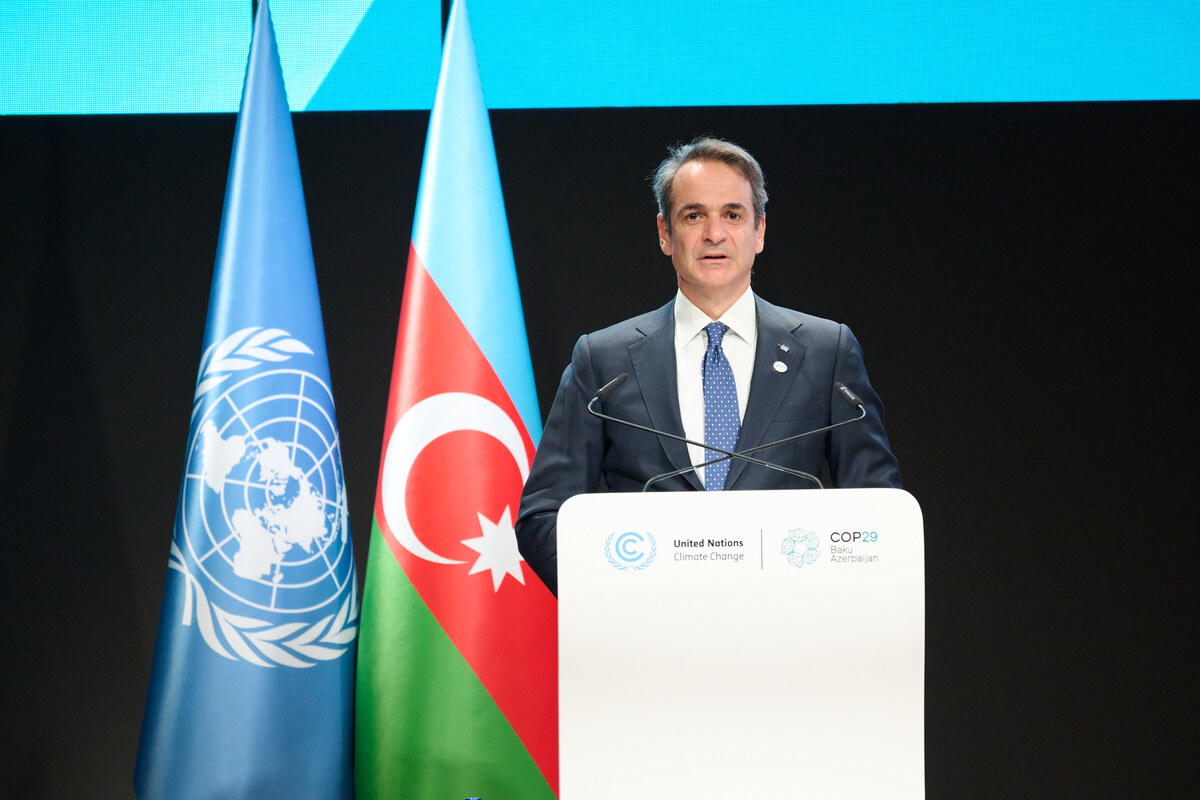
Mitsotakis acknowledged Europe’s leadership in the green transition, as it accounts for only 6 percent of global emissions, but urged greater resources to counter “unprecedented climate shocks.”
“We cannot focus so much on 2050 that we forget 2024. We need more resources to prepare to respond in time, to save lives and livelihoods and to help people and communities rebuild after disasters,” said Mitsotakis.
The Greek prime minister outlined four urgent priorities for Europe: recognizing the trade-offs of energy transition, encouraging regulatory flexibility, unifying the European energy market, and supporting industry adaptation to climate goals.
“Each country must choose its own ambitious path to achieve climate targets. We must allow innovation to do its work,” he noted.
Croatian Prime Minister Andrej Plenkovic also emphasized Croatia’s commitment to decarbonizing its energy system and accelerating renewable adoption.
“Our achievements in the renewable energy sector show our dedication. Our efforts show that economic growth and environmental stability can coexist,” said Plenkovic.