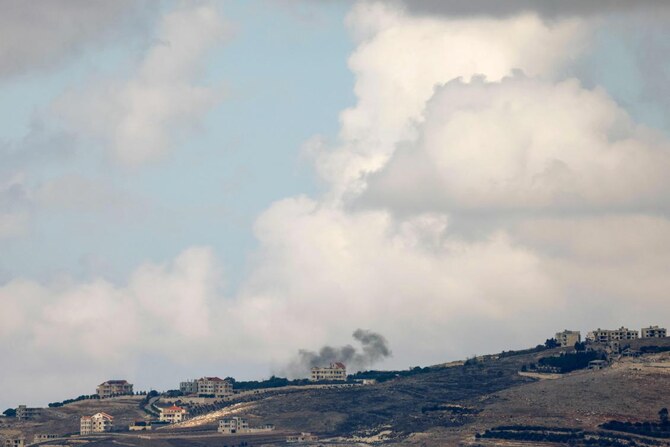
BEIRUT: Lebanon said Israeli strikes killed 33 people across the country on Tuesday, among them many who had been displaced by the intensified conflict between Israel and Hezbollah.
The attacks targeted not only known Hezbollah strongholds such as the southern suburbs of Beirut, but also areas where the Iran-backed group has not traditionally had a presence.
The health ministry said a strike on a town in the Chouf region south of Beirut killed at least 15 people, revising a previous toll upwards from 12.
“The Israeli raid on Joun in the Chouf district resulted... in the death of 15 martyrs, including eight women and four children,” it said.
Twelve others were wounded in the strike, the ministry added.
The official National News Agency (NNA) said the building had housed displaced people fleeing bombardment by Israel in its war against Hezbollah.
The health ministry said a strike a few kilometers further north in the mountainous Aley region east of the capital killed eight people.
A security source told AFP the attack had hit a house where people displaced in the war had taken refuge.
The ministry also reported one dead in an Israeli strike in the Tyre area in south Lebanon.
Elsewhere in the south of the country, the ministry reported strikes on the towns of Tefahta and Roumin killed seven people.
Attacks on the Hermel region in the Bekaa Valley in the east of the country bordering Syria killed another two people.
Nabatiyeh, the largest city in the south, again came under attack. Last month, Israeli strikes razed its historic marketplace and killed the mayor.
Hezbollah, meanwhile, said it fired missiles at an air base near Tel Aviv, following a wave of Israeli air strikes on the group’s south Beirut bastion.
Israel reported two people killed in the northern town of Nahariya by rocket fire from Lebanon.
Since September 23, Israel has stepped up its bombing campaign in Lebanon, mainly targeting Hezbollah strongholds in south Beirut and in the east and south of the country. On September 30, it sent in ground troops.
Israeli strikes outside Hezbollah strongholds have often targeted buildings where displaced civilians have sought refuge, with Lebanese security officials telling AFP the targets were Hezbollah operatives.
On Tuesday morning Israel launched more than a dozen air strikes on south Beirut, state media said, shortly after its military warned residents of four districts to evacuate.
Israel’s military said it had hit “Hezbollah terrorist targets” in south Beirut including “command centers, weapons production sites, and additional Hezbollah terrorist infrastructure.”
Witnesses told AFP they heard gunfire in the area ahead of the strikes — warning shots by residents for people to leave following the evacuation call.
The Lebanon war came after nearly a year of cross-border exchanges of fire, launched by Hezbollah in support of Hamas following its Palestinian ally’s October 7, 2023 attack on Israel that triggered the Gaza war.
With little sign of an end to the conflict, UN peacekeeping chief Jean-Pierre Lacroix met Prime Minister Najib Mikati in Beirut on Tuesday as part of a visit aimed at boosting calls for a ceasefire.
More than 3,300 people have been killed in Lebanon since the clashes began last year, according to the health ministry, the majority of them since late September.


Lebanon says 33 killed in Israeli strikes
https://arab.news/5duxs
Lebanon says 33 killed in Israeli strikes

- The health ministry said a strike on a town in the Chouf region south of Beirut killed at least 15 people, revising a previous toll upwards from 12
- “The Israeli raid on Joun in the Chouf district resulted... in the death of 15 martyrs, including eight women and four children,” it said


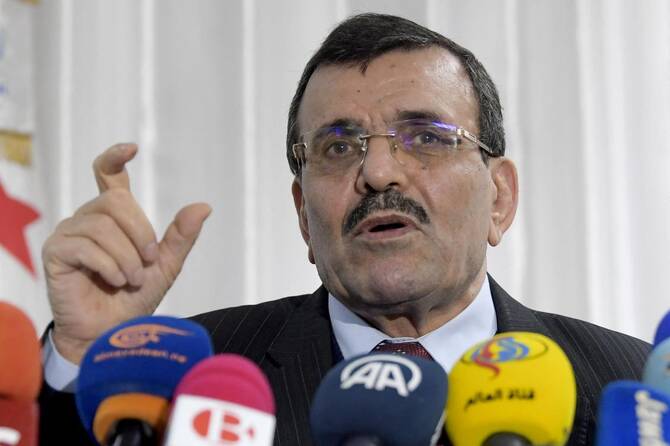
Tunisia court reduces ex-PM’s jail term over terror charges
- Last year, the former premier was sentenced to 34 years in prison.
- An overnight ruling from an appeals court reduced the 70-year-old’s term to 24 years, his defense lawyer Bouthelja said
TUNIS: A Tunisian appeals court has reduced the prison sentence of former prime minister Ali Larayedh by a decade to 24 years after he was found guilty of terrorism charges, his lawyer said Friday.
Since his arrest in late 2022, Larayedh has denied the charges that he helped send militant fighters to Iraq and Syria, and his lawyers have branded the case as politically motivated.
Last year, the former premier was sentenced to 34 years in prison. However, an overnight ruling from an appeals court reduced the 70-year-old’s term to 24 years, his defense lawyer Oussama Bouthelja told AFP.
Larayedh was prime minister from 2013 to 2014. He was a leader in the Islamist party Ennahdha, which briefly governed Tunisia following a popular uprising in 2011 that launched the Arab Spring.
He is a critic of President Kais Saied.
Others prosecuted in the case included former security officials and a spokesman for Ansar Al-Sharia, a group Tunisia designated a terrorist organization in 2013 while Larayedh was prime minister.
The appeals court reduced the sentences of several others in the case, with prison terms now ranging from three to 24 years.
Ennahdha played a key role in Tunisian politics for years before its leader Rached Ghannouchi was hit with multiple prison terms, which include a 22-year sentence on charges of plotting against state security.
Larayedh had already spent 15 years in prison, including 10 in solitary confinement, for plotting against the state under longtime ruler Zine El Abidine Ben Ali, who was toppled during the Arab Spring.
The UN said about 5,500 Tunisians fought with militant groups including the Daesh in Iraq, Syria and Libya between 2011 and 2016.