Saudi Arabia needs 115k new homes a year to meet 2030 homeownership target: Knight Frank 

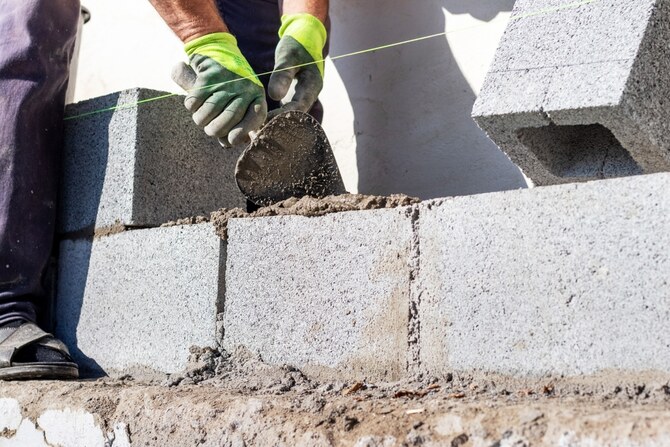
Real estate growth has become a central part of Vision 2023. Shutterstock
Short Url
Updated 13 November 2024
Follow

Saudi Arabia needs 115k new homes a year to meet 2030 homeownership target: Knight Frank 

  • Increase aims to fulfill the Kingdom’s 70% homeownership target by 2030
  • Knight Frank projected 65% of the anticipated 825,000 new homes by 2030 will be driven by household formation from marriage

RIYADH: Saudi Arabia will need to construct 115,000 homes annually over the next six years to address the demands of its growing population, according to new research by Knight Frank. 

In its latest release, the real estate consultancy firm emphasized that this substantial increase aims to fulfill the Kingdom’s 70 percent homeownership target by 2030, up from 63.7 percent at the end of 2023. 

Christopher Payne, partner and chief economist at Knight Frank MENA, said: “The Kingdom aims to create a nation of homeowners with all the attendant benefits that this brings, including economic stability and stimulus, wealth building, and community engagement.” 

An active housing market provides “greater choice, flexibility, and resilience for the Kingdom’s residents,” he added. 

The report underscored the collaborative approach of the Ministry of Municipalities and Housing and the National Housing Co. in working with both private and international stakeholders to deliver affordable and diverse housing options. 

It described this effort as “a national housing program” that will mobilize various partners to address both the demand and supply sides of the housing market. 

Recent initiatives include NHC’s partnerships, such as a deal with Egypt’s Talaat Moustafa Group to build over 27,000 homes, and an agreement with China’s CITIC Construction Group to establish an industrial city for construction materials. 

Payne added: “MOMAH’s initiatives helped to increase spending on residential construction from 5.5 percent of non-oil GDP to 8.5 percent in 2022.” 

Knight Frank projected that 65 percent of the anticipated 825,000 new homes by 2030 will be driven by household formation from marriage, while the remaining 35 percent will stem from the Kingdom’s goal to elevate homeownership rates. 

Additionally, it is noted that “existing platforms” will be utilized to ensure Saudi nationals have access to housing, reflecting the ministry’s aim to make homeownership more accessible to a young, expanding population. 

Further supporting this growth, the government’s Sakani program, launched in 2017, has helped low- and middle-income families access housing through mortgage guarantees, loan subsidies, and reduced payments. Sakani has facilitated over 800,000 housing contracts, spanning ready-made homes, self-construction, and off-plan units. 

With a significant portion of new housing developments projected in Riyadh due to rising demand from economic activity, Knight Frank noted that “urban centers like Riyadh” will play a crucial role in fulfilling the demand. 

This trend is already evident in the capital’s property values, where apartment prices have surged by 62 percent, and villa prices by 37 percent over the last three years. 

Future phases of the Sakani program aim to enhance housing affordability and availability through added incentives for developers and a wider range of housing options. Complementing these efforts is the ministry’s Etmam initiative, which facilitates “one-stop” online access for project approvals, streamlining processes and expediting construction. 

Knight Frank concluded that Saudi Arabia’s proactive housing strategies and Vision 2030 housing targets will unlock “the economic potential of a young, expanding population,” creating a “virtuous cycle” of economic stability and growth for the Kingdom. 


Gulf-EU value chain integration signals shift toward long-term economic partnership: GCC secretary general

Updated 5 sec ago
Follow

Gulf-EU value chain integration signals shift toward long-term economic partnership: GCC secretary general

RIYADH: Value chains between the Gulf and Europe are poised to become deeper and more resilient as economic ties shift beyond traditional trade toward long-term industrial and investment integration, according to the secretary general of the Gulf Cooperation Council.

Speaking on the sidelines of the World Governments Summit 2026 in Dubai, Jasem Al-Budaiwi said Gulf-European economic relations are shifting from simple commodity trade toward the joint development of sustainable value chains, reflecting a more strategic and lasting partnership.

His remarks were made during a dialogue session titled “The next investment and trade race,” held with Luigi Di Maio, the EU’s special representative for external affairs.

Al-Budaiwi said relations between the GCC and the EU are among the bloc’s most established partnerships, built on decades of institutional collaboration that began with the signing of the 1988 cooperation agreement.

He noted that the deal laid a solid foundation for political and economic dialogue and opened broad avenues for collaboration in trade, investment, and energy, as well as development and education.

The secretary general added that the partnership has undergone a qualitative shift in recent years, particularly following the adoption of the joint action program for the 2022–2027 period and the convening of the Gulf–European summit in Brussels.

Subsequent ministerial meetings, he said, have focused on implementing agreed outcomes, enhancing trade and investment cooperation, improving market access, and supporting supply chains and sustainable development.

According to Al-Budaiwi, merchandise trade between the two sides has reached around $197 billion, positioning the EU as one of the GCC’s most important trading partners.

He also pointed to the continued growth of European foreign direct investment into Gulf countries, which he said reflects the depth of economic interdependence and rising confidence in the Gulf business environment.

Looking ahead, Al-Budaiwi emphasized that the economic transformation across GCC states, driven by ambitious national visions, is creating broad opportunities for expanded cooperation with Europe. 

He highlighted clean energy, green hydrogen, and digital transformation, as well as artificial intelligence, smart infrastructure, and cybersecurity, as priority areas for future partnership.

He added that the success of Gulf-European cooperation should not be measured solely by trade volumes or investment flows, but by its ability to evolve into an integrated model based on trust, risk-sharing, and the joint creation of economic value, contributing to stability and growth in the global economy.

GCC–EU plans to build shared value chains look well-timed as trade policy volatility rises.

In recent weeks, Washington’s renewed push over Greenland has been tied to tariff threats against European countries, prompting the EU to keep a €93 billion ($109.7 billion) retaliation package on standby. 

At the same time, tighter US sanctions on Iran are increasing compliance risks for energy and shipping-related finance. Meanwhile, the World Trade Organization and UNCTAD warn that higher tariffs and ongoing uncertainty could weaken trade and investment across both regions in 2026.