


CHICAGO: The re-election of Donald Trump as the 47th president of the United States is expected to open pathways to peace in the Middle East, according to predictions from two prominent political consultants from both the Republican and Democratic parties.
Republican strategist Jeff Davis, president of Victory Media Inc., and Democratic consultant Thom Serafin suggested on Thursday that Trump’s leverage and strong relationship with Israeli Prime Minister Benjamin Netanyahu could facilitate a ceasefire with the Palestinians and potentially pave the way for support from Saudi support.
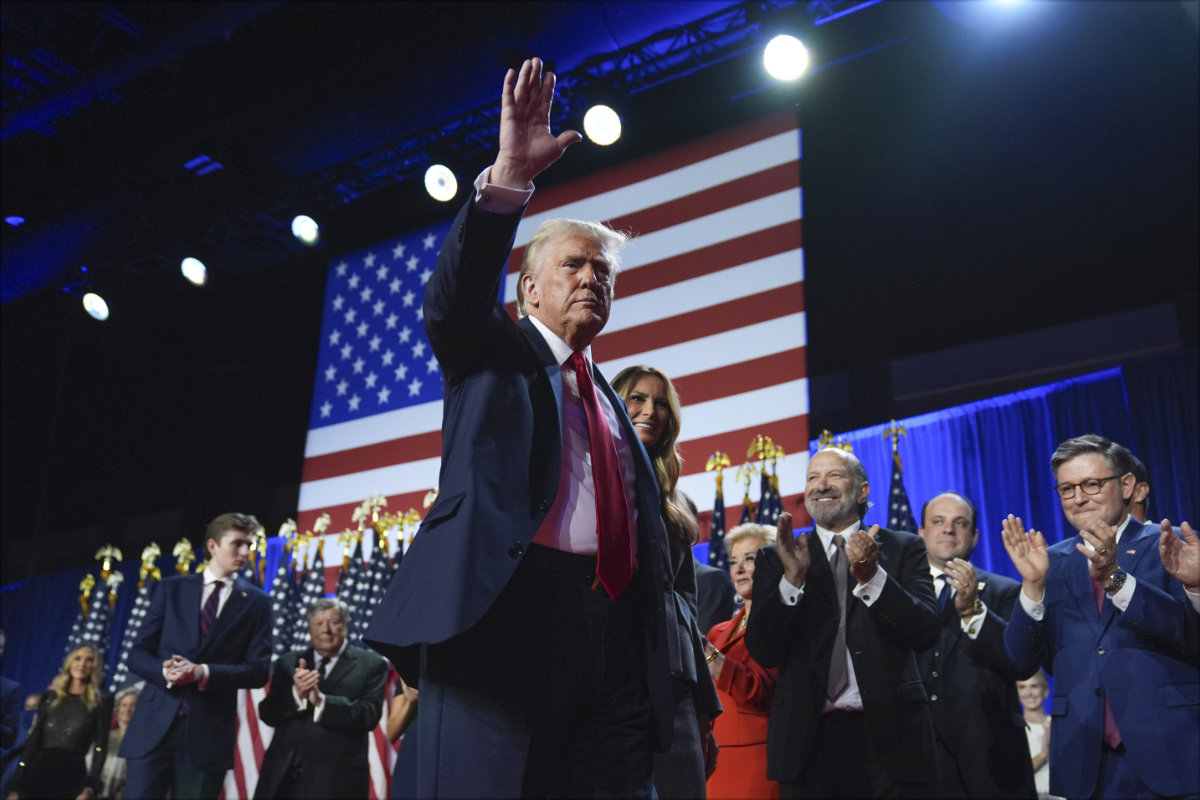
Republican presidential nominee former President Donald Trump waves as he walks with former first lady Melania Trump at an election night watch party at the Palm Beach Convention Center on Nov. 6, 2024, in West Palm Beach, Florida. (AP)
Appearing on The Ray Hanania Radio Show, both consultants agreed that Trump’s rapport with the Israeli leadership and his previous initiatives in the region, including the Abraham Accords, position him uniquely to influence Middle East dynamics.
“(Trump) is well respected, especially in Israel. When he was president last time, Jerusalem became the capital,” Serafin said. “There’s a lot of good blood there. He thought they were coming to an accord where they would have the long-term peace at the time.”
Trump’s first term saw the official US recognition of Jerusalem as Israel’s capital, marked by the controversial relocation of the US Embassy in 2018. Concurrently, he spearheaded the Abraham Accords, paving the way for normalization agreements between Israel and the UAE, Bahrain and later Morocco.
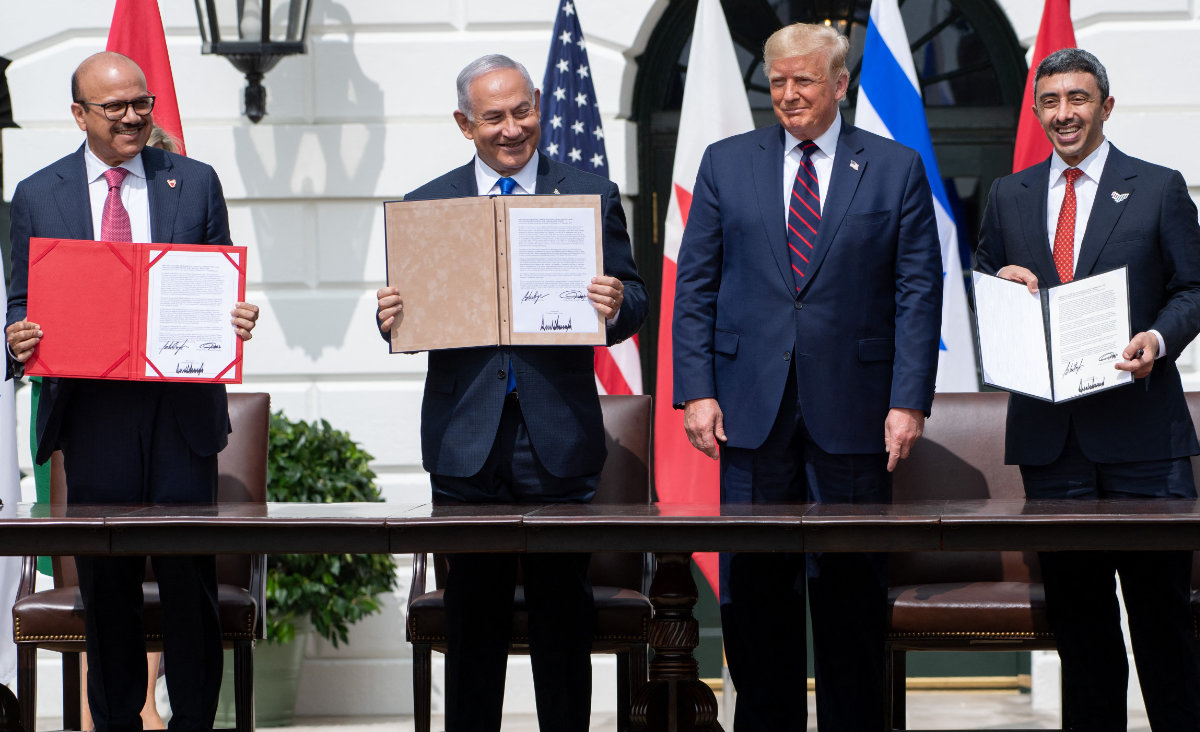
This photo taken on September 15, 2020, shows US President Donald Trump with Bahrain Foreign Minister Abdullatif al-Zayani (L), Israeli Prime Minister Benjamin Netanyahu (3R) and UAE Foreign Minister Abdullah bin Zayed Al-Nahyan with the historic Abraham Accords document at the White House in Washington, DC. (AFP)
Although these accords encountered resistance from some neighboring Arab nations, they laid the groundwork for potential US-mediated discussions between Riyadh and Tel Aviv. However, that prospect was cut short following the Oct. 7, 2023, Hamas-led attack on Israel and the subsequent escalation in Gaza, dashing hopes for a new era of Middle East peace and stability.
“Everything blew up on Oct. 7 when they were, (rather) they thought they were getting very, very close (to a deal). But you need somebody who’s full-time there and goes toe to toe with Netanyahu. And I think Trump is the guy who could do that,” he said.
Serafin, who has an extensive background in media and political consultancy, having worked as press secretary on several US Senate election campaigns and served on the staffs of Senator Alan Dixon and Representative Dan Rostenkowski, highlighted the significance of the hostages held by Hamas as a key element in negotiating peace with regional powers, including Iran and its proxies.

In this photo taken on October 24, 2024, relatives of hostages taken captive in the Gaza Strip by Palestinian militants during the October 7, 2023 attacks protest outside the Israeli prime minister's residence in central Jerusalem, calling for action to release the hostages. (AFP)
“If he’s capable of reaching the Israelis, and I think he is, that’s the key,” he said. “If you can get Israel to be accommodating to what he needs to do, you can bring peace, at least ceasefire, to that part of the world.”
Since October last year, escalating violence in the Middle East has spread from Gaza to Lebanon, drawing diplomats worldwide into urgent efforts to mediate a solution.
INNUMBERS
• 2,600 Trump’s margin of victory over Harris in Arab-majority Michigan suburb of Dearborn.
• 17,400 Joe Biden’s margin of victory over Trump in the same city in 2020.
The conflict, driven by clashes involving Iran-backed groups such as Hamas, Hezbollah and the Houthis, has seen limited restraint from Israeli officials, further fueling tensions. This crisis has also taken center stage in the US election season, especially among Arab Americans some of whom view the Biden-Harris administration’s handling of the situation as a betrayal, given their community’s crucial support for the Democrats’ 2020 win.
Davis noted that while many Arab Americans declined to endorse Harris due to her stance on the conflict, Trump garnered substantial support within the community resulting in his re-election on Tuesday, but still has “some way to go” to fully solidify these ties.
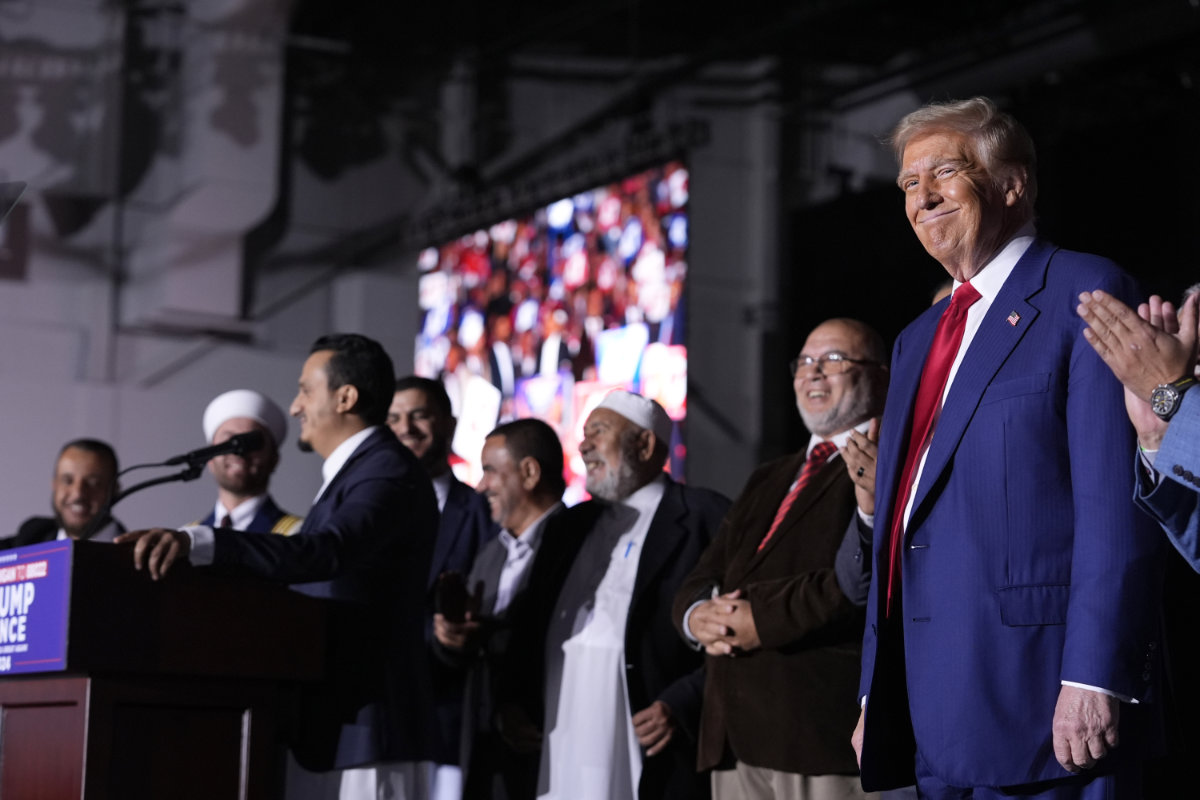
Republican presidential nominee former President Donald Trump, right, looks on as local Muslim leaders speak during a campaign rally on Oct. 26, 2024, in Novi, Michigan. (AP)
He pointed to Michigan’s Arab-majority Dearborn as a case in point, where Trump won 42.5 percent of the Arab American vote compared to Harris’s 36.3 percent. Notably, anti-war critic Dr. Jill Stein drew 18.3 percent in the area, reflecting broader discontent within the community.
“Let’s talk about Michigan a little bit. Because of the population centers in Michigan being Arab American and how Trump did well there. And he did well there, but he won those areas,” Davis said.
Analyzing data from Dearborn, he noted that Trump still has ground to cover with the Arab American community, acknowledging that Stein’s appeal in Dearborn was significantly stronger than her national average.
Davis, a seasoned Republican strategist who has advised campaigns across several battleground states, emphasized that although Stein’s Green Party did not reach the 5 percent threshold needed for major party status, Trump’s support within the Arab American community was bolstered by endorsements from figures like former Democrat Dr. Bishara Bahbah and Dr. Massad Boulos, father-in-law of Trump’s daughter Tiffany.
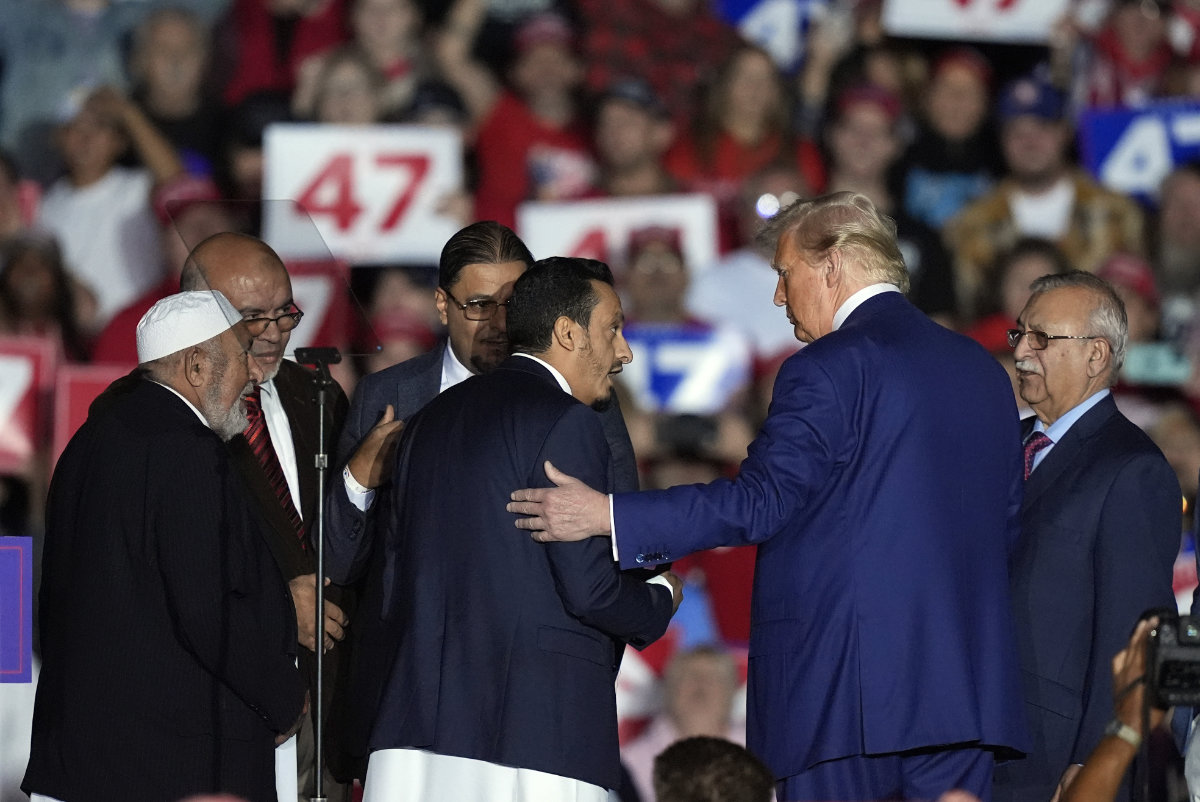
Republican presidential nominee former President Donald Trump, second right, greets local Muslim leaders during a campaign rally in Novi, Michigan on Oct. 26, 2024. (AP)
Both Davis and Serafin noted that Trump made unexpected inroads into traditional Democratic voter bases, securing 45 percent of the Hispanic vote and nearly 27 percent of the Black vote. Surprising many experts, Trump’s success in gaining support from key demographics enabled him to outpace Harris in critical swing states. However, the two consultants emphasized that Harris’s primary setback was her struggle to connect with voters on a personal level.
“I recall that old phrase, ‘I feel your pain.’ She did not exhibit that on the campaign trail,” Serafin said. “She had the joy and all these other things, but ironically, she wasn’t feeling the pain of the average voter that was struggling.”
He argued that Harris’ lack of empathy during the campaign failed to fully address concerns around the economy and rising inflation.
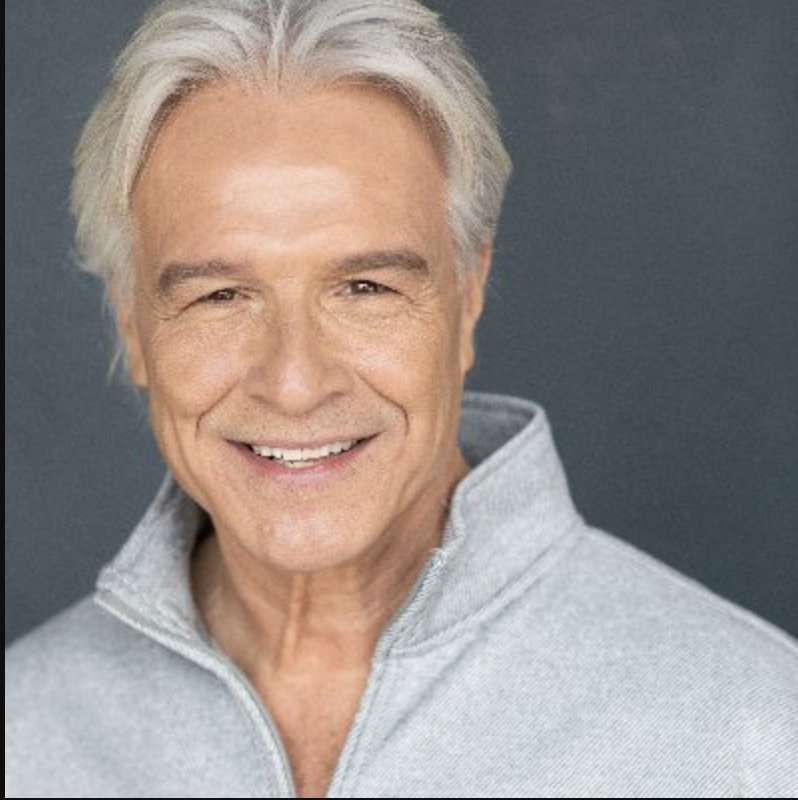
Democratic consultant Thom Serafin believes Vice President Kamala Harris’ lack of empathy during the campaign failed to fully address concerns around the economy and rising inflation. (Supplied)
“Everything I learned in college, over the last 50 years, 60 years in life, is (that) inflation is the hidden pain, hidden taxation. You know, all of a sudden you get your hundred-dollars paycheck every week, but the bills are getting higher and higher. You just can’t meet ends,” Serafin added.
Polling throughout the campaign, including an Arab News/YouGov survey, consistently highlighted economic concerns as top priorities for voters, also among Arab Americans, who indicated them as nearly on par with foreign policy issues in the Middle East.
Davis and Serafin also contended that media coverage frequently misrepresented Trump’s statements, including attributing to him a comedian’s reference to Puerto Rico as a “garbage island,” or claims that Trump suggested aiming guns at Liz Cheney.
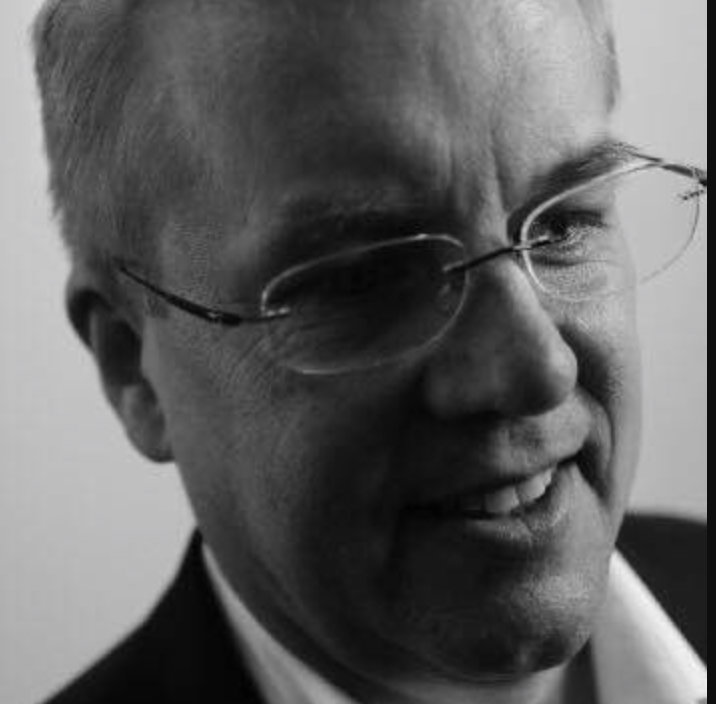
Republican strategist Jeff Davis, president of Victory Media Inc. (Supplied)
In reality, Trump was not present when the comedian made his remark, and his statements on Cheney referred to her lack of military experience, not an incitement to violence.
The consultants also said that Democratic efforts to emphasize Trump’s legal battles, many of which originated from the Democrat-led Department of Justice, further deepened the polarization, arguably contributing to his game. Trump currently faces multiple felony charges related to fraud, election interference and obstruction.
“Every time they called him the felon, I thought to myself, what a mistake. Because everybody knows he’s only a felon because the Democrats wanted him to be one. It wasn’t because he was legitimately a felon,” Serafin said. “And, so, I thought that was always a mistake when she called him that way and some other people. After a while, they stopped doing that because they probably tested that term, and it was backfiring.”
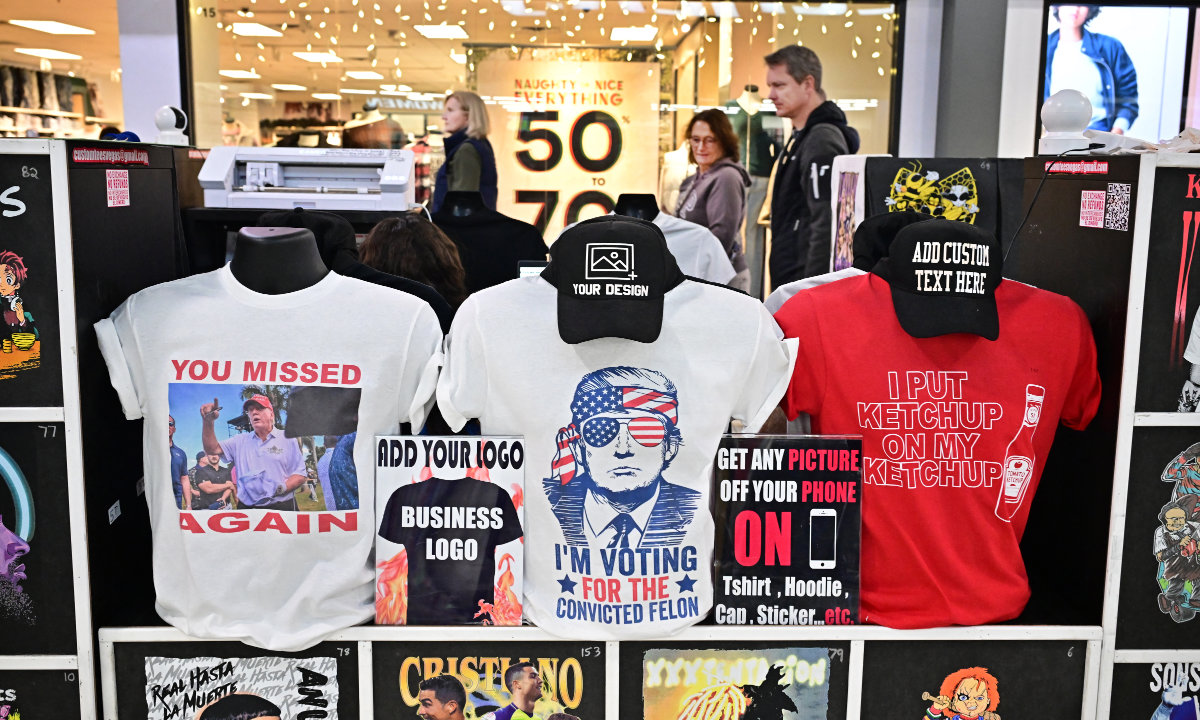
T-shirts on display for sale at a shopping mall in Las Vegas, Nevada, on November 6, 2024, including one reading "I vote for the convicted felon", the day after former US President Donald Trump won the 2024 US presidential election. (AFP)
Both Davis and Serafin believe these cases may be dismissed, setting the stage for another four years under Trump’s leadership — one that will inherit a divided domestic landscape and face the immense challenge of upholding his promise to end the conflict that has claimed nearly 50,000 lives, while working toward the peace and stability long desired in the Middle East.
Serafin and Davis shared their insights on The Ray Hanania Radio Show, aired Thursday on the US Arab Radio Network in Michigan and sponsored by Arab News.
For more information or to listen to past shows, visit ArabNews.com/rayradioshow.


