



BOSTAN, Balochistan: Muhammad Ashraf, a 28-year-old motor vehicle mechanic in Pakistan’s southwestern Balochistan province, was barely a teenager when he had to quit school to help his ailing father support their family.
While Ashraf went on to become a successful technician and set up his own workshop in the rugged town of Kuchlak in the impoverished Balochistan province, his real dream was different: to build a paraglider and fly high in the skies.
In 2021, the mechanic workshop owner got to work making a fan-powered, three-wheel paramotor. He watched paragliding videos on Facebook and YouTube and eventually contacted some fellow mechanics in the provincial capital of Quetta to help him find the required engine and parts.
“I started my work by watching online videos. I didn’t learn from anyone, neither do I have enough education for anyone to teach me, nor is there any such system in our country,” Ashraf told Arab News in an interview this week ahead of a flight of his paraglider.
“I bought an old engine. I opened it and rebuilt it again myself. Once I was fully confident about the engine, I installed it,” he added. “The advantage of the Cultus [compact car] engine is that it’s lightweight yet powerful, with a 1,000cc capacity.”
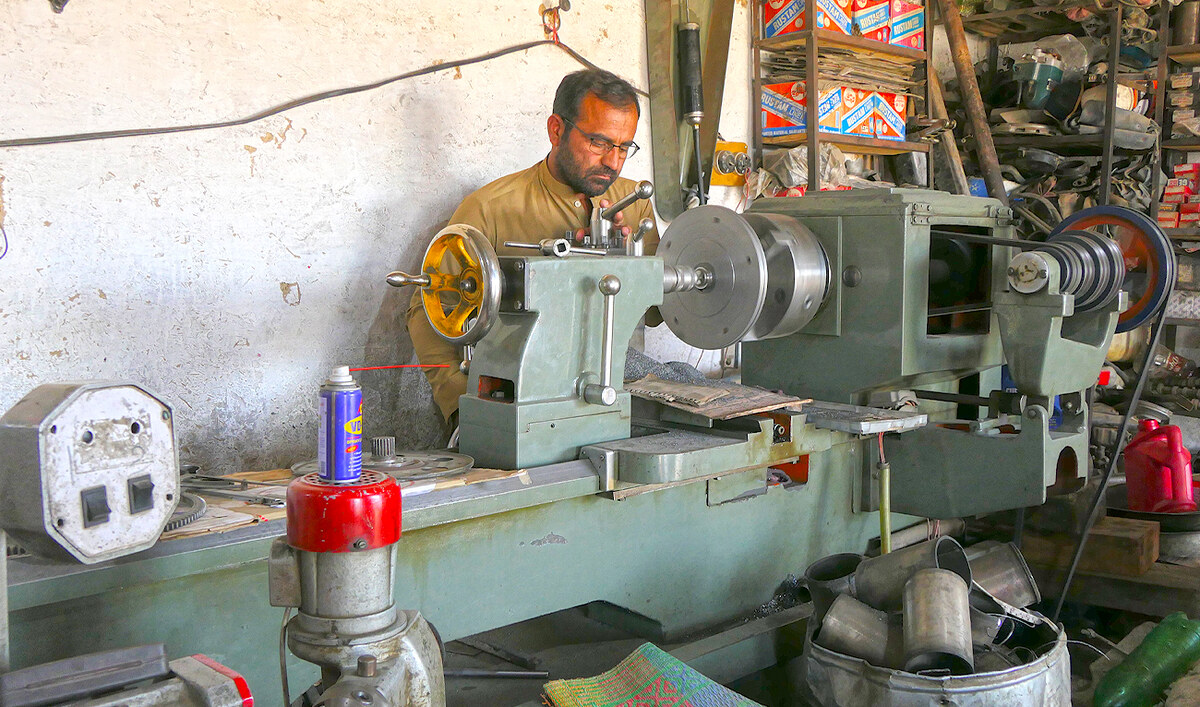
Muhamamd Ashraf works on a lake-grinder inside his workshop in Kuchlak, Pakistan's southwestern Balochistan province on November 03, 2024. (AN Photo)
Other than the car engine, Ashraf used local materials and parts to build the paramotor, spending $5,776 on the project. With a large iron rod hanging in the front to control the movement of the wings and two right-left pedals as the accelerator and brake, Ashraf’s paramotor can fly for half an hour on almost 20 liters of gasoline.
“It was too costly for me to purchase an imported engine and other parts for my paramotor from abroad, hence I used local iron and parts ordered from Lahore, Karachi and Quetta. I used local wood and trimmed it into wings for my paramotor.”
“ACHIEVEMENT FOR PEOPLE OF BALOCHISTAN”
Paragliding is a lucrative business in Pakistan’s picturesque northern areas, annually frequented by hundreds of thousands of tourists. But most people are unfamiliar with paragliding in remote, arid Balochistan, Pakistan’s largest province by area but its most poor and underdeveloped.
Ashraf says he is the first person who has built his own paramotor in the province, completing its first successful flight on Oct. 28 in Killi Qasim, a village in his hometown of Bostan in Pishin district.
“I was quite nervous before taking out my two-seater paraglider for the first flight, but I flew for three minutes and went up to 300 feet in the sky,” he recalled. “My family, friends and other people in my village were very happy when I touched the paraglider down on the ground.”
Muhammad Azam Bazai, a union councilor in Bostan, described Ashraf’s locally made paramotor as an “achievement for the people of Balochistan” and requested the provincial government to support him in building paragliding tourism in the province.
“We were initially mocking him, saying we didn’t believe his aircraft would ever fly or get off the ground,” Bazai said. “But when he flew the paraglider, I was so happy that I can’t even express the joy.”
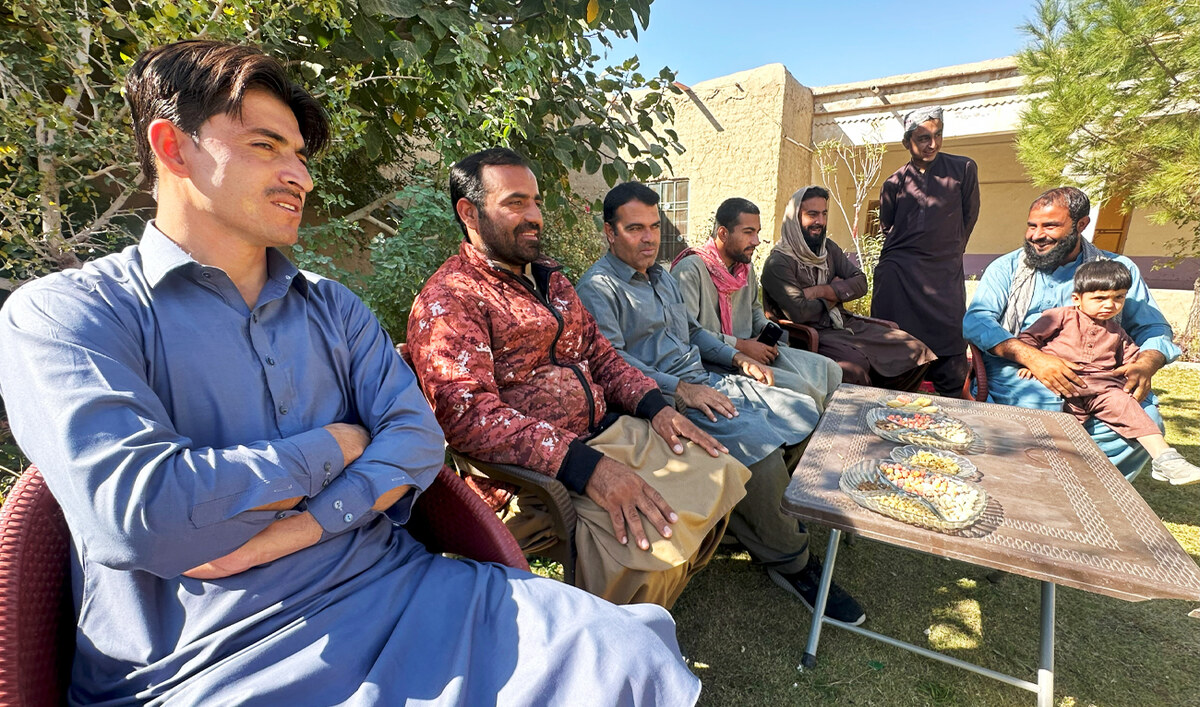
Muhammad Ashraf (second on the left) meets locals in his village in Bostan, Pakistan southwestern district Balochistan province, on November 03, 2024. (AN Photo)
Shahid Rind, a spokesman for the Balochistan government, said the government would look into the viability of Ashraf’s project.
“In the past, the government has promoted such initiatives and positive steps taken by the youth of Balochistan,” he told Arab News. “And if there is any professional or commercial viability in this, the government of Balochistan will definitely support this individual.”
Having successfully built his flying machine, Ashraf now wants to upgrade it to a three-seater with a more powerful engine, and also aspires to build more paramotors for flying enthusiasts in Balochistan.
“I will try to teach people who want to learn how to make and fly it,” the mechanic said as he climbed into his paraglider, readying for flight.
“Whoever is interested in learning in Balochistan, I am here to help.”


