Saudi Arabia’s PMI rises to 6-month high in October

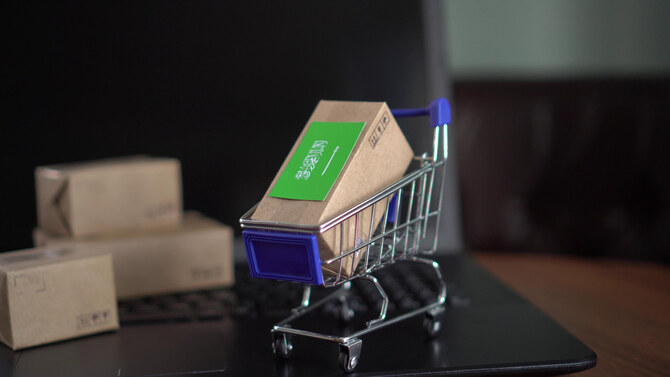
Increased demand from customers helped drive Saudi Arabia’s non-oil businesses. Shutterstock
Short Url
Updated 05 November 2024
Follow

Saudi Arabia’s PMI rises to 6-month high in October

RIYADH: Saudi Arabia’s non-oil business activities strengthened in October, with the Kingdom’s purchasing managers’ index rising to a six-month high of 56.9, an economy tracker showed.

The Riyad Bank Saudi Arabia PMI survey, compiled by S&P Global, revealed that this figure beat the Kingdom’s September rating of 56.3 and the August level of 54.8.

The report revealed that this rise was driven by a sharper increase in sales, which supported further expansions in business activity, employment, purchasing activity, and stocks. 

S&P Global highlighted that any PMI readings above 50 indicate growth, while levels below 50 signal contraction. 

Strengthening the non-oil private sector is a crucial goal outlined in Saudi Arabia’s Vision 2030, as the Kingdom is steadily diversifying its economy by reducing its decades-long reliance on crude revenues. 

Affirming the progress of Saudi Arabia’s economic diversification, a report released by GASTAT in October showed that the Kingdom’s non-oil activities expanded by 4.2 percent in the third quarter of this year, compared to the same period in 2023. 

“In October 2024, Saudi Arabia’s non-oil private sector maintained its upward trajectory, with the PMI rising to 56.9 from 56.3, highlighting the nation’s robust economic health. This growth is part of a steady expansion trend since September 2020, driven by increasing demand and aligning with the goals of Vision 2030,” said Naif Al-Ghaith, chief economist at Riyad Bank. 

He added: “The comprehensive sectoral gains reflect a strong business environment, supported by government initiatives and heightened private sector engagement, aligning with ongoing projects under Vision 2030 that aim to diversify the economy and reduce reliance on oil.” 

S&P Global also attributed the rise in PMI to a stronger increase in sales volumes in October, as businesses commented on higher client demand and a general uplift in economic conditions. 

Survey respondents cited various factors, including customer arrivals, successful marketing strategies, and increased infrastructure development, as some key elements driving non-oil business growth in the Kingdom. 

“Over 40 percent of surveyed companies reported a surge in demand, spurred by robust domestic client interest, creative marketing strategies, and continuous infrastructure investments. These elements underscore Saudi Arabia’s economic resilience and high market confidence, further solidifying its position as a leading non-oil economy in the region,” said Al-Ghaith. 

The report added that businesses that took part in the survey were optimistic about future growth, and it encouraged companies to increase their purchase activity in October. 

Companies operating the Kingdom’s non-oil sector also raised their labor capacity in October, which enabled these firms to remain on top of workloads and curtail their levels of work-in-hand. 

Even though the pace of job creation remained stronger than average, it eased for the second month in a row, partly due to a reduction in the number of staff in the construction sector. 

“With this ongoing expansion, the non-oil sector’s contribution is projected to exceed 52 percent of the overall GDP and grow beyond 4 percent in 2024, reflecting the successful implementation of Vision 2030 and its associated projects,” concluded Al-Ghaith. 


Jordan spends nearly $500 million on water projects in 2025 

Updated 4 sec ago
Follow

Jordan spends nearly $500 million on water projects in 2025 

RIYADH: Jordan spent nearly $500 million on water-related projects and programs in 2025, stepping up investment in supply infrastructure, wastewater treatment and renewable energy, according to official data.

Spending during the year covered large-scale strategic projects as well as upgrades to water networks, wastewater facilities, water harvesting systems and digital infrastructure, the Jordan News Agency, or Petra, reported, citing data from the Ministry of Water and Irrigation. 

The scale of investment reflects the government’s focus on strengthening national water security, improving service quality, and advancing sustainable solutions to address water scarcity and climate change challenges. 

The spending aligns with Jordan’s National Water Strategy 2023–2040, which aims to achieve water security through integrated resource management, reduce water losses from about 50 percent to less than 25 percent by 2040, expand non-conventional water sources, improve irrigation efficiency, and develop major infrastructure projects such as the National Water Carrier to meet rising demand. 

“The ministry’s achievements in 2025 marked a qualitative shift in the management of the water sector through continued progress in implementing the National Carrier Project for desalination and water conveyance from Aqaba to Amman,” Petra stated. 

It added: “The project contract was signed, 11 annexes to the agreement were completed, and grants and international support were secured, most notably a Dutch grant of €31 million ($36.5 million) as part of a broader €100 million support package for the water sector.” 

To enhance water supply, the ministry and its affiliated entities implemented rehabilitation and upgrade projects across several governorates. These included the Bani Kinana District water system improvement project, valued at nearly $60 million, as well as network upgrades in Tafilah worth 6.1 million Jordanian dinars, Petra and Maan at 6.8 million dinars, and Ramtha at €21.36 million. 

To enhance water supply, the ministry and its affiliated bodies carried out rehabilitation and upgrade projects across various governorates. These included the Bani Kinana District water system improvement project, valued at nearly $60 million, along with network upgrades in Tafilah at 6.1 million Jordanian dinar ($8.6 million), Petra/Maan at 6.8 million dinars, and Ramtha at €21.36 million ($25.15 million). 

Other projects included upgrading the Mashtaba water networks in Jerash governorate at a cost of $10.34 million, rehabilitating seven wells in the Kafrein area for $1.19 million, and refurbishing the Abu Al-Zeighan wells desalination plant at a cost of $36 million. 

The ministry also intensified work on wastewater infrastructure, executing and signing agreements for several key projects. These included the Hakama–Irbid wastewater project, valued at 11.37 million dinars. Wastewater initiatives in northeast Balqa were worth €60 million. 

Additional projects in west Irbid and southwest Amman cost $27.7 million. The ministry also expanded the Samra wastewater treatment plant and improved water sources at a cost of $46 million. Upgrades to the Ain Ghazal plant were supported by a $3 million grant, along with an additional €708,700 grant. 

As part of efforts to reduce operational energy costs and improve sustainability, the ministry implemented renewable energy projects, including the operation of a 2-megawatt photovoltaic solar project for the Disi Water Project and solar installations at the Zara–Ma’in plant at a cost of 1.2 million dinars. One of these projects received a silver award for solar energy projects in the UAE in October. 

In the area of water harvesting and risk management, the ministry completed the design and implementation of 15 water harvesting facilities and received water harvesting structures and ponds with a combined storage capacity exceeding 2.1 million cubic meters. It also established 120 water harvesting units in Karak governorate, awarded a tender for ponds in Mafraq governorate with a capacity of 125,000 cubic meters, prepared national flood intensity maps, and launched dam risk assessment tools.  

Institutional and regional cooperation also expanded during the year. This included the signing of 10 investment agreements in the central and southern Jordan Valley, six agreements delegating water distribution management to water user associations, ongoing project discussions with international partners, a Jordanian-Syrian agreement on the fair allocation of Yarmouk Basin waters, and Jordan’s formal membership in the International Commission on Large Dams in May.