



DOHA: A three-month-long art and architecture exhibition in Doha featuring the works of renowned Pakistanis from the 1940s to the present highlights the South Asian nation’s diverse art scene and brings unique insights on the evolution of art and architecture in the region to a global audience.
Titled “Manzar,” which can be translated in Urdu to mean scene, view, landscape or perspective, the exhibition showcases over 200 paintings, drawings, photographs, videos, sculptures, installations, tapestries and miniatures from celebrated Pakistani artists. It has been organized by an Art Mill Museum team and will run at the National Museum of Qatar until January 31, 2025.
Pakistani Prime Minister Shehbaz Sharif, Qatar’s Emir Sheikh Tamim ibn Hamad Al Thani and his sister, Sheikha Al Mayassa Al Thani, inaugurated the exhibition in Doha last week.
“Pakistan’s art scene is less well known in the world compared to other art scenes and for us art historians it is absolutely fascinating to be able to share it with the world,” Caroline Hancock, Senior Curator of Modern and Contemporary Art at the Art Mill Museum, told Arab News.
“We wanted to recount an expansive notion of this place, not limited by drawn and imposed borders, but true to the porosity and transnational interconnections of cultural expressions [in Pakistan].”
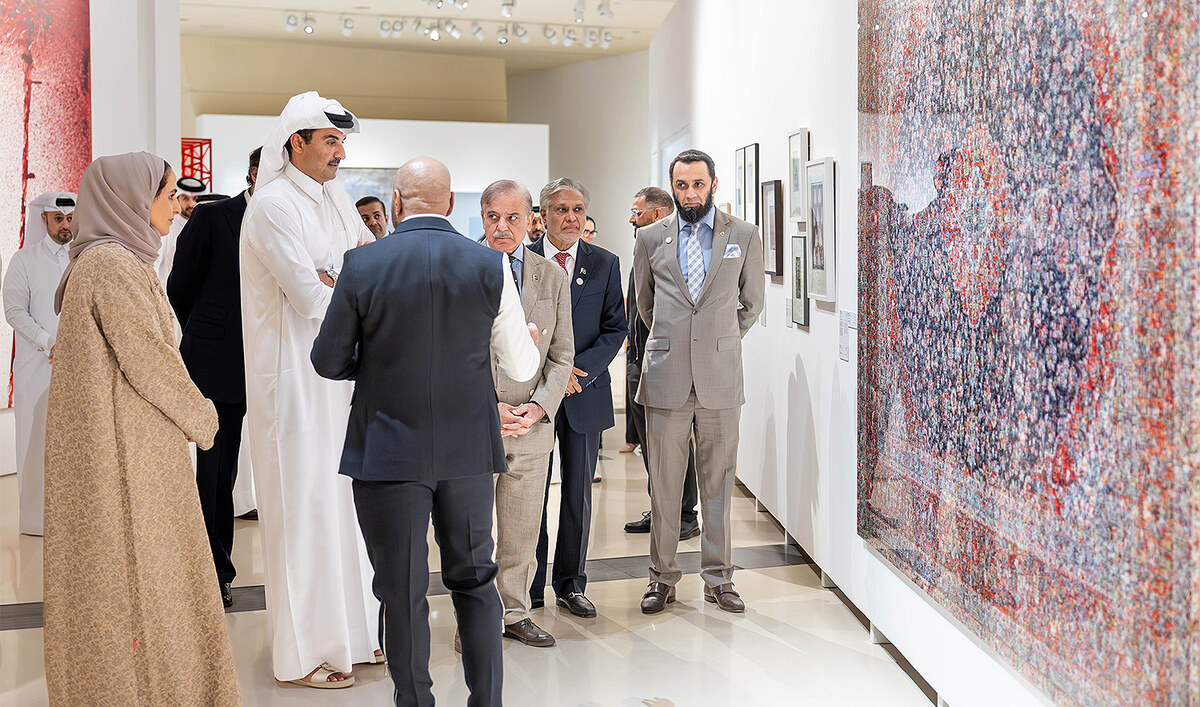
Pakistani Prime Minister Shehbaz Sharif, Qatar’s Emir Sheikh Tamim ibn Hamad Al Thani and his sister, Sheikha Al Mayassa Al Thani visit ‘Manzar’ exhibition in Doha, Qatar, on October 31, 2024. (almayassahamad/X)
Zarmeene Shah, Director of Graduate Studies at the Indus Valley School of Art and Architecture (IVS) in Karachi, the co-curator for Manzar, described the exhibition as “exceptionally significant.”
“Because we never see such a body of noteworthy work come together in a single space, as most of these artworks live in private collections, inaccessible to the public, which is why Manzar offers an incomparable opportunity for audiences to engage with these masterpieces, and to explore how art and architecture have responded to, and reshaped, the nation’s social and political narratives,” Shah told Arab News.
“Our aim is to start a conversation and not provide a definitive showcase.”

The installation in the front comprises a fabric and gold-plated steel pins titled "You Have Set Me Apart" (2017) by Aisha Khali, and at the back, right, shows a stitching collage with dye ink on fabric, titled "Invisible Border" (2019) by artist Khadim Ali displayed at the "Manzar" exhibition at National Museum of Qatar in Doha. (Kuzey Kaya Buzlu)
The exhibition, designed by eminent Pakistani architect Raza Ali Dada, a managing partner at the leading Pakistani firm Nayyar Ali Dada & Associates, integrates architecture and art to chart the thought processes, resistance struggles and achievements of the artistic and architectural community of the South Asian nation.
The exhibit runs thematically and opens with works by pioneering artists such as Abdur Rahman Chughtai and Zainul Abedin, who produced stellar works of art during British colonial rule from 1858-1947 and continued after Pakistan was born as a separate nation out of united India.
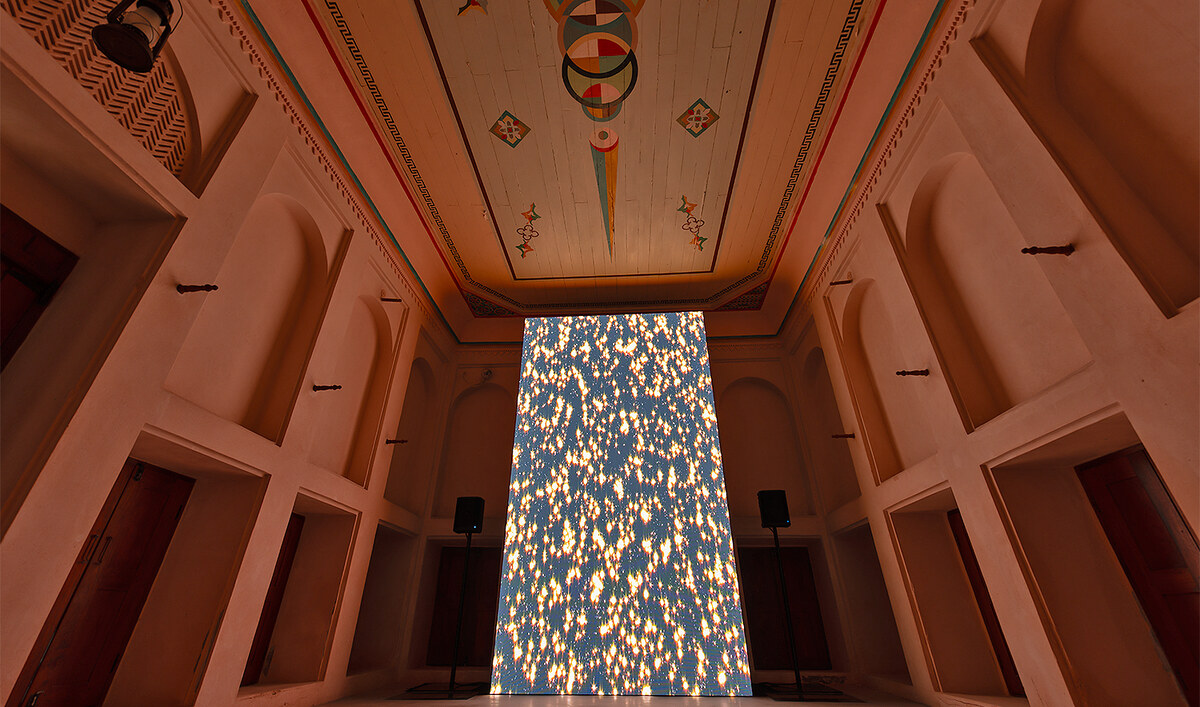
The image shows a video installation titled "Disruption as Rapture" by Shahzia Sikander (2016), displayed at the "Manzar" exhibition at National Museum of Qatar in Doha. (Kuzey Kaya Buzlu)
Indeed, the partition of 1947 is a significant theme for many Pakistani artists at the exhibition, including Anna Molka Ahmed, Zarina, and Bani Abidi. The exhibition also showcases the aesthetic experiments of artists such as Shakir Ali, Zubeida Agha, Murtaja Baseer, and Sadequain, whose deeply personal modes of expression are rooted in the vibrant urban centers of Karachi, Lahore, Dhaka, and the twin cities of Rawalpindi and Islamabad, which embody diverse artistic responses to historical and cultural shifts in the region.
Zahoor ul Akhlaq, Imran Mir, and Rasheed Araeen — known for their multidisciplinary approaches, involvement in educational initiatives, and theoretical writings challenging Western art history and traditions at home and internationally — are also featured, as are influential figures of different generations such as Salima Hashmi, Quddus Mirza, Lala Rukh, Aisha Khalid and Durriya Kazi.
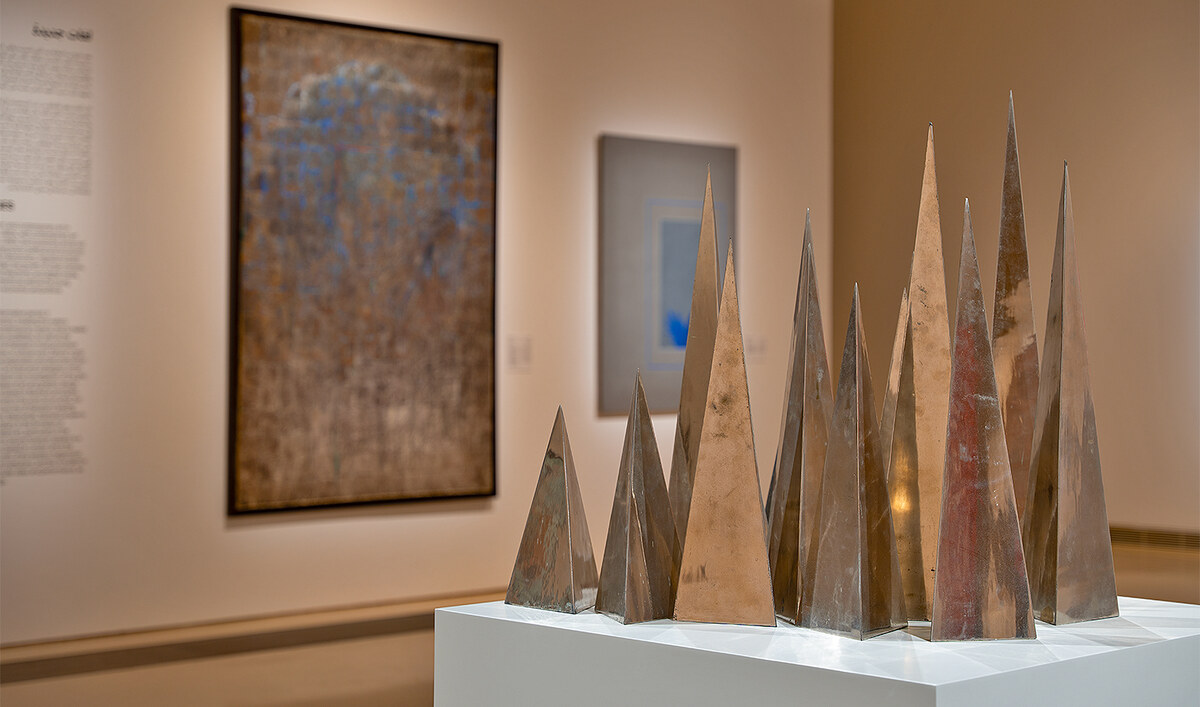
The image shows fifteen steel pyramids by Zahoor ul Akhlaq called "Untitled (circa 1975)", displayed at the "Manzar" exhibition at Qatar Museums in Doha, Qatar. (Kuzey Kaya Buzlu)
Important diaspora artists whose work is part of the exhibition include Naiza Khan in London, Ruby Chishti, Huma Bhabha, Iftikhar and Elizabeth Dadi and Salman Toor in New York, Bani Abidi in Berlin, Basir Mahmood in Amsterdam, Seher Shah in Barcelona and Khadim Ali in Sydney.
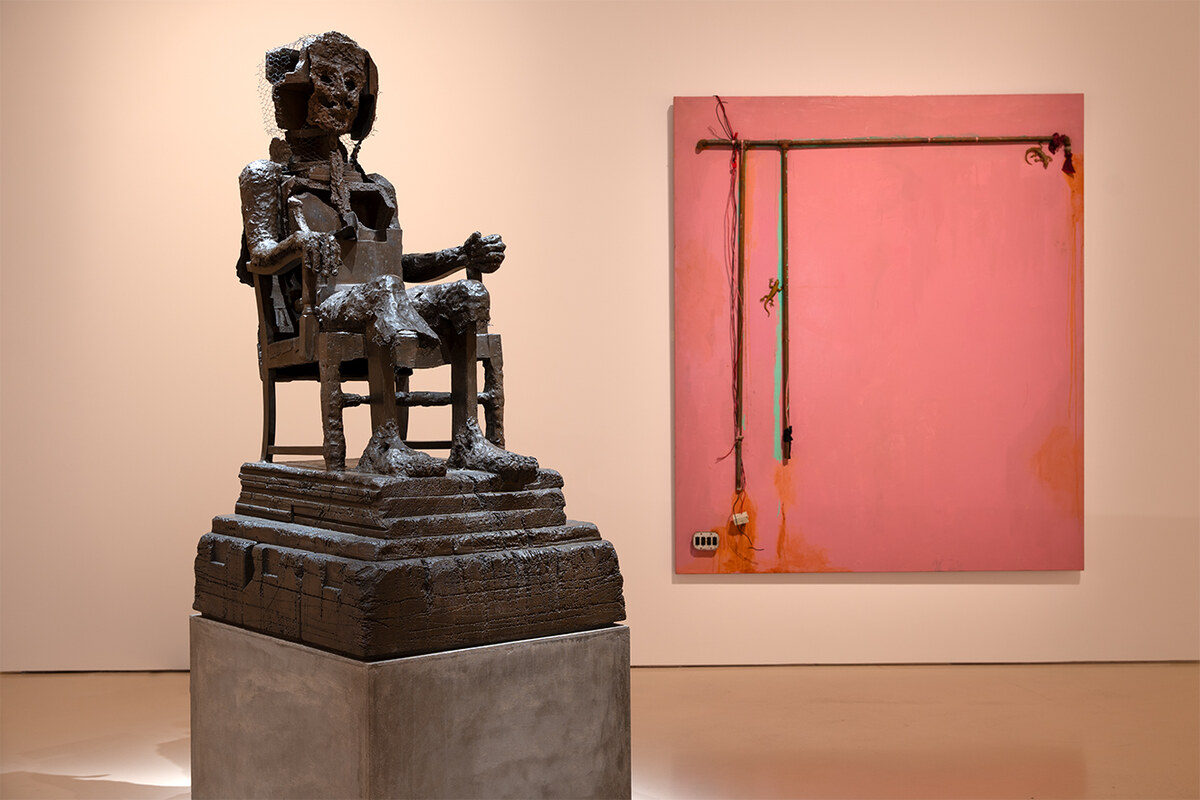
The image shows "The Orientalist" (2007) installation (left) by Huma Bhabha and "Memory of a Pink" (2012) (right) by Huma Mulji displayed at the "Manzar" exhibition at Qatar Museums in Doha, Qatar. (Kuzey Kaya Buzlu)
The exhibition also sheds light on significant contributions by foreign architects who reshaped Pakistan’s landscape and articulated the ambitions of its institutions through landmark projects. These include French artist Michel Ecochard, who designed the first university in the southern city of Karachi, and Greek artist Konstantínos Doxiádis, the lead architect who planned Pakistan’s capital Islamabad.
Manzar also explores Pakistan’s engagement with the debate on regionalism in architecture through the works of influential architects like Nayyar Ali Dada and Kamil Khan Mumtaz from Lahore, alongside Yasmeen Lari, Habib Fida Ali, and Arif Hasan from Karachi.
The exhibition extends to the courtyard of the Palace of Sheikh Abdullah Al Thani with a range of outdoor and indoor installations, along with a film and video program.
Renowned architect Yasmeen Lari, who works in the intersection of architecture and social justice, has exhibited bamboo shelters designed as emergency open-source housing for flood victims, in collaboration with the Heritage Foundation of Pakistan.
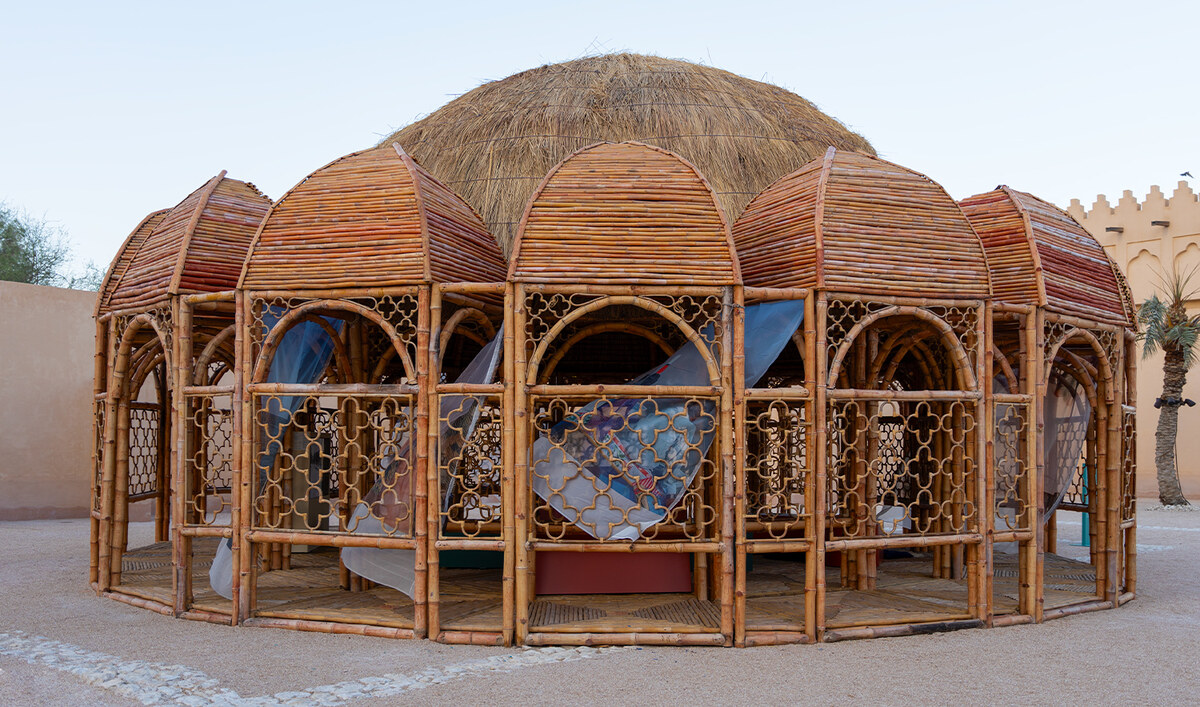
The image shows bamboo prefabricated octa green structure displayed for the "Manzar" exhibition in the courtyard of the Palace of Sheikh Abdullah Al Thani at the National Museum of Qatar in Doha. (Kuzey Kaya Buzlu)
Additionally, the art collective Karachi LaJamia is showcasing a project addressing the environmental crisis in the province of Sindh. Many of these contemporary projects emphasize the themes of sustainability and ecology, reflecting a growing urgency to address environmental issues through art and architecture.

The image shows "Flowers: Gardens of Paradise" (2021) by Hamra Abbas at the "Manzar" exhibition at Qatar Museums in Doha, Qatar. (Kuzey Kaya Buzlu)
“Manzar is an exhibition that truly reflects how everyone from the discourse of art and architecture seem in constant conversation, in dialogue about the environment, either the political environment or the ecological environment,” Karachi-based architect Marvi Mazhar said during a panel discussion, saying Manzar had brought into the spotlight the political and ecological changes the region has undergone through the decades.
“We have always faced heartbreaks, be it the partition, or the formation of East Pakistan [present day Bangladesh] or other movements such as the politics of land and water. Yet historically we collectively ride the tide, through forging diverse practices and sensitivity to their connection to the wider history of modern and contemporary art.”
The exhibit also includes works from the neo-miniature painting movement that emerged at Lahore’s prestigious National College of Arts (NCA) at the start of the 1990s, that revisited traditional techniques and subjects and is showcased through important works by artists like Shahzia Sikander, Imran Qureshi, Hamra Abbas and Rashid Rana.


