ISLAMABAD: Prime Minister Shehbaz Sharif on Sunday praised Pakistani security forces and law enforcement agencies for a successful operation against militants affiliated with the Baloch Liberation Army (BLA) separatist group in the country’s restive Balochistan province.
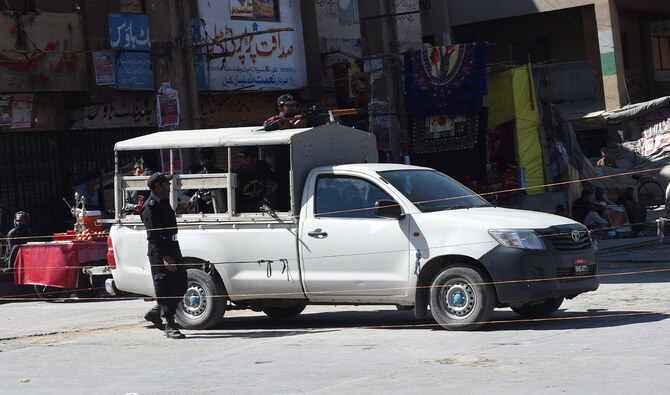
Pakistan’s Frontier Corps (FC) paramilitary force and the Counter-Terrorism Department (CTD) of the police intercepted a group of up to 12 militants in Rarhasham area of Balochistan’s Musa Khel district, according to Balochistan CTD.
An ensuing heavy exchange of fire three militants were killed and two were apprehended, while the rest managed to get away. The arrested suspects were being interrogated to “develop further leads.”
In a statement issued from his office, PM Sharif said timely action by the CTD and security forces foiled a major “sabotage” by the militants.
“Security forces have rendered great sacrifices to eradicate the menace of terrorism from Balochistan,” he said. “The entire nation, including me, pays tribute to the officers of FC, Police and CTD.”
The development came two days after at least seven people, including children and a police constable, were killed and nearly two dozen others injured in a roadside blast in Balochistan province, officials said.
Balochistan, which borders Iran and Afghanistan and is home to major China-led projects such as a strategic port and a gold and copper mine, has been the site of a decades-long separatist insurgency by ethnic Baloch militants. The province has lately seen an increase in attacks by separatist militants.
On Oct. 29, five people were killed in an attack by armed men on the construction site of a small dam in Balochistan’s Panjgur district. The BLA, the most prominent of several separatist groups, claimed responsibility for the attack along with the killing of two other persons in Kech and Quetta districts.
The separatists accuse the central government of exploiting Balochistan’s mineral and gas resources. The Pakistani state denies the allegation and says it is working to uplift the region through development initiatives.


![]()

PM praises security forces for successful operation against militants in Pakistan’s Balochistan
Short Url
https://arab.news/jycep
PM praises security forces for successful operation against militants in Pakistan’s Balochistan
- Pakistani forces killed three separatist militants and arrested two others in Balochistan’s Musa Khel district on Sunday
- Balochistan, home to a long-running separatist insurgency, has witnessed a spike in militant attacks in recent months
Latest updates


Recommended


© 2026 SAUDI RESEARCH & PUBLISHING COMPANY, All Rights Reserved And subject to Terms of Use Agreement.