ISLAMABAD: The government has proposed amendments to Pakistan’s anti-terrorism law to empower military and civilian armed forces by granting them the authority to detain suspects for up to three months, with lawyers and rights activists on Saturday calling the changes a violation of basic constitutional and human rights.
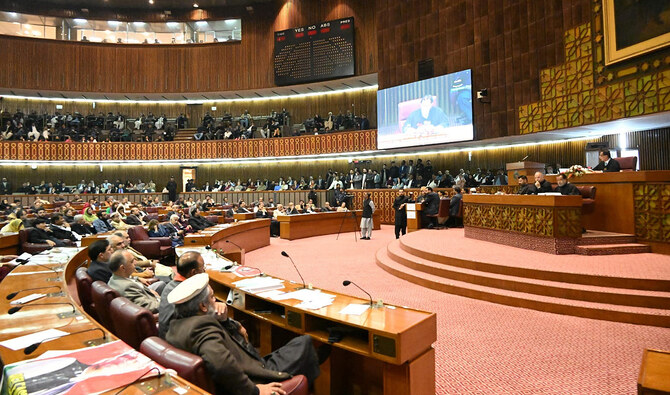
Interior Minister Mohsin Naqvi introduced the bill in the National Assembly a day earlier, saying it would bolster national security and prevent potential militant attacks. The draft law requires separate approval by both houses of parliament with a simple majority to become law.
The Anti-Terrorism Act of 1997 was last amended in 2014, allowing the government and authorized civilian armed forces to conduct preventive detention of individuals suspected of involvement in militant activities.
The provision gave the law enforcement agencies the power to deal with security threats by detaining suspects for up to three months, enabling thorough investigations to prevent potential terrorist acts. However, the amendment included a sunset clause, limiting its validity to two years, which expired in 2016.
“The current security situation requires a robust response that goes beyond the existing legal framework,” the draft law said, adding that erstwhile amendments of the anti-terrorism act were required to be “reinserted to empower the government, armed forces, and civil armed forces with the necessary authority to detain individuals who pose a significant threat to national security.”
“This provision would allow for the preventive detention of suspects based on credible information or reasonable suspicion, thereby disrupting terrorist plots before they can be executed,” the bill added.
The draft law said it would provide law enforcement agencies with the legal backing to conduct “more effective operations against terrorism.”
“It would facilitate the use of Joint Interrogation Teams (JITS), composed of members from various law enforcement and intelligence agencies to conduct comprehensive inquiries and gather actionable intelligence,” the draft law said.
Legal experts and human rights activists said the proposed law would likely be used against human rights activists and dissidents, as it grants blanket powers to the armed forces and intelligence agencies.
“If this bill is passed, then it will be obviously in clear violation of the basic human rights provided in the constitution,” Barrister Ahmad Pansota told Arab News. “The security forces cannot keep any suspect in an inordinate detention just on the pretext of the national security.”
Pansota noted that the Pakistani constitution offers protection against prolonged detention by law enforcement agencies.
“This law could be struck down by the courts if challenged,” he said.
Ammar Ali Jan, a human rights activist, agreed with him, saying the draft law was designed to bypass objections raised about enforced disappearances of activists and dissidents.
“This law is aimed to provide legal cover to all illegal activities of the law enforcement agencies,” he said.
However, former attorney-general of Pakistan, Ashtar Ausaf, argued that the country faces a “unique kind of terrorism threat,” with militants targeting civilians, polio workers, and law enforcement agencies, and said the law would help combat militancy.
“It is the right of parliament to legislate on any matter of public importance, including protecting the life and property of citizens,” he told Arab News. “The draft law will be thoroughly debated in parliament before a vote, and parliamentarians will naturally consider all constitutional rights of citizens.”


![]()

Pakistan proposes anti-terror law changes, drawing criticism from lawyers, rights activists
Short Url
https://arab.news/madyf
Pakistan proposes anti-terror law changes, drawing criticism from lawyers, rights activists
- Draft law seeks to empower state agencies to detain suspects for three months for involvement in militancy
- Experts say the law can be used against dissidents and activists as it provides blanket detention powers
Latest updates


Recommended


© 2026 SAUDI RESEARCH & PUBLISHING COMPANY, All Rights Reserved And subject to Terms of Use Agreement.