

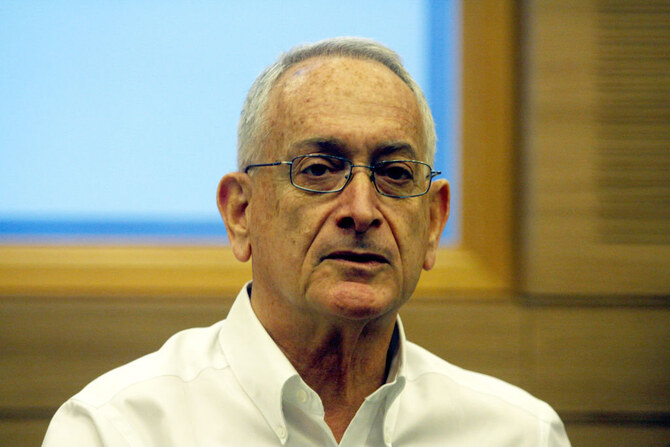

LONDON: Israel is moving to sever ties and impose restrictions on the newspaper Haaretz after its publisher Amos Schocken referred to Palestinians as “freedom fighters” in a speech in London on Sunday.
Israel’s Communications Minister Shlomo Karhi on Thursday submitted a proposal calling for a range of restrictions on Haaretz following Schocken’s comments.
Moves include halting any new government contracts with the newspaper, including individual subscriptions for state employees, and canceling current agreements wherever legally feasible.
“All current agreements with Haaretz, including personal subscriptions, will be canceled as legally feasible,” Karhi’s proposal said, adding that the Government Advertising Bureau will be directed to withdraw all advertisements from the publication and seek refunds for any outstanding payments.
The proposal follows a similar measure put forward by Karhi in November 2023 when he accused Haaretz of undermining Israel’s war effort in Gaza.
Interior Minister Moshe Arbel also ordered an immediate halt to cooperation with Haaretz on Wednesday, saying in a letter that the government “cannot and will not remain silent in the face of harm to IDF soldiers and the state’s efforts to protect its citizens.”

Logo of Haaretz, English edition. (Wikimedia Commons)
The Interior Ministry’s official statement described Schocken’s comments as “deeply offensive and revealing a fundamental departure from core values.”
Speaking at a Haaretz conference in London — titled “Israel After Oct. 7: Ally or Alone?” — Schocken criticized Israeli policies and the current government, accusing Prime Minister Benjamin Netanyahu’s administration of “imposing a cruel apartheid regime on the Palestinian population.”
He told attendees: “It dismisses the costs of both sides for defending the settlements while fighting the Palestinian freedom fighters, that Israel calls terrorists.”
Schocken, who has led the left-leaning publication since 1990, condemned Israel’s settlement policies, asserting that the only viable solution was the establishment of a Palestinian state.
He said: “A Palestinian state must be established. And the only way to achieve this, I think, is to apply sanctions against Israel, against the leaders who oppose it, and against the settlers.”
Following a strong backlash, Schocken clarified his remarks to indicate that he did not consider groups like Hamas to be “freedom fighters,” and emphasized his support for those who resisted occupation without resorting to terrorism.
He said: “Given the reactions to my labeling Palestinians who commit acts of terror as freedom fighters, I have reconsidered my words.
“Many freedom fighters around the world and throughout history, possibly even those who fought for Israel’s establishment, committed terrible acts of terrorism, harming innocent people to achieve their goals.
“I should have said freedom fighters who also resort to terror tactics — which must be combated. The use of terror is not legitimate.”
Schocken, the son of Gershom Schocken who was the editor and publisher of Haaretz for over 50 years, faced similar criticism in September for advocating international intervention against the Netanyahu administration, comparing the situation in Israel to apartheid-era South Africa.


