

Sindh CM expresses concern over high rate of polio vaccine refusals in Karachi, Hyderabad

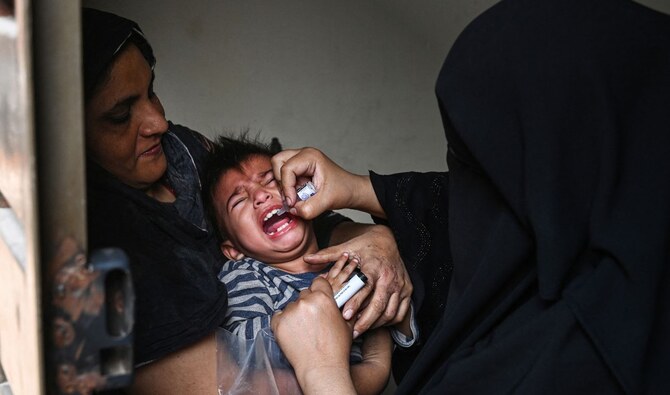
A health worker administers polio drops to a child during a door-to-door vaccination campaign in Lahore on October 28, 2024. (AFP)
Short Url
Updated 29 October 2024
Follow

Sindh CM expresses concern over high rate of polio vaccine refusals in Karachi, Hyderabad

  • Pakistan on Monday launched a week-long, nationwide anti-polio vaccination campaign amid a deepening crisis
  • CM Murad Ali Shah says 81,000 workers will go door-to-door in Sindh to ensure every child receives vaccine

KARACHI: Murad Ali Shah, chief minister of Pakistan’s southern Sindh province, on Monday said that polio vaccine hesitancy and refusals were major challenges in Pakistan’s efforts to eradicate polio, amid a deepening polio crisis in the South Asian country.
The Sindh chief minister said this while launching an anti-polio eradication campaign at SMB Fatima Jinnah School in Karachi’s Garden West area as part of a nationwide drive to vaccinate more than 45 million children.
In the week-long campaign from October 28 till November 3, 10.6 million children under the age of five years will be inoculated across 30 districts of Sindh to protect them against the debilitating disease, according to Shah.
“Vaccine hesitancy and refusals present significant obstacles to polio eradication initiatives in Pakistan,” the Sindh CM was quoted as saying by his office.
“In Sindh, particularly in the cities of Karachi and Hyderabad, a considerable number of parents are reluctant to permit their children to receive the oral polio vaccine (OPV).”
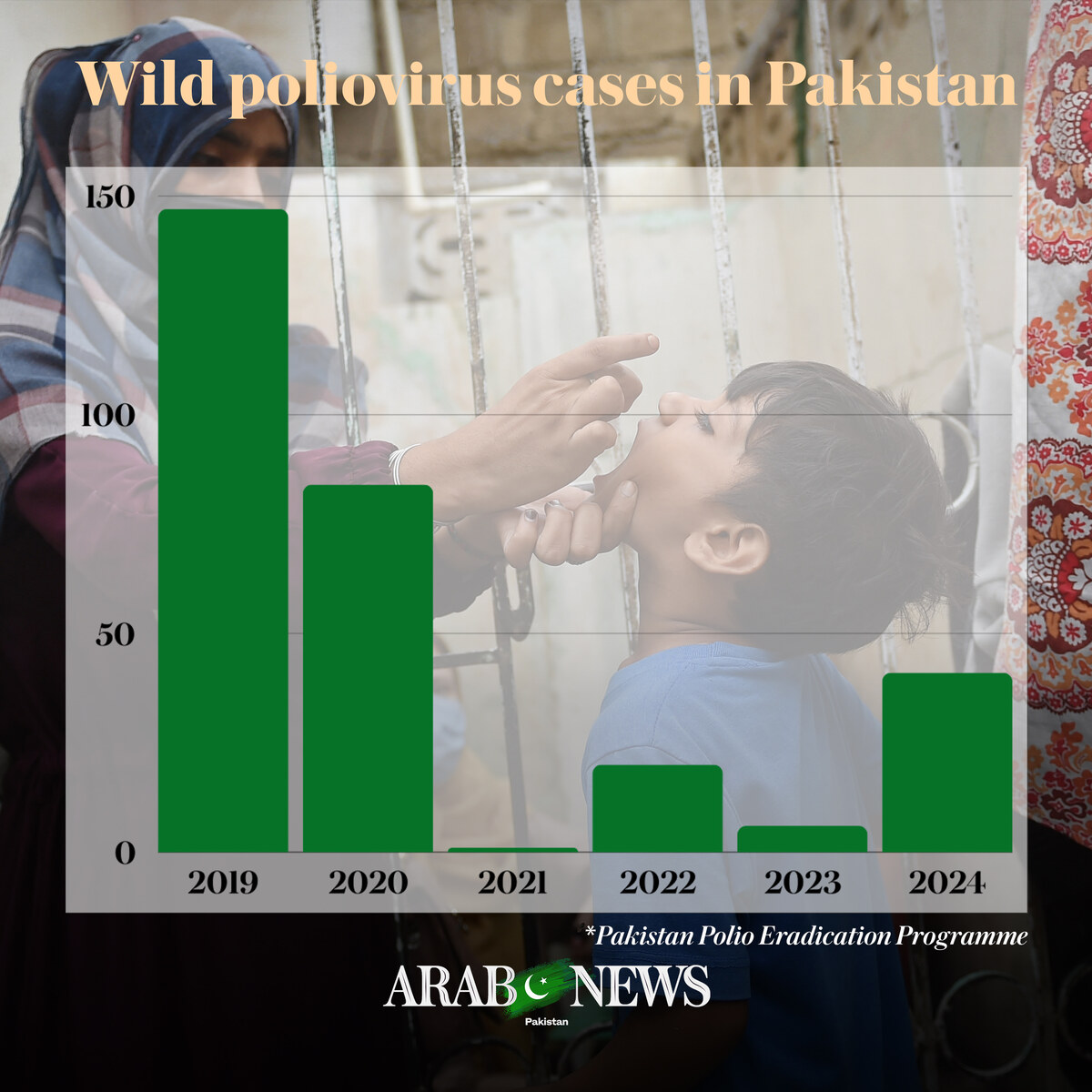

Pakistan has reported a total of 41 polio cases so far this year, of which 12 have been reported in Sindh, according to authorities.
Shah said the challenge was particularly severe in Karachi, which accounted for 85 percent of all refusals documented in Sindh. He said his government had begun the deployment of support teams, and engagement of parliamentarians and local committees to support the polio eradication efforts.
Pakistan and Afghanistan are the only two countries where polio remains an endemic. Since late 2018, Pakistan has seen a resurgence of cases and increased spread of poliovirus, highlighting the fragility of gains achieved in the preceding three years.
The presence of polio-positive environmental samples in various parts of Sindh indicates active virus circulation, according to the chief minister.
“To meet this challenge, 81,000 frontline workers will be mobilized to go door-to-door, ensuring that every eligible child receives the life-saving vaccine,” Shah said.

Islamabad rebuts claims of Pakistan being used as base for possible US strike on Iran

Updated 6 sec ago
Follow

Islamabad rebuts claims of Pakistan being used as base for possible US strike on Iran

  • Pakistan information ministry attributes the ‘reckless’ claims to ‘Afghanistan and Indian X accounts’
  • ’Blame-pushing narrative tries to drag Pakistan into a US-Iran conflict without any evidence,’ it adds

ISLAMABAD: Pakistan on Monday refuted reports claiming that its territory could be used as a base for a possible US military strike on Iran, calling the claims a “reckless” attempt to drag Pakistani into a US-Iran conflict.

The Pakistan information ministry’s fact check account on X attributed the claims to “propaganda machineries Afghanistan and Indian X accounts,” identifying handles that claimed the US has moved aerial refueling (KC-135R) and surveillance aircraft to Pakistan.

The ministry said X accounts, @KHoorasanM_U1, @RealBababanaras and @AFGDefense, claimed these US aircraft are conducting unusual flights toward or into Iranian airspace and that Pakistan is being used as a base to support US stealth fighters (F-35/F-22) in a possible military strike on Iran.

Citing Reuters and Washington Post, the information ministry noted that while US refueling aircraft movements have been reported, but they were mostly linked to Europe, and there is no credible proof of any US aircraft based in Pakistan or any operational flights to Iran for a possible strike.

“This is a reckless, blame-pushing narrative that tries to drag Pakistan into a US-Iran conflict without any verifiable evidence,” the information ministry said on its fact check account on X, urging people not to share sensational military stories from “propaganda pages.”

“For national security and defense matters, rely only on ISPR (Inter-Services Public Relations), MoIB (Ministry of Information and Broadcasting), MoFA (Ministry of Foreign Affairs), and reputable defense outlets.”

The development comes amid weeks of public unrest in Iran over worsening economic conditions and a government crackdown on protesters.

The US-based Human Rights Activists News Agency said at least 572 people have been killed, including 503 protesters and 69 members of security forces. It said more than 10,600 people have been detained over the two weeks of protests.

The group relies on supporters in Iran cross-checking information, AP reported.

With the Internet down in Iran and phone lines cut off, gauging the demonstrations from abroad has grown more difficult. Iran’s government has not offered overall casualty figures.

US President Donald Trump last week threatened to intervene militarily if Tehran continued to kill protesters. He said late Sunday his administration was in talks to set up a meeting with Tehran but cautioned that he may have to act before then as reports of deaths mount and the government continues to arrest protesters.

“Iran called, they want to negotiate,” Trump told reporters on Air Force One.

Iran did not acknowledge Trump’s comments immediately. It has previously warned the US military and Israel would be “legitimate targets” if America uses force to protect demonstrators.

Separately, China said it opposes foreign “interference” in other countries.

“We always oppose interference in other countries’ internal affairs,” foreign ministry spokeswoman Mao Ning told a regular news conference on Monday, when asked about Trump’s comments. “We call on all parties to do more things conducive to peace and stability in the Middle East.”