JOHANNESBURG: Six children who died in a South African township earlier this month had ingested a chemical compound used in pesticides, the country’s health minister said on Monday, in a case that has prompted calls for tighter food safety controls.
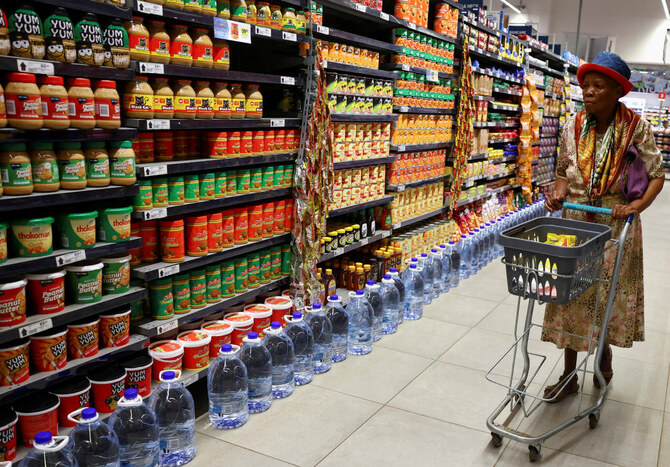
Local media have reported that the children died after eating snacks bought from an informal cornershop in the Soweto township near Johannesburg.
“The cause of death is unequivocally organophosphate ... a group of substances, which are usually used in agriculture or as pesticides,” Health Minister Aaron Motsoaledi told reporters as he announced the findings of a toxicology analysis.
Health officials are still waiting for the results of tests on swabs from informal township cornershops — known as spaza shops in South Africa — in Soweto as they try to establish where the organophosphate came from.
“Our theory, until we are proven otherwise, is that they (the shops) are using it as pesticides to kill rats ... It is also being sold to communities for killing rats,” Motsoaledi said, adding that pesticide products containing organophosphate were not routinely meant to be used in people’s homes.
“Any poison you use to kill pests or whatever domestically is not supposed to kill human beings,” he said.

Six children died from pesticide poisoning in South Africa, lab analysis finds
https://arab.news/v6ry9
Six children died from pesticide poisoning in South Africa, lab analysis finds
US envoy urges nations to commit ‘time and treasure’ to Gaza recovery ahead of first Board of Peace meeting
- America’s ambassador to the UN, Mike Waltz, describes new body as a ‘board of action’ that will usher in ‘era of security, prosperity and opportunity for the Middle East’
- Inaugural meeting of US-led board in Washington on Thursday will bring together 27 nations, including Saudi Arabia and several other Arab and Muslim countries
NEW YORK CITY: The US ambassador to the UN, Mike Waltz, on Wednesday called on member states to commit “time and treasure” to Gaza’s recovery, as he urged countries to back the newly created “Board of Peace” which he said would soon announce more than $5 billion in reconstruction pledges.
The US-led board, established in November under UN Security Council Resolution 2803, is due to hold its inaugural meeting in Washington on Thursday, which will bring together 27 nations, including Saudi Arabia and several other Gulf Arab and Muslim-majority countries.
“The Board of Peace is a board of action,” Waltz said, arguing it marked a break from what he described as the failed approaches of the past.
The board will oversee the implementation of US President Donald Trump’s 20-point peace plan, which includes the deployment of an international stabilization force and the introduction of a technocratic National Committee for the Administration of Gaza.
Waltz said thousands of troops have been pledged to the stabilization force, which would ensure security and help establish a “durable, terror-free environment.”
The National Committee will operate under the board’s oversight, he added, to restore basic services and help build a productive economy.
The ceasefire has reduced hostilities and secured the return of all hostages held by Hamas, both living and deceased, Waltz said. Just months ago, he added, Gaza was controlled by Hamas, who were holding 48 hostages in tunnels it had built “instead of rebuilding Gaza.” However, he stressed that reconstruction cannot proceed without security guarantees.
“Before reconstruction can move forward, Hamas must, and will, disarm,” he said. He also called for the destruction of the group’s tunnels, its weapons-production facilities and other militant infrastructure.
“Reconstruction cannot and will not take place in areas where Hamas has not demilitarized,” Waltz said.
He dismissed criticism of the unconventional structure of the Board of Peace, saying that “the old ways were not working” and the alternative was either continuing Hamas control of Gaza or occupation.
“As chair of the Board of Peace, we are confident that we will see an era of security, prosperity and opportunity for the Middle East emerge,” he added.


