Middle Eastern coastal towns transition to permanent communities

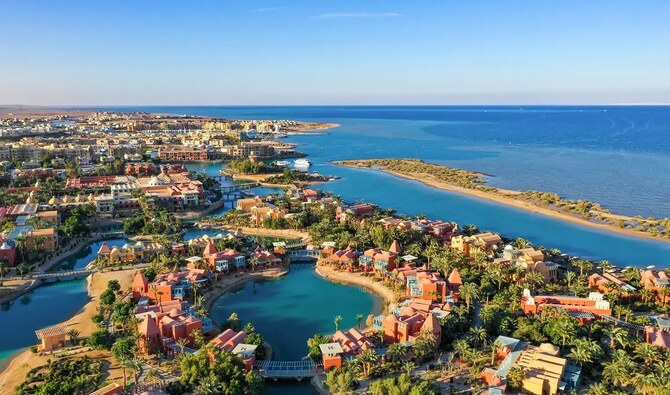
Spanning 36.9 million sq. meters, Orascom’s El Gouna is home to over 25,000 full-time residents. Photo/Supplied
Short Url
Updated 05 November 2024
Follow

Middle Eastern coastal towns transition to permanent communities

RIYADH: Coastal towns across the Middle East are undergoing a significant transformation, evolving from seasonal vacation spots into vibrant, year-round communities.

The rise of remote employment has prompted many workers to relocate to these coastal areas, leading to an increased demand for diverse amenities and housing options. As a result, these towns are adapting to accommodate a varied population.

Omar El-Hamamsy, group CEO of Orascom Development Holding, has observed this shift firsthand. He noted that towns that were once seasonal are now welcoming year-round residents with a range of lifestyles. “People discovered that basically this whole differentiation between a primary home and a secondary home doesn’t exist anymore,” he stated in an interview with Arab News.

“Today, all of our towns are actually populated almost year-round with people who choose to actually come live here and work from here because now it’s become acceptable for people to do remote work,” El-Hamamsy added.


Omar El-Hamamsy, group CEO of Orascom Development Holding. Supplied

Orascom Development Holding is transforming its coastal properties to create communities where residents can live and work. The company’s investments in infrastructure will support business, education, and wellness initiatives across seven countries, including 11 destinations like Egypt’s fully integrated town, El Gouna.

Spanning 36.9 million sq. meters, Orascom’s El Gouna is home to over 25,000 full-time residents. Located along the Red Sea coastline, it has evolved from a luxury resort into a fully integrated town featuring 40 neighborhoods, schools, hospitals, marinas, and restaurants.

El-Hamamsy further emphasized El Gouna’s transformation into a diverse international community: “Almost half of our buyers here are people who don’t live in Egypt in the first place, lots of Europeans, we start increasingly having people from the GCC.”

According to him, El Gouna’s appeal is tied to its robust facilities, which include high-speed internet, reliable infrastructure, and access to educational and medical services.

El Gouna now features luxury residences, commercial zones, and co-working spaces, creating an integrated community rather than a traditional single-purpose resort.

Multifunctional development

Tuban is a newly launched multipurpose district within El Gouna. Spanning nearly a million square meters, Tuban features residential areas, commercial zones, marinas, and the region’s first upscale senior living community.

Mohamed Amer, CEO of El Gouna, explained that Tuban “is going to be 1 million (sq. meters) right in the heart of El Gouna, and what’s new about Tuban is that it’s very much multi-discipline.”

He added: “So there is residential, there is commercial, there is marina, and there is hospitality.”


Mohamed Amer, CEO of El Gouna. Supplied

Amer shared: “Every neighborhood is going to be designed by a different designer. We already launched the first neighborhood that was designed by Hector Barroso, who is a Mexican designer. And the second neighborhood is going to be launched in probably six weeks. And it’s a different designer from Spain.”

Future residents of El Gouna’s Tuban district can anticipate short wait times, as Amer emphasized: “We are the fastest developer in Egypt for delivery for handover. So we deliver in two to two and a half years.” He reiterated, “That still, we are the fastest developer to deliver in Egypt.”

Community-centered destination

El Gouna continues to expand its community-focused amenities, including the G-Space co-working hub and the newly launched G-Valley business incubator. These spaces provide local entrepreneurs and remote workers with professional environments and resources.

In addition, El Gouna hosts cultural and sports events, such as the El Gouna Film Festival and the International Squash Open, further enriching the community experience.

Regional growth

Amer also discussed the impact of the Kingdom’s Red Sea investments, stating: “I really like what’s happening on the Saudi side, and I think that it’s going to positively impact the entire region.” He added, “They say ‘a high tide lifts all the boats,’ you know, once Saudi comes in the game, big time, the pie is getting bigger, and we’re not competing together.” Amer concluded, “So the pie will get bigger, and I think that’s going to positively impact all the parties.”


Middle East AI adoption reaches 75%, beating global average: PwC survey 

Updated 19 December 2025
Follow

Middle East AI adoption reaches 75%, beating global average: PwC survey 

RIYADH: Artificial intelligence is becoming embedded across Middle East workplaces, with 75 percent of employees using AI tools at work over the past year, a higher rate than the 69 percent global average, a new survey showed.

According to PwC’s Middle East Workforce Hopes and Fears Survey 2025, the region is outpacing global peers in adopting AI for everyday work, driven by government and corporate digital transformation efforts.

Based on responses from 1,286 employees, the survey indicates AI use has moved beyond pilot stages, with 32 percent of workers using generative AI tools daily — above the global average of 28 percent and reflecting growing familiarity with AI-driven workflows.

The survey findings align with trends observed in Saudi Arabia, where advanced technologies such as AI are being widely embraced across workplaces.

In November, a report released by KPMG highlighted the Kingdom’s progress in the technology sector, noting that 84 percent of CEOs in Saudi Arabia are ready to deploy AI responsibly — well above the 76 percent global benchmark — supported by the Kingdom’s data governance ecosystem, including national initiatives led by the Saudi Data and Artificial Intelligence Authority. 

Earlier this month, data from the Global AI Index revealed that Saudi Arabia ranked fifth globally and first in the Arab region for growth in the AI sector. 

Commenting on the findings, Randa Bahsoun, partner at PwC Middle East, said: “As employees confidently embrace change, build new capabilities and show remarkable adaptability with AI, they also want to feel secure and supported.” 

She added: “Organizations that provide clarity on how roles will evolve, expand access to learning and protect wellbeing will be the ones that retain talent and get ahead in a fast-changing labor market.” 

Adapting to the tech-driven future 

The latest PwC survey found that the Middle East workforce is confidently leading the integration of AI into daily work, while prioritizing job security and skills development at higher rates than their global counterparts.

According to the report, 49 percent of employees in the region expect technological change — including AI, robotics and automation — to impact their jobs to a large or very large extent over the next three years, compared with 45 percent globally.

PwC said this trend reflects not only higher adoption, but also greater readiness and comfort with next-generation technologies across the region. 

Employees in the Middle East increasingly view emerging technologies as tools that enhance productivity and creativity rather than threats to job security. 

Around eight out of 10 employees said AI has improved their productivity, with 87 percent reporting higher-quality work and 84 percent citing increased creativity. 

Higher confidence among younger employees 

The survey found that younger employees in the region demonstrate significantly higher confidence in AI’s potential, with millennials and Gen Z being the most hands-on users of AI tools. These groups are adopting new technologies quickly and often outpacing older cohorts in both usage and creative application. 

“This puts early career employees in a strong position to adapt to the evolving technological demands of entry-level roles,” said PwC. 

It added: “For employers, this is an opportunity to leverage younger talent to drive digital adoption and performance, while providing guidance, clarity and support as AI continues to reshape the future of work.” 

Acquiring the tools

Skills development remains a defining priority for the Middle East workforce, according to the survey. 

The report found that 69 percent of employees in the region gained new skills over the past 12 months, compared with 56 percent globally. 

Some 81 percent of respondents said they would prefer a job that offers opportunities to build transferable skills — higher than the 69 percent global average. 

Job security has also emerged as the top priority, with 85 percent of employees saying it is very important. 

“As employees in the Middle East seek balance and flexibility, their expectations of career progression and reward are also evolving. Fewer employees are asking for a pay rise than last year, signalling a more cautious labor market,” said PwC. 

The report found that engagement levels among the Middle East workforce remain among the highest globally, with 78 percent of regional employees saying they look forward to going to work, compared with 64 percent globally. 

Despite this high level of engagement, 45 percent of employees said they feel fatigued at least once a week, and nearly half reported feeling overwhelmed, indicating that workload intensity is becoming a significant pressure point. 

Converting momentum to benefits 

PwC highlighted several actions organizations should prioritize to convert the current AI momentum into a lasting advantage. 

The firm said companies should communicate clearly and consistently about where AI technologies are being deployed, what will change across processes, how job roles will be affected and where new value will be created. 

The report also emphasized the importance of building a continuously evolving, future-ready, skills-first workforce that can fully harness AI’s potential. 

“Leaders need to ensure upskilling, reskilling and capability building move 22 beyond periodic initiatives and become a key element of their organizations’ forward-looking business strategy,” said PwC. 

It added: “This means identifying future skill needs early, assessing current capabilities to understand gaps and using those insights to create development pathways tailored to roles, seniority and diverse career trajectories.” 

Companies should also foster a culture of agility and innovation and equip managers to effectively support AI-enabled teams. 

PwC said managers must have the clarity, tools and protected time needed to coach teams, support skill development and manage workloads in ways that sustain employee engagement and wellbeing. 

“This can be achieved by setting clear performance expectations for managers around employee development and wellbeing and supporting them with the knowledge and guidance needed to fulfil these responsibilities,” added PwC. 

Organizations should also prioritize flexibility, autonomy and balanced workloads to sustain high performance, giving employees the freedom and clarity to manage their work effectively. 

The report suggested that expanding flexible work arrangements, strengthening autonomy in day-to-day decision-making and giving teams a greater voice in how work gets done could help employees perform at their best. 

“The Middle East’s workforce continues to demonstrate a powerful blend of optimism, ambition and adaptability. The challenge now is for leaders to amplify these strengths through vision, transparency and care – ensuring that technology, trust and talent progress together,” concluded the report. 

Earlier this month, a KPMG report echoed similar views, saying UAE CEOs are accelerating investment in artificial intelligence while prioritizing people, skills and responsible innovation as core drivers of future growth. 

The report said 84 percent of CEOs in the UAE expect to expand headcount over the next three years, while 80 percent are already redesigning roles to integrate AI collaboration across their businesses.