ISLAMABAD: Prime Minister Shehbaz Sharif on Sunday accused India of taking aggressive measures in recent years to erode the disputed status of Kashmir, saying that peace in South Asia was contingent upon the resolution of the longstanding dispute, as Pakistan observes Black Day today to mark the 1947 arrival of Indian troops in the region.
Pakistan commemorates October 27 annually as Kashmir Black Day, a moment that it views as the beginning of India’s occupation of the princely state of Jammu and Kashmir following the controversial decision of its ruler to accede to India.
The historic event has remained a source of longstanding conflict between the two nuclear-armed neighbors, with both countries controlling parts of Kashmir while claiming it in full.
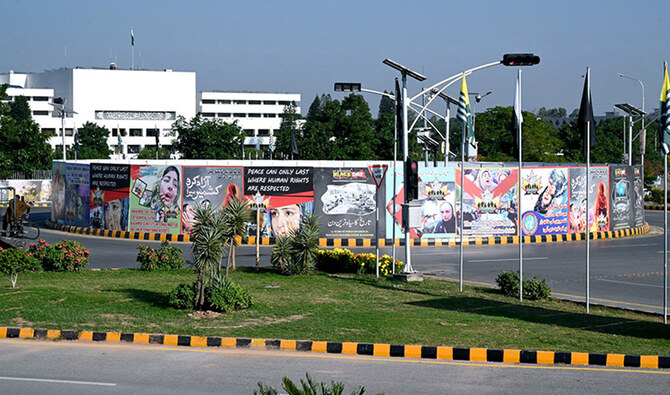
Pakistan uses the day to express solidarity with the Kashmiri people and underscore their struggle for self-determination. Events, including protests, rallies and seminars, were organized in Pakistan and also in Azad Kashmir, the territory of the disputed region under its administration.
“As I recently reaffirmed in my address to the United Nations General Assembly, Pakistan has consistently maintained that peace and stability in South Asia remain contingent upon peaceful resolution of the Jammu and Kashmir dispute in accordance with the relevant UNSC resolutions and aspirations of the Kashmiris,” Sharif wrote in a message.
“India must realize that it cannot suppress the genuine aspirations of the Kashmiri people by its coercive tactics.”
Sharif accused India of using steps to “tighten its grip” on Jammu and Kashmir since Aug. 5, 2019, mentioning the day New Delhi revoked the region’s special constitutional status offering it limited autonomy.
“Today, the Kashmiri people are enduring the most egregious and painful curbs on their daily lives and livelihoods,” he said. “The number of political prisoners remains in the thousands.”
The Indian decision to change the region’s constitutional status followed Pakistan’s move to downgrade its diplomatic relations with its arch-rival.
Officials in Islamabad also expressed concern that New Delhi was trying to alter the demographics of the only Muslim-majority region under its control by allowing Hindus from other cities to purchase land in Kashmir.
More recently, India has held elections in the region to demonstrate that the situation is gradually normalizing after the uproar following its August 2019 decision, which led to a communication blackout in Indian-administered Kashmir and the arrests of hundreds of political leaders and workers who opposed the move.
The Pakistani prime minister said the people of Kashmir under Indian rule had “suffered countless hardships during the last 75 years,” though their resolve to exercise their right to self-determination was as firm as it was in 1947.
“The Indian occupation forces act with impunity under draconian counterterrorism laws. However, these oppressive measures cannot dampen the Kashmiri people’s yearning for self-determination,” Sharif added.


![]()

South Asia’s peace contingent on Kashmir dispute resolution, says Pakistan PM on ‘Black Day’
Short Url
https://arab.news/8h6sy
South Asia’s peace contingent on Kashmir dispute resolution, says Pakistan PM on ‘Black Day’
- Indian troops first arrived in Kashmir on October 27, making Pakistan observe it as Black Day
- Sharif says people of Kashmir want the right to self-determination despite years of hardship
Latest updates


Recommended


© 2026 SAUDI RESEARCH & PUBLISHING COMPANY, All Rights Reserved And subject to Terms of Use Agreement.