

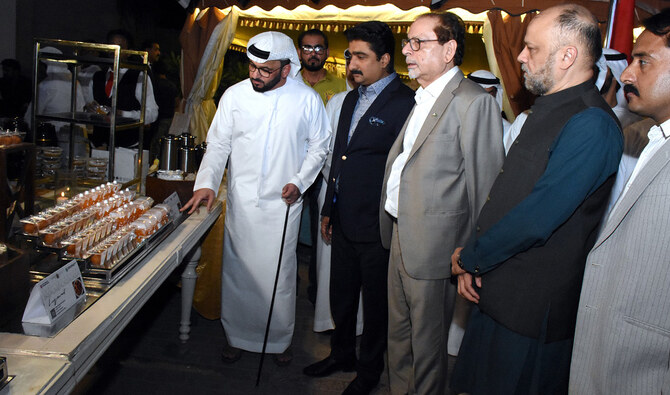

KARACHI: The United Arab Emirates (UAE) consulate in Karachi on Thursday treated residents of Pakistan’s culinary hub to Emirati cuisine as it hosted an event at the Arts Council of Pakistan (ACP) to showcase the culture and cuisine of the Gulf country.
The event, titled ‘Flavours of the UAE: A Culinary and Cultural Journey,’ came as part of over-a-month-long World Culture Festival currently being held at the ACP in the southern Pakistani city. The festival featuring music, theater, dance and fine arts from various countries of the world is running from Sept. 26 till Oct. 30.
To introduce the people of Karachi to the delectable Emirati cuisine, UAE Consul-General Dr. Bakheet Ateeq Al-Remeithi invited a master chef from the UAE who prepared a dozen of mouth-watering dishes at the event.
“I made machboos [rice and chicken cooked in warm whole spices], harees [coarsely-ground cracked wheat, mixed with seasoned meat], balaleet [a sweet and savoury dish popular for breakfast], asida [a dough lump often with added butter or honey], gemat [sweetmeat balls], chebab [pancake], mahalla [a sweetened bread made from flour, water, eggs and seasoning] and a total of 12 such items,” said Mainuddin, the chef who had three assistants, told Arab News.
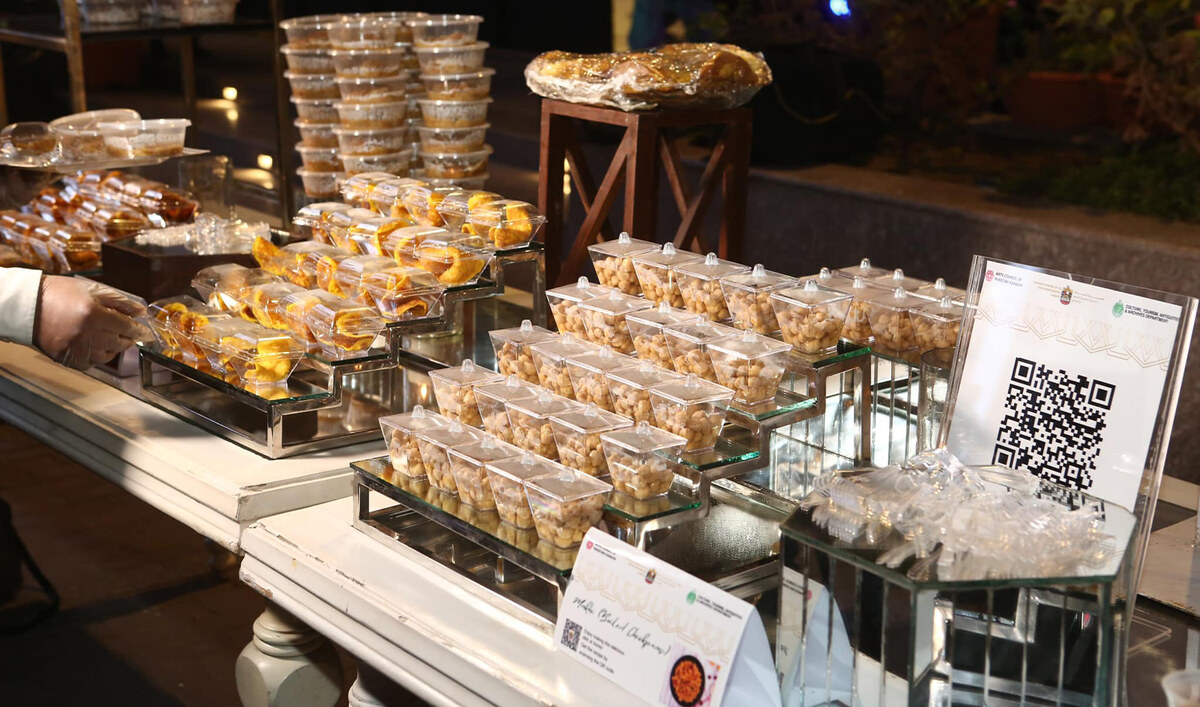
Emirati cuisine is showcased at the "Flavours of the UAE: A Culinary and Cultural Journey" in Karachi, Pakistan, on October 24, 2024. (Arts Council of Pakistan Karachi/Facebook)
The venue featured an Arabic cultural tent for attendees to relish the delicious Emirati cuisine along with Arabic qahwa and dates.
The UAE consul-general said they especially flew Mainuddin from the UAE for the event.
“He came and made us all the dishes from yesterday till today to provide special UAE cuisine and Emirati food for our brothers and sisters in Pakistan, with the taste of UAE,” Dr. Bakheet said.
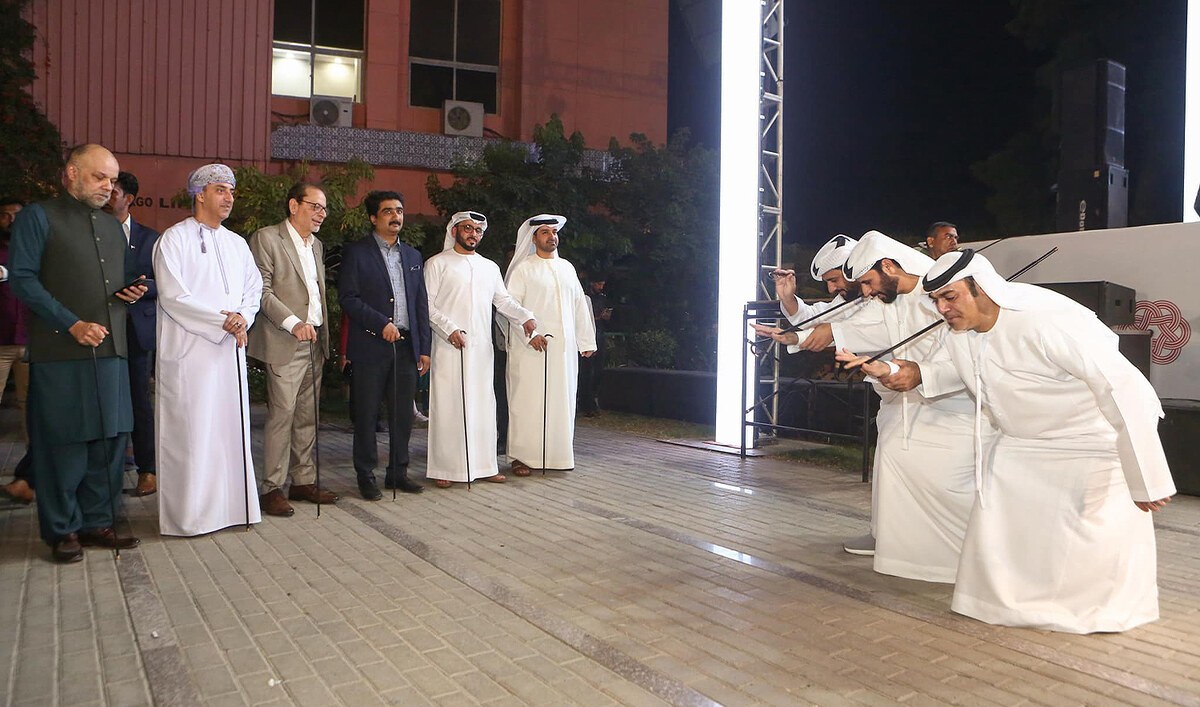
The UAE Consul-General, Dr. Bakheet Ateeq Al-Remeithi (fifth from left), observes a cultural dance at the "Flavours of the UAE: A Culinary and Cultural Journey" event in Karachi, Pakistan, on October 24, 2024. (Arts Council of Pakistan Karachi/Facebook)
The event, which had attendees from the consulates of Oman, Qatar, Bahrain and Indonesia as well, opened with traditional Arabic dance performance. The UAE consul general, Sindh Culture Minister Zulfiqar Ali Shah and ACP Karachi President Ahmed Shah also joined in to the delight of the attendees.
“This kind of dance [that we performed tonight], we celebrate on Eid. Like, [we do it] at a marriage, first of all, [or] any happiness festival,” the UAE consul-general said.
“When any visitors come to us, such as ministers, we prefer this traditional [dance] to be presented in front of them.”
Shah commended the UAE consulate for hosting such a vibrant evening.
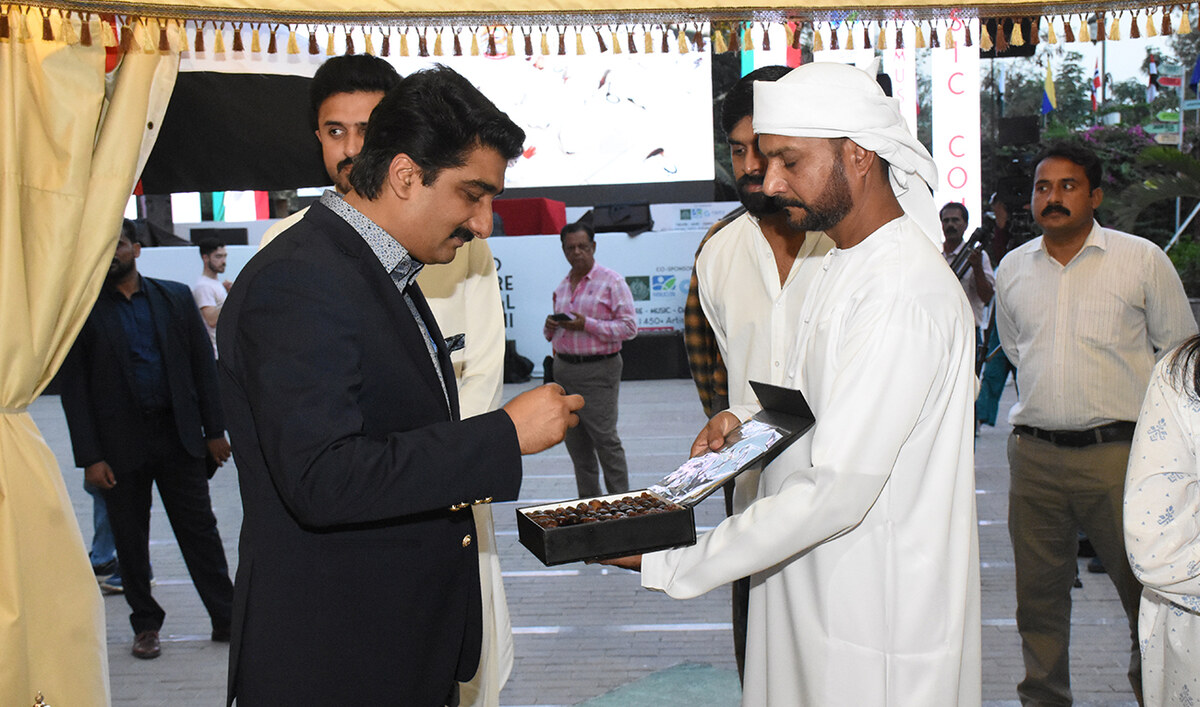
Visitor picks dates during the "Flavors of the UAE: A Culinary and Cultural Journey" in Karachi, Pakistan, on October 24, 2024. (Arts Council of Pakistan)
“Pakistan and the UAE share brotherly relations and today, Mr. Bakheet has presented various Emirati delicacies to the citizens of Karachi,” he said.
“Such programs strengthen cultural ties and our friendship will go a long way [through such events].”
Ramesh Singh Khalsa, patron-in-chief of the Pakistan Sikh Council, expressed his joy to be a part of the evening that fostered “diversity and inclusivity.”
“We saw a cultural presentation from Dubai in the form of an Arabic dance performance which was very good,” he told Arab News. “It was a delight to be here and taste the delicious food.”
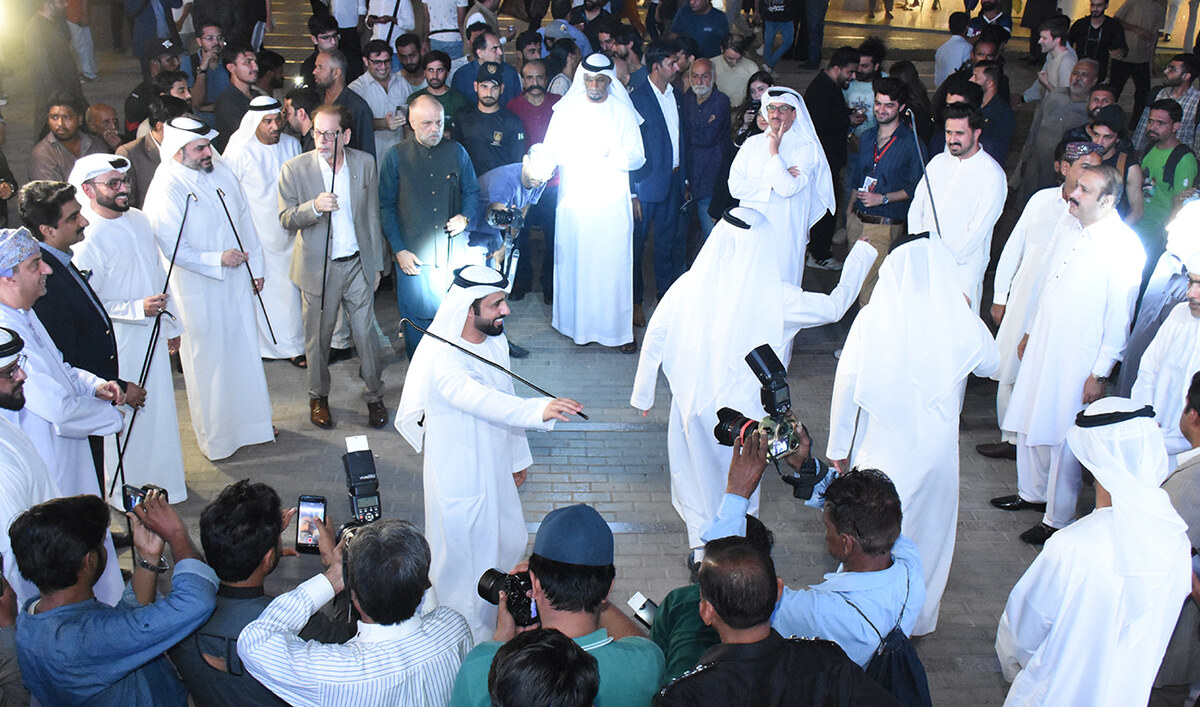
Cultural dance being performed at the UAE: A Culinary and Cultural Journey" in Karachi, Pakistan, on October 24, 2024. (Arts Council of Pakistan)


