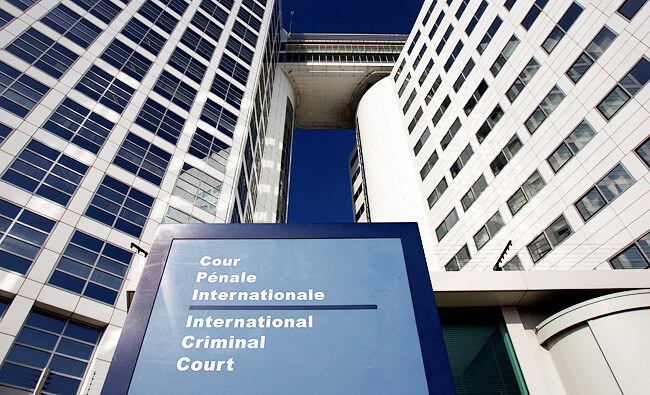
THE HAGUE: The International Criminal Court on Wednesday said it would sentence in November a Malian militant police chief convicted of war crimes and crimes against humanity committed in Timbuktu.
Al Hassan Ag Abdoul Aziz Ag Mohamed Ag Mahmoud, 46, was found guilty in June of crimes including torture and outrages upon personal dignity during a reign of terror in the fabled Malian city.
Al Hassan played a “key role” overseeing amputations and floggings as police chief when militants from the Al-Qaeda in the Islamic Maghreb and Ansar Dine groups seized control of Timbuktu for almost a year from early 2012, a judge previously said.
“The judges may impose a prison sentence of maximum 30 years or, when justified by the extreme gravity of the crime and the individual circumstances of the convicted person, life imprisonment,” the ICC said in a statement.
“They may also add a fine or forfeiture of the proceeds, property and assets derived directly or indirectly from the crime committed.”
The Hague-based court will sentence Al Hassan on November 20 from 2 p.m. local time (1300 GMT), according to the statement.
Notices of appeal against verdict were filed in September by both the defendant’s legal team and the prosecutor.
Al Hassan was also convicted of “contributing to the crimes perpetrated by other members” of the militant groups including mutilation and persecution.
He told investigators that the people of Timbuktu were “scared out of their minds,” according to the prosecutor.
The militant was however acquitted of the war crimes of rape and sexual slavery, as well as the crime against humanity of forced marriage.
Founded between the fifth and 12th centuries by Tuareg tribes, Timbuktu is known as the “Pearl of the Desert” and “The City of 333 Saints” for the number of Muslim sages buried there during a golden age of Islam.
But militants who swept into the city considered the shrines idolatrous and destroyed them with pickaxes and bulldozers.
The militants from Al-Qaeda in the Islamic Maghreb and Ansar Dine exploited an ethnic Tuareg uprising in 2012 to take over cities in Mali’s volatile north.
The ICC in June made public an arrest warrant for one of the Sahel’s top militant leaders over alleged atrocities in Timbuktu from 2012 to 2013.
Iyad Ag Ghaly, is considered to be the leader of the Al-Qaeda-linked Group for the Support of Islam and Muslims (JNIM), which operates in Mali, Burkina Faso and Niger.


![]()

ICC to sentence Mali militant in November over war crimes
Short Url
https://arab.news/bnxw3
ICC to sentence Mali militant in November over war crimes
- “The judges may impose a prison sentence of maximum 30 years or, when justified by the extreme gravity of the crime,” the ICC said
- The Hague-based court will sentence Al Hassan on November 20 from 2 p.m. local time


Latest updates


© 2026 SAUDI RESEARCH & PUBLISHING COMPANY, All Rights Reserved And subject to Terms of Use Agreement.