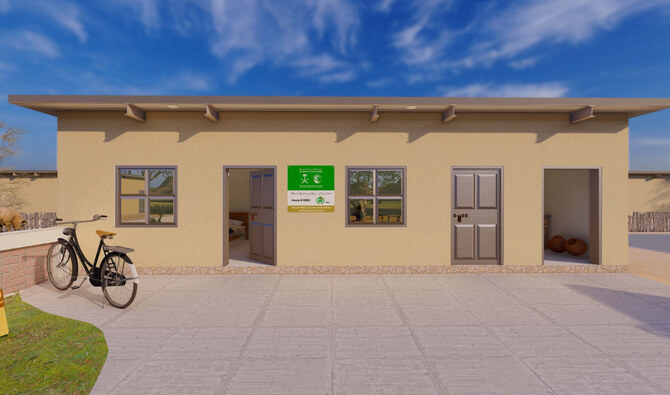
ISLAMABAD: The King Salman Humanitarian Aid and Relief Center (KSrelief) has announced the construction of 1,000 houses for families displaced by the 2022 floods in Pakistan’s northwest Khyber Pakhtunkhwa (KP) and eastern Punjab provinces, aiming to “rebuild communities and foster resilience” across the South Asian nation, a statement said on Wednesday.
The Saudi charity organization, with one of the largest humanitarian budgets available to any aid agency worldwide, has undertaken a wide variety of projects in more than 80 countries.
Pakistan is the fifth largest beneficiary of its aid and humanitarian activities and has received significant assistance, particularly following the 2022 monsoon floods, during which unusually heavy rains triggered flash floods, killing over 1,700 people and causing economic losses of around $30 billion.
The agreement for construction was finalized between Pakistan’s National Disaster Management Authority (NDMA) and KSrelief earlier in October when officials from both sides signed the Cooperation Programs. Of the 1,000 houses, 590 will be built in KP’s Dera Ismail Khan and 410 in Punjab’s Rajanpur and Dera Ghazi Khan.
“KSrelief has announced a major initiative to build 1,000 permanent houses for families in KP and Punjab who were displaced by the devastating 2022 floods,” the charity organization said in a statement. “This project is part of a broader series of public facilitation initiatives announced by KSrelief.”
All the houses will include two rooms, a kitchen and a washroom, with the aim of providing “safe and permanent” housing for around 7,000 people in the flood-hit regions of KP and Punjab.
The statement emphasized that KSrelief’s initiative will support the “recovery process” while enhancing the long-term well-being of affected communities.
Earlier this year in July, heavy monsoon rains triggered floods and landslides in KP and Punjab, resulting in nearly 250 deaths.
Pakistan is recognized as one of the world’s most vulnerable countries to the effects of climate change. This year, the country recorded its “wettest April since 1961,” with 59.3 millimeters of rainfall, while some regions faced a deadly heat wave in May and June.


![]()

KSrelief to construct 1,000 houses for flood-hit families of Pakistan
Short Url
https://arab.news/6wgzm
KSrelief to construct 1,000 houses for flood-hit families of Pakistan
- 590 homes will be built in northwest KP while 410 in eastern Punjab provinces
- 2022 floods killed over 1,700 people and caused a loss of around $30 billion
Latest updates


Recommended


© 2026 SAUDI RESEARCH & PUBLISHING COMPANY, All Rights Reserved And subject to Terms of Use Agreement.