SYDNEY: King Charles III wrapped up a six-day Australia tour Wednesday, jetting off to the Pacific island of Samoa for a summit of the 56-nation Commonwealth, where more questions about Britain’s colonial legacy await.
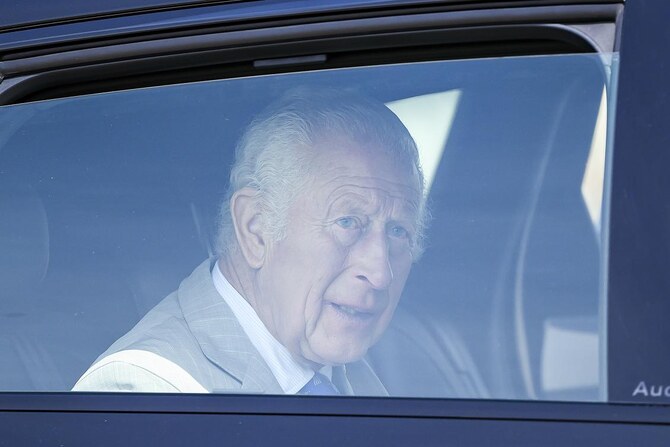
The king took off from Sydney airport after a slimmed-down tour of Australia, capped by a public finale Tuesday under the sails of the harborside Opera House where thousands of fans crowded for a brush with royalty.
On his first major foreign tour since being diagnosed with cancer earlier this year, the 75-year-old monarch held a community barbecue, greeted posy-bearing children, met ministers and dignitaries, and was sneezed on by a bow-tie-wearing alpaca named Hephner.
He was also given a stark reminder of the resentment that remains over Britain’s imperial past.
An Indigenous senator, Lidia Thorpe, heckled him during a stop in the capital Canberra, screaming: “Give us our land back!” and “This is not your land, you are not my king!“
Charles insists that the monarchy still has a place in Australia’s democracy and that the Commonwealth — a bloc of 2.5 billion people — can play a “significant role on the global stage.”
“It has the diversity to understand the world’s problems, and the sheer brain power and resolve to formulate practical solutions,” he said before heading to Apia, the coastal capital of Samoa — halfway between New Zealand and Hawaii.
This year’s Commonwealth summit is the first hosted by a Pacific Island nation and will be an “extraordinary” opportunity to showcase the region, Commonwealth Secretary-General Patricia Scotland told AFP.
She said she hoped the gathering would “cement” the Commonwealth family “as we look to what, for many, is a very troubled and complex future.”
That sentiment is reflected in the theme of this year’s summit: “One Resilient Common Future,” with discussions to focus on the environment, democratic systems, economy, youth, gender, and digital transformation.
Climate change and rising sea levels are expected to feature heavily, with world leaders to deliberate on an Ocean Declaration to safeguard a healthy and resilient ocean.
Pacific island nations — once seen as the embodiment of palm-fringed paradise and now among the most climate-threatened areas of the planet — are well placed to highlight this “existential threat,” Scotland said.
About 70 percent of Samoa’s population of 220,000 lives in low-lying coastal areas.
Each Commonwealth country has been adopted by a village festooned in that nation’s colors and national flags.
Nonetheless, the legacy of empire will loom over the summit, in particular when leaders select a new secretary-general nominated from the African region — in line with regional rotations of the position.
Scotland has been secretary-general since 2016, and all three candidates to succeed her have called publicly for reparations for slavery and colonialism.
At the last Commonwealth summit two years ago in Rwanda, Charles responded to calls for countries that benefited from slavery to pay reparations and issue an apology by expressing his “personal sorrow” at the suffering it caused.
Beyond the political challenges, Charles’ nine-day tour of Australia and Samoa with Queen Camilla is a test of his own health following his diagnosis in February with an undisclosed form of cancer.


![]()

King Charles winds up Australia trip, flies to Samoa summit
Short Url
https://arab.news/n4fjk
King Charles winds up Australia trip, flies to Samoa summit
Latest updates


Recommended


© 2026 SAUDI RESEARCH & PUBLISHING COMPANY, All Rights Reserved And subject to Terms of Use Agreement.