LONDON: A majority of Arab-American voters support a continuing US military presence in the Middle East, but when it comes to dealing with Iran, 41 percent would prefer to see fewer sanctions and more diplomacy and incentives, according to a survey conducted for Arab News by YouGov.
However, 32 percent support a more aggressive stance, believing the US should not only be applying maximum diplomatic pressure but should also increase sanctions against Iran.
Eleven percent believe the new US administration should maintain the current pressure on Tehran. Only 4 percent support the use of military force against Iran by the US.
The poll’s finding of an appetite for diplomacy over sanctions surprised Joseph Haboush, a former non-resident scholar at the Middle East Institute and Washington correspondent for Al Arabiya English.

A majority of Arab-American voters support a continuing US military presence in the Middle East. (AFP)
“From the conversations that I’ve had over the years in the Arab-American community, I thought it would be more prevalent for Arab Americans to take a more hawkish approach toward Iranian proxies and other groups, but the poll shows that that isn’t 100 accurate,” he told the Arab News-sponsored “Ray Hanania Radio Show.”
Nevertheless, 52 percent believe the US should either maintain its military presence in the Middle East (25 percent) or increase it (27 percent). Thirty-eight percent think the US should reduce its military footprint in the region.
“That’s another interesting element,” said Haboush. “They want the US to work its diplomatic channels, but at the same time they don’t want the US to leave from a military point of view.
Opinion
This section contains relevant reference points, placed in (Opinion field)
“I think the belief is that once the military presence is gone, the overall interest is gone, and then … they’re left to look to other powers that may not be as influential as they’d like.”
It would “be great for policymakers here in Washington to have a look at this poll because it’s reflective of how much people in the region want US involvement and think that it’s productive.
“At the same time, the policies we’ve seen toward Gaza and now in Lebanon are putting a dent in the US image abroad. But despite that, folks still want to see some sort of US involvement.
“The reality of the matter, for better or worse, is that the US is the only side that’s going to be able to bring these wars to an end, or at least put some sort of pressure on the Israelis.”

Only 4 percent support the use of military force against Iran by the US. (AFP)
Caroline Rose, director of the Project on Post-Withdrawals Security Landscapes at the New Lines Institute for Strategy and Policy in Washington, D.C., said: “It’s clear that Arab Americans clearly recall the costs of sudden withdrawal in the region and value America’s deterrence with malign terrorist organizations, militias and other forces that undermine security.
“After the US pulled out of Iraq in 2011, the emergence of the Islamic State (Daesh) compelled it to redeploy its forces in 2017.
Read our full coverage here: US Elections 2024: What Arab Americans want
“The Trump administration’s sudden announcement of withdrawal from northeast Syria ushered in new security risks for local actors on the ground, such as Syria’s Kurdish communities, as it invited a Turkish offensive and encroachment from the Syrian regime and Iran-aligned militant groups.
“The Trump administration’s incremental draw-down effort in 2020, reducing 5,000 US personnel in Iraq to 2,500 in the wake of escalation with Iran over the killing of IRGC (Islamic Revolutionary Guard Corps) Gen. (Qassem) Soleimani, ultimately didn’t incite the level of regional chaos that the Syria withdrawal announcement did in October 2019.
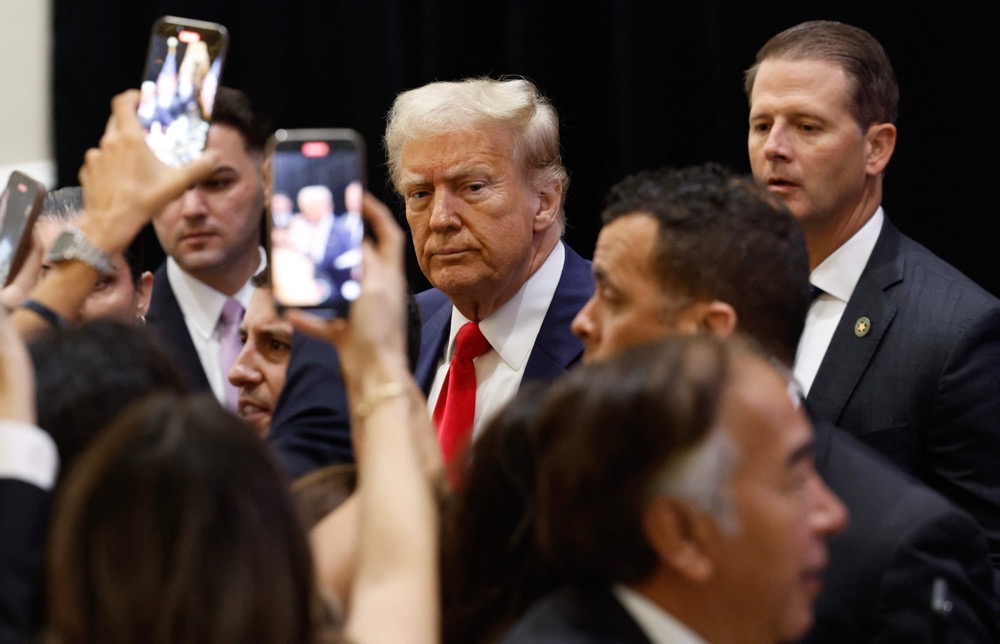
“The Trump administration’s sudden announcement of withdrawal from northeast Syria ushered in new security risks for local actors on the ground,” said Caroline Rose. (AFP)
“However, it did set the groundwork for a more long-term strategy for withdrawal in Iraq that could very well create further space for Iran and Iran-sponsored groups to exploit in the country.
“The elephant in the room additionally affecting Arab-American hesitancy for seeing the US military presence in the Middle East withdrawn, of course, is the memory of a botched Afghanistan withdrawal in 2021 that fully displayed the potential consequences of an immediate evacuation of US forces.”