LONDON: A Black motorist killed by a London police marksman who was acquitted of murder this week was a member of a violent gang and allegedly shot a rival a week earlier, according to court records that were allowed to be published Tuesday.
Jurors were not told about Chris Kaba’s gang ties during the trial that ended with Sgt. Martyn Blake being found not guilty Monday in the Central Criminal Court.
Kaba, 24, was shot on Sept. 5, 2022, after ramming police vehicles during a traffic stop. Police did not know who was driving the vehicle, but it was an Audi Q8 that had been used as a getaway car in an unsolved shooting a night earlier.
Blake fired a single round through the windshield of the Audi because he said he thought fellow officers’ lives were in danger. Kaba was found to be unarmed.
Prosecutors defended their decision to charge Blake in an exceptionally rare case against a British police officer for a death in the line of duty. They argued at trial that Blake misjudged the risk to his colleagues, exaggerated the threat after the shooting and aimed for Kaba’s head. Blake denied those assertions.
A judge had said the details of Kaba’s criminal record and alleged involvement in other shootings were irrelevant for jurors to consider in determining whether Blake used unreasonable force. Justice James Goss ordered news media not to report any of those details.
Following the trial, the news media challenged Goss’ order, and he lifted the restrictions on the information that had emerged during earlier proceedings.
The Metropolitan Police supported the release of the information to remove any “misleading impression” about Kaba’s character in the hopes it could quell violence toward officers, particularly on Saturday when an annual demonstration is held in London by family members of people who have died in police custody.
“If the information in relation to Mr. Kaba’s character is shared with the public, those who would seek to provoke anti-police violence would gain less support and the overall likelihood of disorder and the risk to public safety would reduce,” Deputy Assistant Commissioner Stuart Cundy said in a court statement.
Kaba’s mother, Helen Lumuanganu, had asked the court not to release the details until an inquest could be held into her son’s death, which could take years.
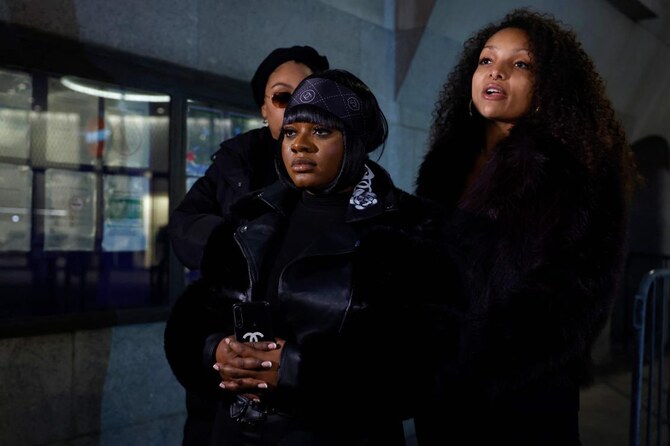
Dozens of demonstrators held a peaceful protest Monday night outside the Old Bailey courthouse where the trial was held, chanting for justice for Kaba.
“Despite this verdict, we won’t be silenced,” his family said in a statement. “We are deeply grateful to everyone who stood by us and fought for justice. We will continue fighting for Chris, for justice, and for real change. Chris’ life mattered, and nothing can take that away from us.”
Inquest, a justice advocacy group that released the statement Monday, said neither the family nor the charity were commenting after the release of the new information from court.
Evidence at previous trials indicated Kaba had shot a gang rival on the dance floor of a nightclub on Aug. 30 and then chased the victim outside and shot him again before fleeing. The victim, who was hit twice in the leg, survived.
The Audi he was driving on the night he was killed had been used to drive him to the club that night and was also linked to another shooting in May.
Kaba had convictions for fighting and possessing a knife and had served several stints behind bars, including a four-year sentence in 2017 for possessing an imitation firearm.
Kaba, who had been a rapper and was about to become a father, was also facing a possible court order aimed at curbing gang behavior at the time of his death.
Fatal shootings by police in the UK are rare. In the year to March 2023, officers in England and Wales who are authorized to carry a gun fired their weapons at people 10 times and killed three, according to official statistics.
The shooting renewed racism allegations against the Met police, also known as Scotland Yard, as it had been trying to restore confidence following a series of scandals and an independent review that found it mired in sexism, homophobia and institutional racism.
The decision to charge Blake created a backlash from some of his specially trained firearms colleagues who refused to carry their weapons in a show of solidarity. The Met was briefly forced to call on neighboring departments and the military for backup.
The union representing Met police officers applauded the decision to lift the reporting restrictions on Kaba’s gang involvement and said Blake never should have faced trial.

Black motorist fatally shot by London police officer in 2022 was a member of a violent gang
Short Url
https://arab.news/rj5pr
Black motorist fatally shot by London police officer in 2022 was a member of a violent gang
- Prosecutors defended their decision to charge Blake in an exceptionally rare case against a British police officer for a death in the line of duty
- They argued at trial that Blake misjudged the risk to his colleagues, exaggerated the threat after the shooting and aimed for Kaba’s head
ICE agents can’t make warrantless arrests in Oregon unless there’s a risk of escape, US judge rules
- US District Judge Mustafa Kasubhai issued a preliminary injunction in a proposed class-action lawsuit
- Case targets Department of Homeland Security’s practice of arresting immigrants they happen to come across
PORTLAND, Oregon: US immigration agents in Oregon must stop arresting people without warrants unless there’s a likelihood of escape, a federal judge ruled Wednesday.
US District Judge Mustafa Kasubhai issued a preliminary injunction in a proposed class-action lawsuit targeting the Department of Homeland Security’s practice of arresting immigrants they happen to come across while conducting ramped-up enforcement operations — which critics have described as “arrest first, justify later.”
The department, which is named as a defendant in the suit, did not immediately comment in response to a request from The Associated Press.
Similar actions, including immigration agents entering private property without a warrant issued by a court, have drawn concern from civil rights groups across the country amid President Donald Trump’s mass deportation efforts.
Courts in Colorado and Washington, D.C., have issued rulings like Kasubhai’s, and the government has appealed them.
In a memo last week, Todd Lyons, the acting head of US Immigration and Customs Enforcement, emphasized that agents should not make an arrest without an administrative arrest warrant issued by a supervisor unless they develop probable cause to believe that the person is in the US illegally and likely to escape from the scene before a warrant can be obtained.
But the judge heard evidence that agents in Oregon have arrested people in immigration sweeps without such warrants or determining escape was likely.
The daylong hearing included testimony from one plaintiff, Victor Cruz Gamez, a 56-year-old grandfather who has been in the US since 1999. He told the court he was arrested and held in an immigration detention facility for three weeks even though he has a valid work permit and a pending visa application.
Cruz Gamez testified that he was driving home from work in October when he was pulled over by immigration agents. Despite showing his driver’s license and work permit, he was detained and taken to the ICE building in Portland before being sent to an immigration detention center in Tacoma, Washington. After three weeks there, he was set to be deported until a lawyer secured his release, he said.
He teared up as he recounted how the arrest impacted his family, especially his wife. Once he was home they did not open the door for three weeks out of fear and one of his grandchildren did not want to go to school, he said through a Spanish interpreter.
Afterward a lawyer for the federal government told Cruz Gamez he was sorry about what he went through and the effect it had on them.
Kasubhai said the actions of agents in Oregon — including drawing guns on people while detaining them for civil immigration violations — have been “violent and brutal,” and he was concerned about the administration denying due process to those swept up in immigration raids.
“Due process calls for those who have great power to exercise great restraint,” he said. “That is the bedrock of a democratic republic founded on this great constitution. I think we’re losing that.”
The lawsuit was brought by the nonprofit law firm Innovation Law Lab, whose executive director, Stephen Manning, said he was confident the case will be a “catalyst for change here in Oregon.”
“That is fundamentally what this case is about: asking the government to follow the law,” he said during the hearing.
The preliminary injunction will remain in effect while the lawsuit proceeds.
US District Judge Mustafa Kasubhai issued a preliminary injunction in a proposed class-action lawsuit targeting the Department of Homeland Security’s practice of arresting immigrants they happen to come across while conducting ramped-up enforcement operations — which critics have described as “arrest first, justify later.”
The department, which is named as a defendant in the suit, did not immediately comment in response to a request from The Associated Press.
Similar actions, including immigration agents entering private property without a warrant issued by a court, have drawn concern from civil rights groups across the country amid President Donald Trump’s mass deportation efforts.
Courts in Colorado and Washington, D.C., have issued rulings like Kasubhai’s, and the government has appealed them.
In a memo last week, Todd Lyons, the acting head of US Immigration and Customs Enforcement, emphasized that agents should not make an arrest without an administrative arrest warrant issued by a supervisor unless they develop probable cause to believe that the person is in the US illegally and likely to escape from the scene before a warrant can be obtained.
But the judge heard evidence that agents in Oregon have arrested people in immigration sweeps without such warrants or determining escape was likely.
The daylong hearing included testimony from one plaintiff, Victor Cruz Gamez, a 56-year-old grandfather who has been in the US since 1999. He told the court he was arrested and held in an immigration detention facility for three weeks even though he has a valid work permit and a pending visa application.
Cruz Gamez testified that he was driving home from work in October when he was pulled over by immigration agents. Despite showing his driver’s license and work permit, he was detained and taken to the ICE building in Portland before being sent to an immigration detention center in Tacoma, Washington. After three weeks there, he was set to be deported until a lawyer secured his release, he said.
He teared up as he recounted how the arrest impacted his family, especially his wife. Once he was home they did not open the door for three weeks out of fear and one of his grandchildren did not want to go to school, he said through a Spanish interpreter.
Afterward a lawyer for the federal government told Cruz Gamez he was sorry about what he went through and the effect it had on them.
Kasubhai said the actions of agents in Oregon — including drawing guns on people while detaining them for civil immigration violations — have been “violent and brutal,” and he was concerned about the administration denying due process to those swept up in immigration raids.
“Due process calls for those who have great power to exercise great restraint,” he said. “That is the bedrock of a democratic republic founded on this great constitution. I think we’re losing that.”
The lawsuit was brought by the nonprofit law firm Innovation Law Lab, whose executive director, Stephen Manning, said he was confident the case will be a “catalyst for change here in Oregon.”
“That is fundamentally what this case is about: asking the government to follow the law,” he said during the hearing.
The preliminary injunction will remain in effect while the lawsuit proceeds.
© 2026 SAUDI RESEARCH & PUBLISHING COMPANY, All Rights Reserved And subject to Terms of Use Agreement.


