

Indonesia, Pakistan sign bilateral pacts worth $10.7 million at annual trade expo

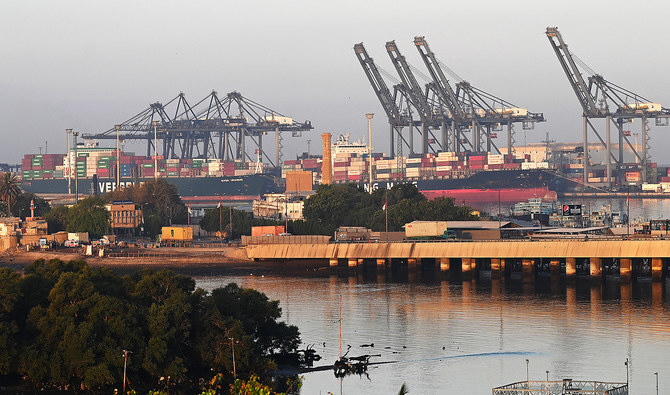
Shipping containers are seen stacked on a ship at a sea port in Karachi on April 6, 2023. (AFP/ file)
Short Url
Updated 21 October 2024
Follow

Indonesia, Pakistan sign bilateral pacts worth $10.7 million at annual trade expo

  • Trade Expo Indonesia was held recently from Oct. 9-12 in Jakarta, says state media
  • Pakistan PM expresses desire to foster closer bilateral cooperation with Indonesia

ISLAMABAD: Pakistan and Indonesia have signed bilateral trade pacts and memorandums of understanding worth $10.7 million during a recently held trade expo in the country, state-run media reported on Monday, adding that the development would boost economic relations between the two countries.

Trade Expo Indonesia (TEI) is Indonesia’s largest international trade fair held annually in October. The recent TEI exhibition was held from Oct. 9-12, 2024, at the Indonesia Convention Exhibition.

Pakistan and Indonesia have attempted to bolster their economic ties through trade and investment over the years. The two countries signed a Preferential Trade Agreement in 2012 that became operational in September 2013, allowing for concessional market access to 232 goods from Pakistan such as fresh fruits, cotton and fabrics, and 313 from Indonesia, such as edible palm oil products, sugar confectionaries and cocoa products.

According to the Pakistan Business Council, the trade relationship between Pakistan and Indonesia holds significant potential for growth, with opportunities for increased cooperation in areas like agriculture, textiles, and energy.

“Business-to-business bilateral cooperation trade agreements and memorandums of understanding worth 10.7 million dollars were signed between the two countries during this event,” state broadcaster Radio Pakistan said. “In this regard, Trade Expo Indonesia was held recently to promote bilateral cooperation between Indonesia and Pakistan.”

Radio Pakistan said both countries have also reiterated their desire to increase cooperation in the fields of trade and economy with the support of the Special Investment Facilitation Council (SIFC), a Pakistani hybrid civil-military forum, set up in June last year to attract international investment in its key economic sectors. 

Earlier, Pakistan Prime Minister Shehbaz Sharif also felicitated Indonesian President Prabowo Subianto on taking oath of office. 

“Warm felicitations to H.E. Prabowo Subianto, on taking oath as the President of Indonesia. Our nations have enjoyed fraternal ties, rooted in shared values & mutual respect,” Sharif said in a post on social media platform X.

The prime minister expressed his willingness to work closely with President Subianto to enhance bilateral cooperation and promote regional, and global peace and security.

Pakistan stocks recover as oil supply fears ease after Islamabad seeks Red Sea route— analyst

Updated 05 March 2026
Follow

Pakistan stocks recover as oil supply fears ease after Islamabad seeks Red Sea route— analyst

  • Pakistan has sought Saudi help to secure oil supplies via Red Sea port after Iran’s closure of Strait if Hormuz
  • Analyst says higher crude oil prices, expectations of IMF releasing next loan tranche also triggered bullish activity

ISLAMABAD: Pakistani stocks marked a sharp recovery when trading closed on Thursday, as institutional activity increased following Islamabad’s move to seek crude oil supplies through the Red Sea port eased oil supply fears, a financial analyst said. 

Pakistani stocks have recorded a sharp decline this week, with the benchmark KSE-100 index recording its largest-ever single-day decline on Monday when it plunged 16,089 points. Escalating conflict in the Middle East triggered panic selling at the Pakistani bourse, forcing a temporary trading halt on Monday. 

The KSE-100 index, however, gained 3.49 percent or 5,433.46 points to close at 161,210.67 when trading ended on Thursday, up from the previous close of 155,777.21 points, according to Pakistan Stock Exchange’s (PSX) data.

Pakistan’s Petroleum Minister Ali Pervaiz Malik met Saudi Ambassador Nawaf bin Said Al-Malki on Wednesday to discuss Iran’s closure of the key Strait of Hormuz, which has threatened Pakistan’s energy supply. Roughly 20 percent of the global oil and gas supply passes through the route. Saudi Arabia indicated it could facilitate shipments through the Red Sea port of Yanbu, offering an alternative route if Gulf shipping lanes remain disrupted, the petroleum ministry said on Wednesday. 

“Stocks staged a sharp recovery at PSX amid institutional activity on easing fuel supply fears after KSA [Kingdom of Saudi Arabia] commits oil supplies through the Red Sea port,” Ahsan Mehanti, chief executive officer at Arif Habib Commodities, told Arab News.

He said higher global crude oil prices and expectations of the International Monetary Fund releasing its next tranche of the $7 billion loan for Pakistan also helped bullish activity at the PSX.

An IMF mission was in Pakistan to hold talks on the third review of a $7 billion Extended Fund Facility multi-year program, and for the second review of the $1.4 billion Resilience and Sustainability Facility this week.

However, the delegation left for Türkiye amid tensions in the Gulf. Pakistani officials have said talks are likely to continue virtually in the coming days. 

Pakistani brokerage Topline Securities said in its daily market review report that strong institutional buying “turned the tide” on Thursday after the market’s recent overreaction to regional issues.

The report added that Hub Power Company (HUBC), Oil & Gas Development Company (OGDC), Fauji Fertilizer Company (FFC), Engro Corporation (ENGROH), and Meezan Bank Limited (MEBL) collectively contributed 2,197 points to the KSE benchmark’s gain.

Topline Securities said 723 million shares were traded on Thursday, with K-Electric Limited (KEL) stealing the spotlight as more than 1.17 billion shares changed hands.

Pakistani investors are closely monitoring developments in the Gulf, particularly around energy routes and further retaliatory actions, as the conflict’s trajectory remains uncertain.