


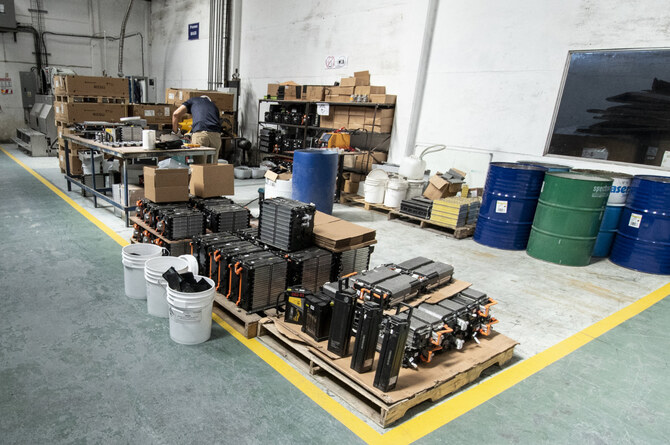

RIYADH: In today’s tech-driven society, electronic waste, also known as e-waste, is growing at an alarming rate, with batteries being a significant contributor to this environmental challenge.
The improper disposal of batteries poses serious threats to human health, the environment, and public safety. As Saudi Arabia adopts sustainable practices, addressing battery waste is viewed as a critical issue.
Batteries convert chemical energy into electrical energy, allowing them to power everything from smartphones to electric vehicles. While they are essential to modern life, they contain hazardous materials that, if improperly disposed of, can leach into the environment.

“Improper battery disposal can contaminate the air, water and soil as batteries contain toxic heavy metals such as lead, cadmium and mercury,” Dr. Sultan Meo, a professor and consultant at King Saud University’s Department of Physiology in Riyadh, told Arab News.
In a recent study, Meo reported that environmental pollution causes about 8.1 million deaths a year — more than 1 in 8 deaths globally — making it the second leading risk factor for early death, surpassed only by high blood pressure.
Lead is particularly harmful, especially to children. In fact, the World Health Organization lists it as one of the top ten chemicals of public health concern.
“Lead exposure is particularly harmful to children, as it can cause neurological disorders, developmental delays, learning difficulties, impaired memory, cognitive dysfunction, attention disorders, depression and anxiety,” Meo said.
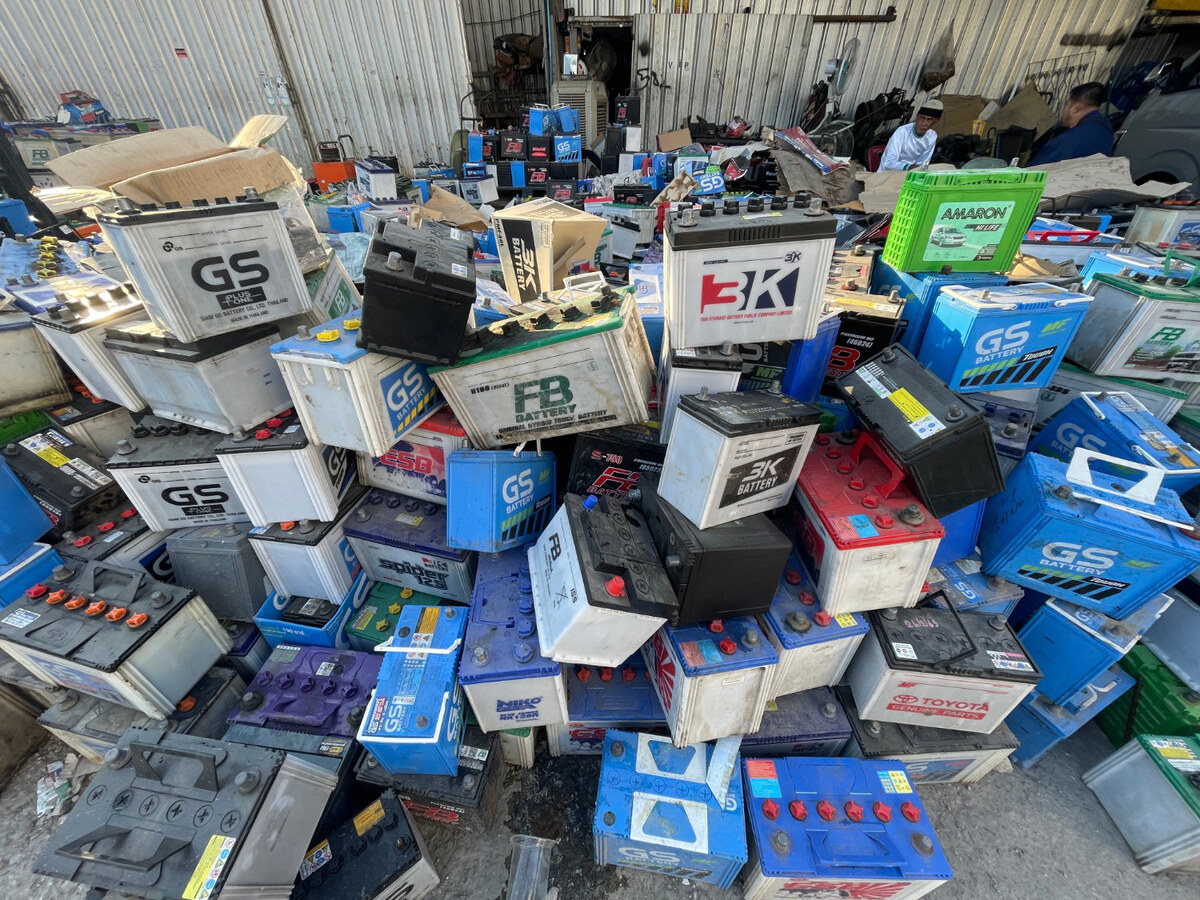
Encouraging responsible disposal practices protects the environment and promotes community safety. (Shutterstock photo)
There is also a link between lead exposure and cardiovascular diseases, including hypertension, cardiac arrhythmias and myocardial infarction.
“Lead exposure causes systemic inflammation, oxidative stress, atherosclerosis and thrombosis,” Meo added.
The Institute for Health Metrics and Evaluation estimates that more than 1.5 million deaths worldwide were attributed to lead exposure in 2021, primarily due to cardiovascular effects. It has also been linked to reduced IQ in children.
Opinion
This section contains relevant reference points, placed in (Opinion field)
The health risks extend beyond the heart and brain, however. Lead also reduces sperm count and motility, affecting male fertility, further highlighting the need for responsible disposal methods.
When batteries are discarded in landfills or mixed with regular waste, the impact on wildlife and ecosystems is immense. Chemicals from leaking batteries seep into the soil and waterways, poisoning plant and animal life and disrupting food chains.
The effects also trickle down to humans through contaminated water and food.
Lithium-ion batteries, commonly used in electronics, are particularly hazardous. When damaged or mishandled, they can short-circuit and cause fires, both in landfills and recycling centers.
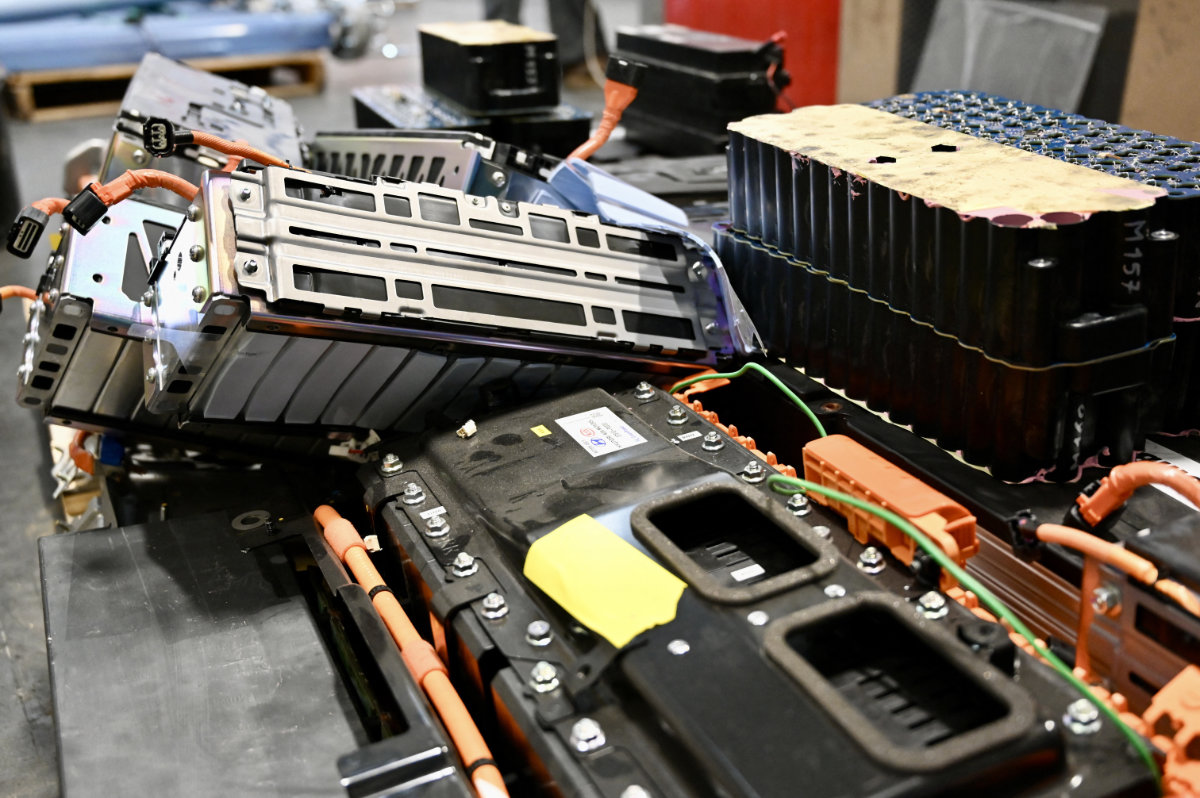
Physical damage to batteries can cause leaks of hazardous chemicals to the soil, which may eventually lead to toxins in the human body through food consumption, in addition, the leaks of chemicals can cause fire, especially lithium-based batteries. (AFP/File)
Fires in waste management facilities expose workers to dangerous toxins and can lead to larger environmental disasters.
To prevent such incidents, it is crucial to store batteries safely before disposal. Batteries should be kept away from flammable materials and handled carefully to avoid puncturing or crushing, which could result in hazardous leaks or explosions.
Saudi Arabia has committed to promoting environmental sustainability, including responsible e-waste management and recycling. As part of Vision 2030, the Kingdom is implementing recycling programs and raising awareness about the importance of proper battery disposal.
In 2022, the Saudi government launched various initiatives aimed at enhancing recycling infrastructure, including dedicated e-waste collection points and awareness campaigns to encourage citizens to recycle batteries and other electronic waste properly.
The Saudi Investment Recycling Company is leading these efforts by building the Kingdom’s first integrated e-waste recycling plant.
DID YOUKNOW?
• Many retailers now offer e-waste recycling programs, making it easier to safely dispose of old batteries.
• Used batteries should be stored in a cool, dry place, away from flammable materials, to prevent fire or leakage.
• Disposal instructions should be followed, especially for larger batteries used in industrial equipment or vehicles.
• Educating others about the risks of improper battery disposal helps to protect the environment and public health.
The Ministry of Environment, Water and Agriculture is also promoting initiatives that align with global standards for battery recycling, helping to mitigate the harmful effects of hazardous materials on the environment.
Saudi Arabia is also promoting circular economy principles — reducing waste, recycling materials and reusing valuable components from old batteries.
While infrastructure improvements are vital, public awareness of proper disposal methods is equally important.
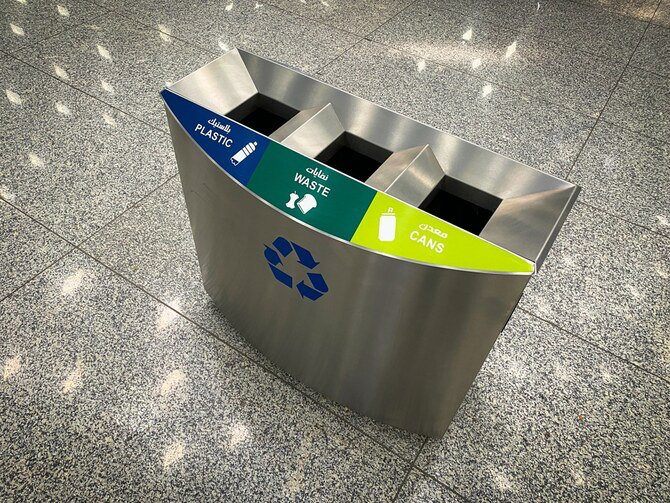
Retailers and municipalities across Saudi Arabia are increasingly offering waste disposal facilities, but public engagement is key to their success. (AN file photo)
Batteries should never be thrown in regular trash bins. Instead, consumers must be educated on using designated drop-off locations for battery recycling.
Retailers and municipalities across Saudi Arabia are increasingly offering these facilities, but public engagement is key to their success.
“Batteries should be recycled or disposed of properly at designated facilities to prevent fires and the release of toxic chemicals into the air, water and soil,” Meo said.
Through a combination of government initiatives, public awareness campaigns and individual action, the Kingdom is taking action on e-waste management.


