KYIV, Ukraine: Ukrainian President Volodymyr Zelensky was set to at least partially unveil a plan to win the war against Russia to his country’s Parliament on Wednesday after weeks of dropping hints about the blueprint to lukewarm Western allies, including US President Joe Biden.
The plan — comprising military, political, diplomatic and economic elements — is considered by many as Ukraine’s last resort to strengthen its hand in any future ceasefire negotiations with Russia. Thus far, however, no country has publicly endorsed it or commented on its feasibility.
Zelensky is keen to get the “victory plan” in place before a new US president is sworn in next year, though Ukrainian officials say neither presidential candidate will necessarily improve Kyiv’s standing in the war.
Zelensky’s presentation to Parliament, announced on Monday by presidential adviser Serhii Leshchenko, comes during a bleak moment in Ukraine. The country’s military is suffering losses along the eastern front as Russian forces inch closer to a strategically significant victory near the crucial logistics hub of Pokrovsk.
At every turn, Kyiv is outnumbered by Moscow: The country is struggling to replenish ranks with an unpopular mobilization drive; its ammunition stocks are limited; and Russia’s superiority in the skies is wreaking havoc for Ukrainian defensive lines.
It’s not clear how much of his victory plan Zelensky will reveal on Wednesday; Leshchenko indicated that it would be fully unveiled, while other officials suggested that the president would not divulge its most sensitive elements to all lawmakers.
Either way, the plan essentially puts Kyiv’s future in the hands of its allies. Without it, any deal with Russia would almost certainly be unfavorable for Ukraine, which has lost a fifth of its territory and tens of thousands of lives in the conflict. Kyiv would be unlikely to ever recover occupied territory, or receive reparations for widespread destruction across the country.
Several elements of the plan have already come to light: making Ukraine a member of NATO; allowing the country to use Western long-range weapons to strike deep inside Russia; providing resources to strengthen Ukraine’s air and other defenses, and intensifying sanctions against Russia.
Ukraine’s surprise military incursion into Russia’s Kursk region in August was also part of the plan, Zelensky told reporters. He said the 1,000 square kilometers (386 square miles) of territory captured by Ukraine — along with other provisions of the plan — will likely serve as a bargaining chip in negotiations with Russia.
NATO’s Article 5 states that an attack against one member is considered an attack against all. Ukraine’s inclusion in the alliance would deter Russian President Vladimir Putin from invading again, Ukrainian officials argue. Western leaders have so far been reluctant to guarantee an invitation, fearing escalation from Putin.
Ukrainian officials were expecting feedback from Western allies at a meeting of the Ukraine Defense Contact Group at Ramstein Air Base in Germany, during which defense leaders from 50-plus partner nations gather to coordinate weapons aid for the war. Scheduled for this past weekend, the summit was postponed after Biden canceled his attendance in response to Hurricane Milton in the US
Zelensky has since toured Western capitals to present other key allies an outline of his vision. But none so far have given any indication they will support the plan. Some expressed concerns over the tight deadline set by Zelensky, who gave allies just three months to adopt the blueprint’s main tenets in late September.
Thus far, the US has been Kyiv’s main backer during the two-and-a-half-year war. But Biden has balked at the request to use long-range weapons to strike specific targets inside Russia, fearing a possible escalation in the war. Meanwhile, an intensifying conflict in the Middle East between Israel and Hezbollah that risks embroiling Iran has diverted Washington’s attention.
Many expect Democratic nominee and Vice President Kamala Harris to continue Biden’s policy and maintain the status quo. Under Biden, US assistance to Kyiv, though substantial, has consistently arrived too late to make a significant difference for Ukrainian forces.
Republican nominee and former President Donald Trump has only said that he’d end the war quickly, without saying how.
Meanwhile, Brazil and China have proposed alternate peace plans that Zelensky has rejected, saying they would merely pause the war and give Moscow time to consolidate its battered army and defense industry.


![]()

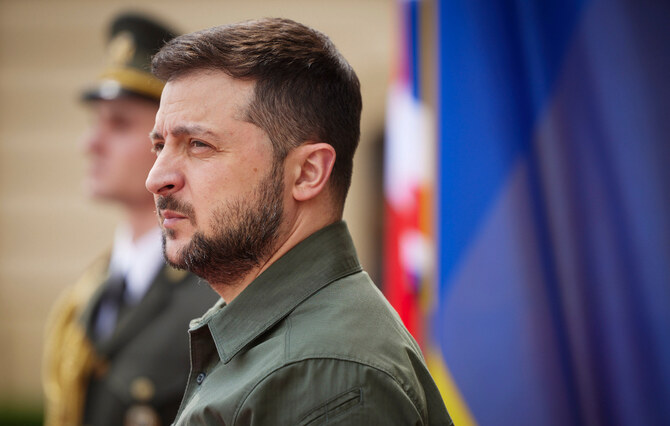
Zelensky to unveil ‘victory plan’ to Ukrainian lawmakers after presenting it to Western allies
Short Url
https://arab.news/nnzku
Zelensky to unveil ‘victory plan’ to Ukrainian lawmakers after presenting it to Western allies
- The plan is considered as Ukraine’s last resort to strengthen its hand in any future ceasefire negotiations with Russia
- No country has publicly endorsed it or commented on its feasibility


Latest updates


© 2026 SAUDI RESEARCH & PUBLISHING COMPANY, All Rights Reserved And subject to Terms of Use Agreement.