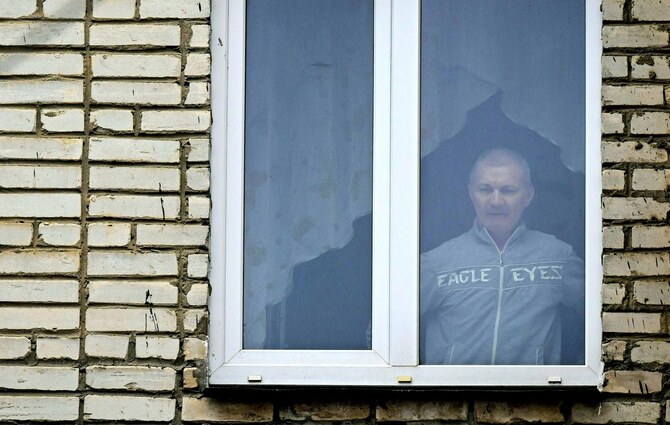
MOSCOW: A Russian man convicted of discrediting the military after his daughter made a drawing criticizing Russia’s military actions in Ukraine was released from prison after serving 22 months, a group that monitors political detentions said Tuesday.
Alexei Moskalyov was convicted in March 2023 on the basis of posts that he made on a social media site. The post came to authorities’ attention after his daughter, then age 13, made a drawing in school opposing the military operation.
Moskalyov was sentenced to two years in prison, but he fled. He was arrested in Belarus a day later and extradited to Russia. A court later reduced his sentence to a year and 10 months.
The OVD-Info group, which reported his release, said that Moskalyov told it that agents of the Federal Security Service questioned other inmates in his unit before he was released and suggested they were looking for cause to file new charges against him.
Since sending troops into Ukraine in February 2022, Russia has cracked down harshly on criticism of the military and the operation in Ukraine. Several prominent opponents of the fighting who were sentenced to lengthy prison terms — one of them to 25 years — were freed and sent out of the country in August in a widescale prisoner exchange with the West.


![]()

Russia releases man whose daughter’s drawing opposed Ukraine fighting
Short Url
https://arab.news/nf6bs
Russia releases man whose daughter’s drawing opposed Ukraine fighting
- Alexei Moskalyov was convicted in March 2023 on the basis of posts that he made on a social media site
- The post came to authorities’ attention after his daughter, then age 13, made a drawing in school opposing the military operation


Latest updates


© 2026 SAUDI RESEARCH & PUBLISHING COMPANY, All Rights Reserved And subject to Terms of Use Agreement.