

Saudi Arabia’s Eastern Province unveils $3bn tourism projects

According to the Saudi Press Agency, these developments will lead to the creation of more than 2,200 hotel rooms, representing a major boost for the region’s hospitality sector. SPA
Short Url
Updated 09 October 2024
Follow

Saudi Arabia’s Eastern Province unveils $3bn tourism projects

  • Developments will lead to the creation of more than 2,200 hotel rooms
  • Another 10 projects have been approved, totaling over SR10.6 billion

RIYADH: Saudi Arabia’s Eastern Province is set for a significant tourism expansion following the approval of 17 new projects valued at over SR12.7 billion ($3.38 billion) as part of the Kingdom’s dedicated fund portfolio.

According to the Saudi Press Agency, these developments will lead to the creation of more than 2,200 hotel rooms, representing a major boost for the region’s hospitality sector.

Additionally, another 10 projects have been approved, totaling over SR10.6 billion, which will contribute an extra 1,400 hotel rooms. These initiatives are part of the ongoing efforts under the Saudi Tourism Development Fund to enhance the region’s tourism infrastructure and align with Saudi Arabia’s Vision 2030 goals.

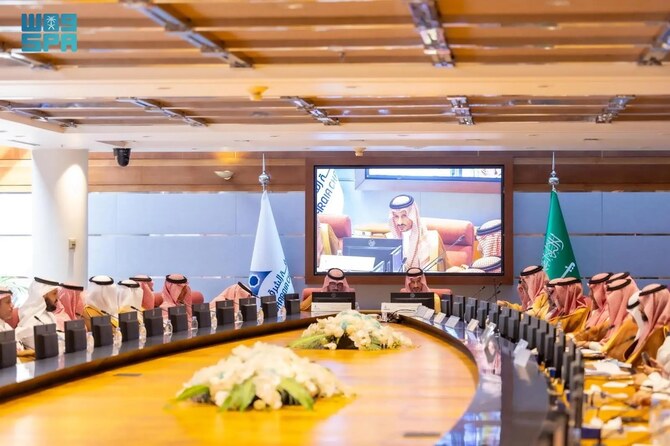
This announcement was made during a meeting between Saudi Minister of Tourism Ahmed Al-Khateeb and a group of investors and entrepreneurs from the Eastern Province. Badr Al-Reziza, chairman of the Eastern Province Chamber of Commerce, was also present, highlighting the investment opportunities in the tourism sector.

Al-Khateeb emphasized the Eastern Province’s status as a premier tourist destination, showcasing its diverse geography and historical significance.

“The region features extensive coastlines along the Arabian Gulf, providing unique opportunities for beach tourism,” he stated. He also noted the rich heritage of the province, which enhances its appeal to both local and international visitors.

During the meeting, Al-Khateeb reiterated the Ministry of Tourism’s commitment to strengthening partnerships with the private sector, which he identified as a primary driver of tourism development in Saudi Arabia.

He highlighted the importance of encouraging investments and facilitating investor support, including the Tourism Investment Enablers Program, which aims to reduce government fees in the hospitality sector by 22 percent. The suspension of municipal fees on hospitality facilities was also mentioned as a measure to stimulate further investment.

Al-Reziza echoed these sentiments, noting the Eastern Province’s prominence as a tourism destination. He pointed out the variety of activities and attractions available, which include cultural, heritage, and coastal experiences, along with family-friendly parks and natural resources. He stressed that tourism is a vital driver of local development, significantly improving the quality of life for residents.

The Eastern Province is already witnessing a surge in tourism, with recent statistics indicating that over 19 million tourists, both domestic and international, visited the region in 2023—a substantial increase from previous years. Tourist spending in the area reached SR27.8 billion, reflecting a 27 percent rise compared to the prior year.

Saudi Arabia’s tourism sector is flourishing, having seen a 656 percent increase since 2019, with 17.5 million international visitors projected for 2024, according to the Ministry of Tourism. This growth underscores the Kingdom’s efforts to enhance its tourism offerings and attract global travelers.

A key factor in this expansion was the introduction of the first tourism visa in 2019, which significantly boosted international tourism. Under Vision 2030, Saudi Arabia aims to welcome 100 million tourists by 2030—a target already achieved seven years ahead of schedule in 2023.

On a national level, tourism has become one of the largest sources of employment for citizens, with approximately 900,000 nationals currently working in the sector.


‘The future is renewables,’ Indian energy minister tells World Economic Forum

Updated 22 January 2026
Follow

‘The future is renewables,’ Indian energy minister tells World Economic Forum

  • ‘In India, I can very confidently say, affordability (of renewables) is better than fossil fuel energy,’ says Pralhad Venkatesh Joshi during panel discussion
  • Renewables are an increasingly important part of the energy mix and the technology is evolving rapidly, another expert says at session titled ‘Unstoppable March of Renewables?’

BEIRUT: “The future is renewables,” India’s minister of new and renewable energy told the World Economic Forum in Davos on Wednesday.
“In India, I can very confidently say, affordability (of renewables) is better than fossil fuel energy,” Pralhad Venkatesh Joshi said during a panel discussion titled “Unstoppable March of Renewables?”
The cost of solar power has has fallen steeply in recent years compared with fossil fuels, Joshi said, adding: “The unstoppable march of renewables is perfectly right, and the future is renewables.”
Indian authorities have launched a major initiative to install rooftop solar panels on 10 million homes, he said. As a result, people are not only saving money on their electricity bills, “they are also selling (electricity) and earning money.”
He said that this represents a “success story” in India in terms of affordability and “that is what we planned.”
He acknowledged that more work needs to be done to improve reliability and consistency of supplies, and plans were being made to address this, including improved storage.
The other panelists in the discussion, which was moderated by Godfrey Mutizwa, the chief editor of CNBC Africa, included Marco Arcelli, CEO of ACWA Power; Catherine MacGregor, CEO of electricity company ENGIE Group; and Pan Jian, co-chair of lithium-ion battery manufacturer Contemporary Amperex Technology.
Asked by the moderator whether she believes “renewables are unstoppable,” MacGregor said: “Yes. I think some of the numbers that we are now facing are just proof points in terms of their magnitude.
“In 2024, I think it was 600 gigawatts that were installed across the globe … in Europe, close to 50 percent of the energy was produced from renewables in 2024. That has tripled since 2004.”
Renewables are an increasingly important and prominent part of the energy mix, she added, and the technology is evolving rapidly.
“It’s not small projects; it’s the magnitude of projects that strikes me the most, the scale-up that we are able to deliver,” MacGregor said.
“We are just starting construction in the UAE, for example. In terms of solar size it’s 1.5 gigawatts, just pure solar technology. So when I see in the Middle East a round-the-clock project with just solar and battery, it’s coming within reach.
“The technology advance, the cost, the competitiveness, the size, the R&D, the technology behind it and the pace is very impressive, which makes me, indeed, really say (renewables) is real. It plays a key role in, obviously, the energy demand that we see growing in most of the countries.
“You know, we talk a lot about energy transition, but for a lot of regions now it is more about energy additions. And renewables are indeed the fastest to come to market, and also in terms of scale are really impressive.”
Mutizwa asked Pan: “Are we there yet, in terms of beginning to declare mission accomplished? Are renewables here to stay?”
“I think we are on the road but (its is) very promising,” Pan replied. There is “great potential for future growth,” he added, and “the technology is ready, despite the fact that there are still a lot of challenges to overcome … it is all engineering questions. And from our perspective, we have been putting in a lot of resources and we are confident all these engineering challenges will be tackled along the way.”
Responding to the same question, Arcelli said: “Yes, I think we are beyond there on power, but on other sectors we are way behind … I would argue today that the technology you install by default is renewables.
“Is it a universal truth nowadays that renewables are the cheapest?” asked Mutizwa.
“It’s the cheapest everywhere,” Arcelli said.