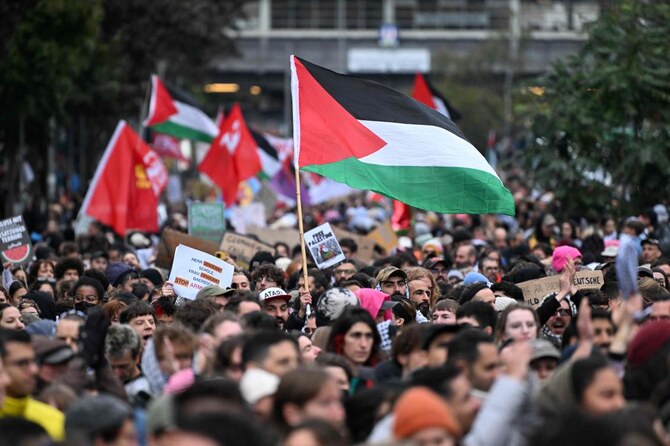
THE HAGUE: Bolivia has joined South Africa’s case against Israel at the International Court of Justice that alleges the Israeli Gaza offensive breaches the UN Genocide Convention, the court said on Wednesday.
The South American country is the latest of several nations, including Colombia, Libya, Spain and Mexico, adding their weight to the case against Israel, which vehemently denies the accusations.
Bolivia already announced in November it was severing diplomatic ties over what it described as the “disproportionate” attacks on Gaza by Israel.
At the time, Israel slammed the move as “a surrender to terrorism.”
In a January 26 ruling that made headlines around the world, the ICJ told Israel to do everything possible to prevent acts of genocide during its military operations in Gaza.
The court has also ordered Israel to ensure “unimpeded access” to UN-mandated investigators to look into allegations of genocide.
South Africa has returned several times to the ICJ, arguing that the dire humanitarian situation in the territory compels the court to issue further fresh emergency measures.
In its submission to the court made public on Wednesday, Bolivia argued: “Israel’s genocidal war continues, and the Court’s orders remain dead letters to Israel.”
While ICJ rulings are legally binding, the court has no concrete means to enforce them.
In a separate ruling in July, the ICJ issued an “advisory opinion” that Israel’s occupation of Palestinian territory was “unlawful” and should end as soon as possible.
Israel’s Gaza campaign has killed at least 42,010 people, the majority of them civilians, according to figures provided by the Hamas-run territory’s health ministry.
The UN has described the figures as reliable.
The offensive was prompted by Hamas’s October 7, 2023 attack which resulted in the deaths of 1,205 people in Israel, mostly civilians, according to an AFP tally based on Israeli official figures that include hostages killed in captivity.
Israel has intensified strikes on Hezbollah strongholds in Lebanon since September 23, leaving more than 1,150 people dead, according to an AFP tally of official figures.


![]()

Bolivia joins South Africa’s ICJ genocide case against Israel
Short Url
https://arab.news/zj3b5
Bolivia joins South Africa’s ICJ genocide case against Israel


Latest updates


Recommended


© 2026 SAUDI RESEARCH & PUBLISHING COMPANY, All Rights Reserved And subject to Terms of Use Agreement.