DAMASCUS: The Syrian government said seven civilians were killed in an Israeli air strike in Damascus Tuesday, that a war monitor said targeted a building used by Iran’s Revolutionary Guards and Lebanon’s Hezbollah.
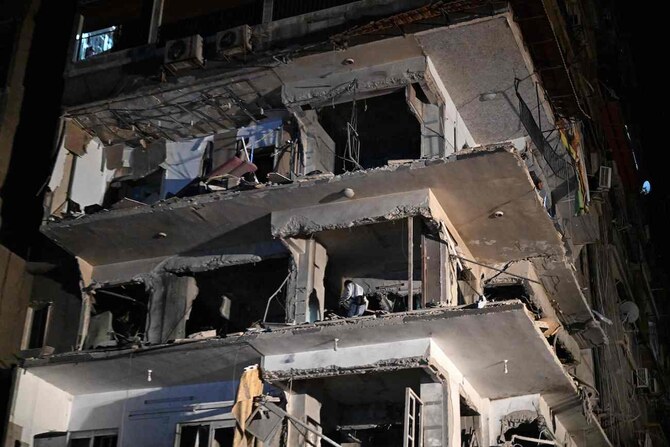
The defense ministry said women and children were among the dead in the strike on a residential and commercial building in the Mazzeh neighborhood of the capital which is home to embassies and security headquarters.
It said the toll was preliminary as rescuers were still combing the rubble.
The Britain-based Syrian Observatory for Human Rights said: “Israel targeted a building frequented by senior Revolutionary Guards and Hezbollah operatives, as well as a car parked in front of the building.”
Observatory chief Rami Abdel Rahman said nine people were killed, five of them civilians including a child.
At least two of the dead were foreigners, the Observatory said, without specifying their nationality.
None of the dead were Iranian, the embassy said.
AFPTV footage from the scene showed a building engulfed in smoke, with rubble and torn metal strewn on the ground.
Electrician Adel Habib, 61, who lives in the building which was hit, said the strike was like “Judgment Day.”
“I was on my way home when the explosion happened and communications and electricity were cut off so I could no longer contact my family” inside the building, Habib said.
“These were the longest five minutes of my life until I heard the voices of my wife, children and grandchildren.”
Syrian state television said the strike caused “extensive” damage.
An AFP correspondent said the first three floors of the building had been destroyed and counted about 20 cars damaged by falling debris.
Last week, the Observatory said an Israeli strike on Mazzeh killed four people, including the son-in-law of the late Hezbollah leader Hassan Nasrallah, killed in an Israeli air strike on south Beirut last month.
Israeli authorities rarely comment on individual strikes in Syria, but have repeatedly said they will not allow arch-enemy Iran to expand its presence.
Iran and Lebanon’s Hezbollah have been among the Syrian government’s most important allies in the country’s more than decade-old civil war.
More than 400,000 people, most of them returning Syrian refugees, have crossed into Syria over the past two weeks, fleeing heavy Israeli air strikes on Lebanon.


![]()

Syria says seven civilians killed in Israel Damascus strike
Short Url
https://arab.news/6pkdh
Syria says seven civilians killed in Israel Damascus strike
- The defense ministry said women and children were among the dead in the strike on a residential and commercial building in the Mazzeh neighborhood of the capital


Latest updates





© 2026 SAUDI RESEARCH & PUBLISHING COMPANY, All Rights Reserved And subject to Terms of Use Agreement.