DAMASCUS: Syrian air defense was intercepting ‘hostile targets’ in the country’s central region on Sunday evening, state media said, a phrase usually used to refer to Israeli strikes on the war-torn country.
“Our air defense systems are intercepting hostile targets in the airspace of the central region” of the country, the official SANA news agency said.
“Israeli strikes” targeted a “weapons depot south of Homs and a rockets depot in the eastern Hama countryside,” Observatory chief Rami Abdel Rahman told AFP, adding that the sites belonged to the Syrian army.
Earlier on Sunday, an Israeli strike in Syria targeted trucks transporting aid for Lebanese people, wounding three aid workers, the Observatory said.
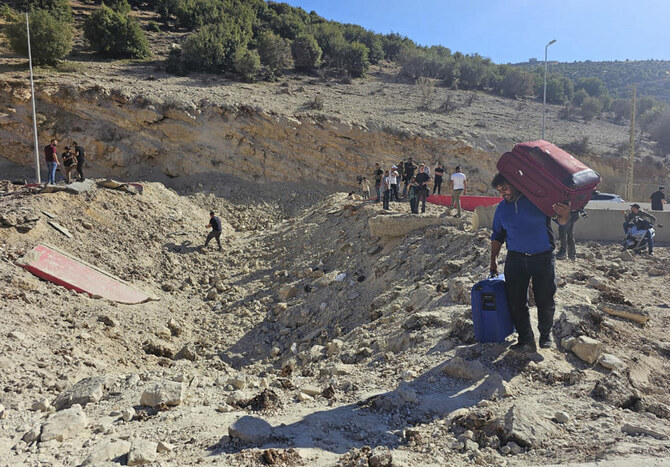
On Friday, Lebanon said an Israeli air strike on the Syrian border cut off the main international road linking the two countries.
Since Syria’s civil war erupted in 2011, Israel has carried out hundreds of strikes in the country, mainly targeting army positions and Iran-backed fighters, including Hezbollah.
Israeli authorities rarely comment on individual strikes in Syria, but have repeatedly said they will not allow arch-enemy Iran to expand its presence there.
The strikes have increased in recent days, including on areas near the border with Lebanon.
Tens of thousands of people have crossed into Syria over the past week, fleeing heavy Israeli air strikes on Lebanon.


![]()

Syria air defense intercepts ‘hostile targets’: state media
Short Url
https://arab.news/nrvt4
Syria air defense intercepts ‘hostile targets’: state media
- “Our air defense systems are intercepting hostile targets in the airspace of the central region” of Syria, official SANA news agency said


Latest updates




© 2026 SAUDI RESEARCH & PUBLISHING COMPANY, All Rights Reserved And subject to Terms of Use Agreement.