Startup Wrap – Regional startups across diverse sectors continue to raise funds

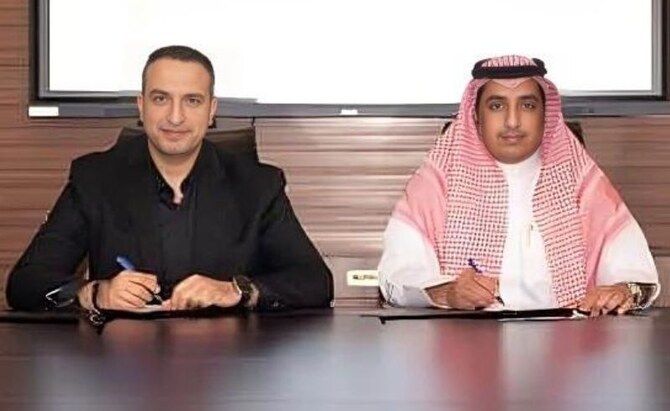
Al Menu, a Saudi Arabia-based software-as-a-service provider for the food and beverage industry, has raised $10.12 million in a funding round led by Al Majdiah Investment alongside other investors. (Supplied)
Short Url
Updated 06 October 2024
Follow

Startup Wrap – Regional startups across diverse sectors continue to raise funds

  • Founded in 2022 by Mamdoh Ali, Al Menu offers cloud-based solutions designed to enhance the operations of restaurants and cafes in Saudi Arabia

RIYADH: Startups across the Middle East and North Africa have recently secured new funding to drive expansion, innovate services, and enter new markets, highlighting ongoing investor interest in diverse sectors including event-tech, e-commerce, and adtech.

Al Menu, a Saudi Arabia-based software-as-a-service provider for the food and beverage industry, has raised $10.12 million in a funding round led by Al Majdiah Investment alongside other investors.

Founded in 2022 by Mamdoh Ali, Al Menu offers cloud-based solutions designed to enhance the operations of restaurants and cafes in Saudi Arabia.

Ali, the CEO, stated that aims to reduce operational management costs and increase workforce efficiency for thousands of restaurants and cafes in the Kingdom.

Nasser Al-Majid, CEO of Al Majdiah Investment, added that their investment in Al Menu reflects their commitment to strengthening the role of the F&B sector in achieving Vision 2030’s hospitality goals.

The new funding is aimed at accelerating the company’s expansion efforts in the restaurant service sector.

Mila Celebrations raises $227k in pre-seed funding

Mila Celebrations, an event planning platform based in Saudi Arabia, has raised $227,000 in a pre-seed funding round from angel investors.

Founded in early 2024 by Muhammad Ghourbal, the startup provides a comprehensive solution for organizing events and celebrations.

The investment will be used to support Mila’s expansion into the wider Gulf Cooperation Council region.

This investment comes as Saudi Arabia’s events sector is expected to see a significant boom. 

According to a recent report by Mordor Intelligence, the industry is expected to grow from $2.38 billion in 2024 to $3.45 billion in 2029.

Quantum completes $7m pre-series A round led by HearstLab

Quantum, a Saudi Arabia-based advertising tech firm, has secured funding in its $7 million pre-series A round, with HearstLab, the investment arm of Hearst Corporation, participating in the round.

Founded in 2020 by Omar Malaikah and Sara Bin Ladin, Quantum offers advertisers a platform to select publishers, purchase ad space directly, and access detailed data analytics to measure campaign impact.

“As Saudi Arabia pushes forward with Vision 2030, we are proud to be at the forefront of media and data innovation. HearstLab’s backing shows the great potential that Saudi Arabia has as a hub for cutting-edge technologies in all sectors,” said Malaikah.

This investment marks HearstLab’s first foray into the Middle Eastern market.

Podeo secures $5.4m in series A for international growth

UAE-based podcast distribution platform Podeo has closed a $5.4 million series A funding round led by Oraseya Capital, with contributions from Ibtikar Fund, Cedar Mundi Ventures, Samarium, iSME, and Razor Capital.

Podeo, founded in 2020 by Stefano Fallaha, Anthony Essaye, and Mario Hayek, enables content creators to monetize their podcasts through an end-to-end platform.

The fresh capital will be used to expand Podeo’s reach across emerging markets, including Latin America, Eastern Europe, and Southeast Asia.

“We are committed to empowering creators to become the next generation of global audio stars, providing them with cutting-edge tools to captivate diverse audiences around the world,” said Fallaha, the CEO.

“This series A funding will allow us to amplify our mission and scale our ecosystem at lightning speed across emerging global markets, making storytelling limitless and giving diverse voices the power to be heard by billions worldwide,” he added.

Agility Global invests in Global Ventures’ third fund

Singapore-based Agility Global has committed an undisclosed amount to Global Ventures’ third fund, launched earlier this year.

Global Ventures, founded in 2018 by Noor Sweid in Dubai, focuses on early-stage investments across the Middle East and Africa in sectors such as supply chain technology, energy technology, and agri-tech.

“We are passionate champions and advocates for businesses led by the region’s new generation of entrepreneurs and innovators,” said Agility Global Chairman Tarek Sultan.

“The Middle East and Africa are brimming with innovation and entrepreneurial energy. Through our venture capital arm, Agility Ventures, and our investment in Global Ventures’ new MEA fund, we are encouraging the region’s startups and entrepreneurs to commercialize and scale great ideas and innovations,” he added.

Agility Global, a multi-business operator and long-term investor, aims to support innovative startups within these key areas through this fund.

“With our focus on supply chain technology, we are incredibly grateful for the support of Agility Global, a long-standing leader in the supply chain sector regionally and globally. We are thrilled to have a true partner in Agility Global as we continue to back mission-driven founders addressing critical challenges across the Middle East and Africa,” Sweid said.

Earlier in July, Jordan’s investment fund, the Innovative Startups and SMEs Fund, also invested $5 million in Global Ventures’ Fund III.

Kuwait’s Bazzar Gate raises $1m to boost e-commerce platform

Kuwait-based e-commerce startup Bazzar Gate has secured $1 million in funding from undisclosed investors.

Founded by Mohammad Al-Mutawa in 2020, Bazzar Gate offers a one-stop-shop drop-shipping e-commerce solution, including delivery and payment systems.

The funding will primarily be used to scale its newly launched platform, Partners, which helps users set up dropshipping e-commerce businesses by addressing challenges such as high startup costs and logistical complexities.

“Receiving this investment validates the vision we have for Partners and its potential to redefine e-commerce entrepreneurship. We’re committed to providing a platform where anyone can become an e-commerce business owner in minutes, without the traditional barriers of high costs, logistics, or time investment,” Al-Mutawa added.

Oman sovereign wealth fund commits $150m to ewpartners

Oman Investment Authority, the nation’s sovereign wealth fund, has committed $150 million to international investment firm ewpartners’ Technology Innovation Fund II.

The $1 billion private equity fund focuses on expansion-stage technology and techenabled investments within GCC countries.

The partnership also entails the establishment of a local fund with OIA’s Future Fund Oman, which aims to support the country’s National Vision 2040.

Through this initiative, ewpartners intends to leverage products, technologies, and capabilities from established industry players, particularly from China, to foster the growth of successful companies in Oman.

The investment firm will direct investments toward sectors critical to Oman’s economic development, including advanced manufacturing, information and communications technology, renewable energy, logistics, tourism, and agriculture.

These investments align with Oman’s broader economic mandate to diversify its economy and enhance its regional competitiveness.

Valu partners with ShipBlu and PayTabs Egypt 

Egyptian financial technology company Valu has entered a new partnership with logistics provider ShipBlu and digital payments firm PayTabs Egypt.

The collaboration aims to streamline online payment processes for e-commerce transactions delivered within Egypt.

Valu credit users will now have the option to pay for online orders delivered by ShipBlu, benefiting from secure payments facilitated by PayTabs Egypt.

The initiative seeks to encourage a shift toward a cashless society, providing consumers with various digital payment options, including credit and debit cards, QR codes, and eWallets, as part of a payment-on-delivery model.


World must prioritize resilience over disruption, economic experts warn

Saudi Arabia’s Finance Minister Mohammed Al-Jadaan urged policymakers and investors to “mute the noise” and focus on resilience.
Updated 23 January 2026
Follow

World must prioritize resilience over disruption, economic experts warn

  • Al-Jadaan said that much of the anxiety dominating markets reflected a world that had already been shifting for years
  • Pointing to Asia and the Gulf, Al-Jadaan said that some countries had already built models based on diversification and resilience

DAVOS: Saudi Arabia’s Finance Minister Mohammed Al-Jadaan urged policymakers and investors to “mute the noise” and focus on resilience, as global leaders gathered in Davos on Friday against a backdrop of trade tensions, geopolitical uncertainty and rapid technological change.

Speaking on the final day of the World Economic Forum in Davos, Al-Jadaan said that much of the anxiety dominating markets reflected a world that had already been shifting for years.

“We need to define who ‘we’ are in this so-called new world order,” he said, arguing that many emerging economies had been adapting to a more fragmented global system for decades.

Pointing to Asia and the Gulf, Al-Jadaan said that some countries had already built models based on diversification and resilience. In energy markets, he pointed out that the focus should remain on balancing supply and demand in a way that incentivized investment without harming the global economy.

“Our role in OPEC is to stabilize the market,” he said.

His remarks were echoed by Saudi Arabia’s Minister of Economy and Planning Faisal Alibrahim, who said that uncertainty had weighed heavily on growth, investment and geopolitical risk, but that reality had proven more resilient.

“The economy has adjusted and continues to move forward,” Alibrahim said.

Alibrahim warned that pragmatism had become scarce, trust increasingly transactional, and collaboration more fragile. “Stability cannot be quickly built or bought,” he said.

Alibrahim called for a shift away from preserving the status quo towards the practical ingredients that made cooperation work, stressing discipline and long-term thinking even when views diverged.

Quoting Saudi Arabia’s founding King Abdulaziz Al-Saud, he added: “Facing challenges requires strength and confidence, there is no virtue in weakness. We cannot sit idle.”

President of the European Central Bank Christine Lagarde stressed the importance of distinguishing meaningful data from headline noise, saying: “Our duty as central bankers is to separate the signal from the noise. The real numbers are growth numbers not nominal ones.”

Managing Director of the IMF Kristalina Georgieva echoed Lagarde’s sentiments, saying that the world had entered a more “shock prone” environment shaped by technology and geopolitics.

Director General of the World Trade Organization Ngozi Okonjo-Iweala said that the global trade systems currently in place were remarkably resilient, pointing out that 72 percent of global trade continued despite disruptions.

She urged governments and businesses, however, to avoid overreacting.

Okonjo Iweala said that a return to the old order was unlikely, but trade would remain essential. Georgieva agreed, saying global trade would continue, albeit in a different form.

Georgieva warned that AI would accelerate economic transformation at an unprecedented speed. The IMF expects 60 percent of jobs to be affected by AI, either enhanced or displaced, with entry-level roles and middle-class workers facing the greatest pressure.

Lagarde warned that without cooperation, capital and data flows would suffer, undermining productivity and growth.

Al-Jadaan said that power dynamics had always shaped global relations, but dialogue remained essential. “The fact that thousands of leaders came here says something,” he said. “Some things cannot be done alone.”

In another session titled Geopolitical Risks Outlook for 2026, former US Democratic representative Jane Harman said that because of AI, the world was safer in some ways but worse off in others.

“I think AI can make the world riskier if it gets in the wrong hands and is used without guardrails to kill all of us. But AI also has enormous promise. AI may be a development tool that moves the third world ahead faster than our world, which has pretty messy politics,” she said.

American economist Eswar Prasad said that currently the world was in a “doom loop.”

Prasad said that the global economy was stuck in a negative-feedback loop and economics, domestic politics and geopolitics were only bringing out the worst in each other.

“Technology could lead to shared prosperity but what we are seeing is much more concentration of economic and financial power within and between countries, potentially making it a destabilizing force,” he said.

Prasad predicted that AI and tech development would impact growing economies the most. But he said that there was uncertainty about whether these developments would create job opportunities and growth in developing countries.

Professor of international political economy at the University of New South Wales in Australia, Elizabeth Thurbon, said that China was driving a Green Energy transition in a way that should be modeled by the rest of the world.

“The Chinese government is using the Green Energy Transition to boost energy security and is manufacturing its own energy to reduce reliance on fossil fuel imports,” she explained.

Thurbon said that China was using this transition to boost economic security, social security and geostrategic security. She viewed this as a huge security-enhancing opportunity and every country had the ability to use the energy transition as a national security multiplier. 

“We are seeing an enormous dynamism across emerging market economies driven by China. This boom loop is being driven by enormous investments in green energy. Two-thirds of global investment flowing into renewable energy is driven largely by China,” she said.

Thurbon said that China was taking an interesting approach to building relationships with countries by putting economic engagement on the forefront of what they had to offer.

“China is doing all it can to ensure economic partnership with emerging economies are productive. It’s important to approach alliances as not just political alliances but investment in economy, future and the flourishment of a state,” she said.

The panel criticized global economic treaties and laws, and expressed the need for immediate reforms in economic governing bodies.

“If you are a developing economy, the rules of the WTO, for example, are not helpful for you to develop. A lot of the rules make it difficult to pursue an economic development agenda. These regulations are not allowing the economies to grow,” Thurbon said.

“Serious reform must be made in international trade agreements, economic bodies and rules and guidelines,” she added.

Prasad echoed this sentiment and said there was a need for national and international reform in global economic institutions.

“These institutions are not working very well so we can reconfigure them or rebuild them from scratch. But unfortunately the task of rebuilding falls into the hands of those who are shredding them,” he said.

WEF attendees were invited to join the Global Collaboration and Growth meeting to be held in Saudi Arabia in April 2026 to continue addressing the complex global challenges and engage in dialogue.