


DUBAI: After almost 18 months of war, fighting in Sudan is escalating as seasonal rains end with the army using intensified airstrikes and allied fighters to shore up its position ahead of a likely surge by the rival Rapid Support Forces, or RSF.
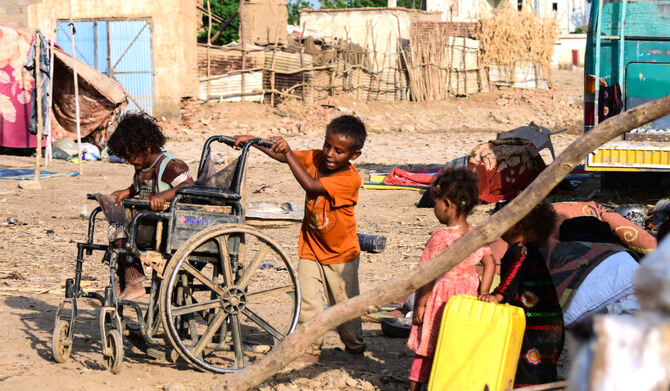
An uptick in fighting will aggravate an already dire humanitarian crisis in which famine has been confirmed and over 10 million people — one-fifth of the population — are displaced, more than anywhere else in the world.
UN agencies have often been unable to deliver aid.
“There won’t be a decisive breakthrough,” said a senior Western diplomat in the region.
“What we expect to come into the fall more and more is much more fragmentation, to see more armed groups getting involved ... And this will make the situation in general much more difficult.”
BACKGROUND
The RSF has had the upper hand during much of the conflict but last week the army launched its biggest offensive yet in Khartoum, advancing across a key bridge over the Nile.
The RSF has had the upper hand during much of the conflict but last week the army, after shunning US-led talks in Switzerland, launched its biggest offensive yet in Khartoum, advancing across a key bridge over the Nile.
In Darfur, former rebel groups and volunteers from displacement camps have rallied to defend the densely populated city of Al-Fasher, the army’s last holdout in the western region, against waves of RSF attacks.
Two army sources said the army had worked for months to replenish weaponry, including drones and warplanes, and train new volunteers to strengthen its position on the ground before any negotiations.
Three residents in the capital, which is made up of Khartoum and its adjoining cities of Omdurman and Bahri, said that in recent days, the army had been carrying out more air bombardments with more drones and fighter jets than before.
While the army has used its superior air power at the end of the rainy season to pound RSF-held territory in the capital, Darfur and El Gezira state, the RSF’s more effective ground troops are expected to regain an edge as the dry season starts and roads become more passable.
On Monday, the RSF released a video with its fighters promising a “hot winter” for its rivals in Sennar, where the rains had slowed its progress earlier.
Witnesses there and in the capital reported heavy fighting on Thursday.
Both sides have reinforced militarily as the conflict in Africa’s third largest country by land area has deepened, drawing on material support from foreign backers, diplomats and analysts say.
The war began in April 2023 as the army and the RSF jostled to protect their power and wealth ahead of a planned political transition toward civilian rule and free elections.
The RSF, which has its roots in the so-called Janjaweed militias that helped the government crush a rebellion in Darfur in the early 2000s, quickly occupied much of the capital before consolidating its grip on Darfur and seizing El Gezira state, south of Khartoum.
Earlier this year, the army gained ground in Omdurman after acquiring Iranian drones.
But it showed little sign of building on the advance before the surprise offensive it began last week on the day that its commander, General Abdel Fattah Al-Burhan, told the UN that the RSF had to withdraw and lay down its arms for there to be peace.
The army now has control of the capital’s Halfaya bridge, allowing it to build a foothold in Bahri from its bases in Omdurman.
It has also weathered heavy clashes and sniper fire to advance across another Nile bridge that leads to the heart of the capital, military sources and witnesses said.
For months, the RSF has besieged Al-Fasher, which is crammed with some 1.8 million residents and displaced people. Activists and diplomats have warned of ethnically charged bloodletting if the city falls after similar violence that was blamed on the RSF and its allies elsewhere in Darfur.
Two witnesses in Al-Fasher said that the RSF had been shelling large areas of the city as the army responded with air strikes.
The battle has dragged on as non-Arab former rebel groups and volunteers from displacement camps who are better equipped for ground combat than the army fight to protect themselves and their families, the witnesses said.
A local group representing displaced people in Darfur said this week that the fighting had exacerbated the humanitarian situation in two dozen camps across the Darfur region, “all of which suffer from a lack of the most basic daily necessities,” and that disease and starvation were spreading.
Aid workers and human rights activists say there has been little increase in humanitarian relief despite pledges by both sides to improve access to aid.
Sudan, often overlooked amid armed conflicts in Ukraine, Gaza and elsewhere, received some diplomatic attention at the UN General Assembly last week.
But USAID Deputy Administrator Isobel Coleman said there had been little progress getting outside players to stop fueling the war.
“Both of the actors in this conflict, both sides of this, have outside support which they believe is going to tip the scales to their advantage,” she said.


