RIO DE JANEIRO: Brazilians go to the polls Sunday to elect mayors and councilors in more than 5,500 cities after a vitriolic, sometimes violent, campaign two years after presidential elections that polarized Latin America’s biggest country.
As the prelude to the next presidential vote in 2026, the municipal outcome will serve as a bellwether of political sentiment in a country deeply divided between followers of leftist President Luiz Inacio Lula da Silva and his predecessor, far-right Jair Bolsonaro.
Bolsonaro backers stormed the presidential palace, Congress and Supreme Court after he lost the vote in 2022, calling for the military to oust Lula and claiming, without evidence, that the election was stolen.
Bolsonaro, now under investigation over those events, remains hugely influential.
In Sao Paulo, Latin America’s biggest city, he has backed incumbent mayor Ricardo Nunes to retain the mayorship.
Lula, for his part, has come out in support of MP Guilherme Boulos.
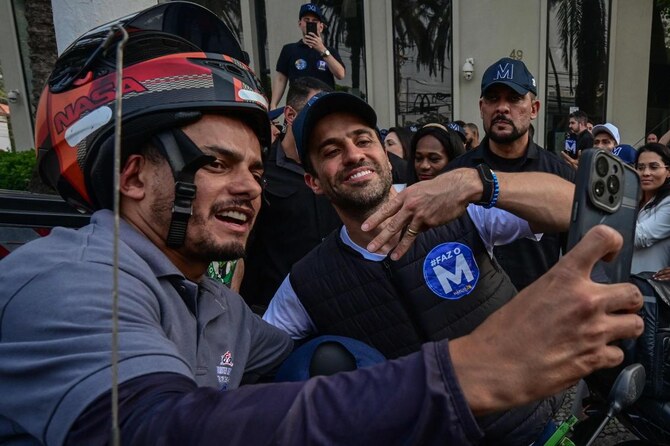
But adding a new dimension to a traditional political rift, outsider career coach and influencer Pablo Marcal has become a surprise hit with voters — with polls showing a near three-way tie between the men.
Rightwing Marcal, a provocative 37-year-old, has brought chaos to the campaign.
Regularly accused of spreading fake news, he has been thrown out of several debates — one of which saw an exasperated rival beat him with a chair.
With his aggressive style of politics, Marcal has attracted votes even from the Bolsonarista bloc, as well as Evangelical sectors and staunch opponents of “communism” — a tag Bolsonaro has regularly tried to put on Lula.
Alarmed by the rise of Marcal, Brazilian artists, intellectuals, businessmen and legal scholars have urged residents of Sao Paulo not to split their vote and unite behind Boulos to avoid a “tragic” outcome for the city.
In Rio de Janeiro, centrist mayor Eduardo Paes is by far the favorite for a fourth term.
His closest rival, rightwing MP Alexandre Ramagem, has proven a controversial choice — he is under investigation for allegedly spying on politicians and other public figures when he served as head of intelligence under then-president Bolsonaro.
There have been concerns raised over alleged organized crime infiltration of municipal politics, with the head of the Supreme Electoral Tribunal warning of attempts to influence the election outcome in some municipalities.
In September, there were at least a dozen attacks on and threats against candidates for mayor and other municipal posts, and three deaths, according to press reports.
The election campaign has taken place in the absence of Brazil’s most popular political platform.
Social network X has been suspended in the country since August 31 in a disinformation tug-of-war between the Supreme Court and owner Elon Musk.
It also occurred as the country battled record fires and a critical drought fueled by climate change, according to experts.
Yet the environmental emergency confronting Brazil, from the Amazon rainforest to the Pantanal wetlands and beyond, hardly feature in the campaign.
Overall, polling does not bode well for Lula’s Workers’ Party which may, once again, find itself without a single state capital.
“Not even the political strength of the (president) or the good numbers of the economy seem able to reverse” the party’s years-long decline, said political analyst Andre Cesar.
Polls show that 11 of the 26 state capitals, including Rio de Janeiro, could elect their mayor in the first voting round.
If no candidate obtains more than 50 percent of votes cast, the contest will be settled in a second election round on October 27.

Brazilians choose mayors, councilors in bellwether election
Short Url
https://arab.news/8t6xa
Brazilians choose mayors, councilors in bellwether election
- The municipal outcome will serve as a bellwether of political sentiment in a deeply divided country
- The election campaign has taken place in the absence of Brazil’s most popular political platform
C. Africa’s displaced youth bet on vote for brighter future
BIRAO: Amani Abdramane bustled around her donkey in the makeshift camp where she lives in the Central African Republic.
In this northern part of the country, on the edge of the Sahel, the sun is scorching and sand is swallowing the last traces of vegetation.
The 18-year-old adjusted a pink scarf covering her head and shoulders and pondered what she wanted from Sunday’s general election that will choose local and regional officials, members of parliament and a new president.
“I hope the person I vote for brings peace,” she said of the seven candidates vying to become head of state.
They include President Faustin-Archange Touadera, who is seeking a third consecutive term.
Displaced by decades of conflict, young people like Abdramane who live in camps around the town of Birao in the far northeast, see the elections as a chance for a better future.
Abdramane fled ethnic violence in El-Sisi, her home village seven kilometers (four miles) from Birao, in 2015 with her mother and eight siblings.
Her father had been killed a few months earlier.
“I just want my brothers, sisters and me to be able to go to school,” she said.
- First-time voters -
Abdramane had just completed her second year of school, aged eight, when her family had to flee.
She has not returned to lessons since.
Now the teenager and other young people are counting on the elections to bring them peace, education and opportunities beyond life as displaced persons.
The last polls were in 2020 but lack of security meant even those old enough to vote at the time were unable to do so.
There is a crowd outside the community radio station in the Korsi neighborhood of Birao, which serves as a distribution center for voter registration cards.
Marina Hajjram, also 18, will be voting for the first time.
“I’m so happy,” she told AFP, clutching her voter card.
Behind her in the queue, 25-year-old Issa Abdoul agreed the elections were essential “to continue the reconstruction of our country.”
Korsi is home to thousands of internally displaced persons, as well as many refugees from neighboring Sudan.
Across CAR, there were 416,000 internally displaced persons as of November, the vast majority of whom are under 25 and will be voting for the first time this weekend.
- A brighter future -
For them, the mere act of obtaining a voter registration card is a challenge.
First they must produce an identity document. But many lost everything when they fled, including ID papers for those who had them.
Three quarters of people in the CAR are under 35, according to a 2018 report by the United Nations Population Fund.
And peace is one of the things these young people most want.
Although the situation has improved in much of the country, particularly in cities, violence persists in the northeast on the border between the two Sudans.
This is mainly due to incursions by Sudanese armed forces, who are waging war in a region already plagued by abuses blamed on rebel groups.
Issene Abdoulkasim, 23, only made it to the third year of primary school.
Now he wants to become a tailor so he can afford to study again.
“I dream of studying so I can become a member of parliament. Because as an MP I’ll be able to bring peace and development,” he said.
“I want to put an end to conflicts, tensions and everything that is destroying our country.”
In this northern part of the country, on the edge of the Sahel, the sun is scorching and sand is swallowing the last traces of vegetation.
The 18-year-old adjusted a pink scarf covering her head and shoulders and pondered what she wanted from Sunday’s general election that will choose local and regional officials, members of parliament and a new president.
“I hope the person I vote for brings peace,” she said of the seven candidates vying to become head of state.
They include President Faustin-Archange Touadera, who is seeking a third consecutive term.
Displaced by decades of conflict, young people like Abdramane who live in camps around the town of Birao in the far northeast, see the elections as a chance for a better future.
Abdramane fled ethnic violence in El-Sisi, her home village seven kilometers (four miles) from Birao, in 2015 with her mother and eight siblings.
Her father had been killed a few months earlier.
“I just want my brothers, sisters and me to be able to go to school,” she said.
- First-time voters -
Abdramane had just completed her second year of school, aged eight, when her family had to flee.
She has not returned to lessons since.
Now the teenager and other young people are counting on the elections to bring them peace, education and opportunities beyond life as displaced persons.
The last polls were in 2020 but lack of security meant even those old enough to vote at the time were unable to do so.
There is a crowd outside the community radio station in the Korsi neighborhood of Birao, which serves as a distribution center for voter registration cards.
Marina Hajjram, also 18, will be voting for the first time.
“I’m so happy,” she told AFP, clutching her voter card.
Behind her in the queue, 25-year-old Issa Abdoul agreed the elections were essential “to continue the reconstruction of our country.”
Korsi is home to thousands of internally displaced persons, as well as many refugees from neighboring Sudan.
Across CAR, there were 416,000 internally displaced persons as of November, the vast majority of whom are under 25 and will be voting for the first time this weekend.
- A brighter future -
For them, the mere act of obtaining a voter registration card is a challenge.
First they must produce an identity document. But many lost everything when they fled, including ID papers for those who had them.
Three quarters of people in the CAR are under 35, according to a 2018 report by the United Nations Population Fund.
And peace is one of the things these young people most want.
Although the situation has improved in much of the country, particularly in cities, violence persists in the northeast on the border between the two Sudans.
This is mainly due to incursions by Sudanese armed forces, who are waging war in a region already plagued by abuses blamed on rebel groups.
Issene Abdoulkasim, 23, only made it to the third year of primary school.
Now he wants to become a tailor so he can afford to study again.
“I dream of studying so I can become a member of parliament. Because as an MP I’ll be able to bring peace and development,” he said.
“I want to put an end to conflicts, tensions and everything that is destroying our country.”
© 2025 SAUDI RESEARCH & PUBLISHING COMPANY, All Rights Reserved And subject to Terms of Use Agreement.