
CAIRO: Libya’s state-run oil company said Thursday it was restarting full oil production, almost two months after shutting down operations in two of its major fields amid a political crisis.
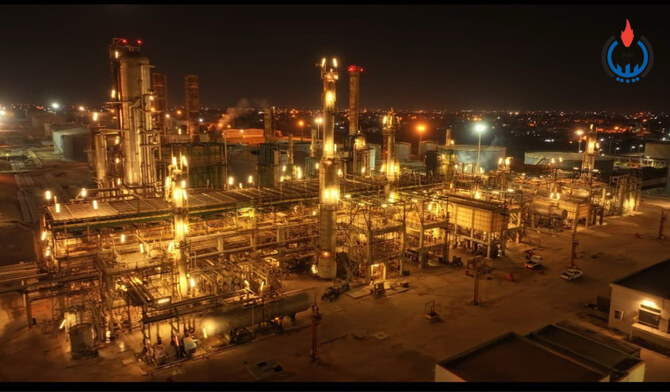
The National Oil Corporation said in a statement that it would resume production at the Sharara and El-Feel oil fields, and export shipments from Es Sider, the country’s largest port. In August, the company declared “force majeure,” a legal maneuver that lets a company get out of its contracts because of extraordinary circumstances.
As part of the review of the force majeure situation, NOC confirmed in its statement that it “can resume the operations of crude oil production and exporting operations to its customers.”
The National Oil Corporation previously blamed the shutdown on the Fezzan Movement, a local protest group. It came as the country’s rival authorities were locked in a dispute over the governance of its Central Bank, which distributes the country’s oil revenues.
In August, the UN warned that the country was poised to face even greater instability due to the dispute. But that was resolved in recent days, when the country’s parliament appointed a new governor to the bank.
Libya produces more than 1.2 million barrels of oil per day, and Sharara is the country’s largest field, producing up to 300,000 barrels per day. It was exporting most of it. In September, exports averaged 460,000 bpd according to oil analytics firm Kpler.
The oil-rich country has been in political turmoil since a NATO-backed uprising toppled and killed longtime dictator Muammar Qaddafi in 2011. Since then, Libya has been split between rival administrations in the east and the west, each backed by militias and foreign governments.
The latest dispute
NOC declared force majeure on Aug. 7 at Sharara oilfield — one of Libya’s largest production areas with a capacity of about 300,000 barrels per day — and on Elfeel oilfield on Sept.2.
Sharara is located in southwestern Libya and operated by a joint venture of NOC with Spain’s Repsol, France’s TotalEnergies, Austria’s OMV, and Norway’s Equinor.
Elfeel has a capacity of 70,000 barrels per day and is operated by Mellitah Oil and Gas, a joint venture between NOC and Italy’s Eni.
Two engineers at the field told Reuters the oilfield resumed production but not with full capacity due to maintenance work.
Earlier, three engineers said there were some “technical problems” at Elfeel.
The government in Benghazi in the east said oil production and exports would resume normal operations, after the rival authorities agreed last month to appoint Issa as new central bank governor.
Authorities in the second-largest city had closed oilfields and halted most of crude exports on Aug. 26 in protest against a move by the Presidential Council, which sits in Tripoli in the west, to replace veteran central bank chief Sadiq Al-Kabir.
The head of the Presidential Council, Mohamed Al-Menfi, met with Issa on Wednesday and stressed “the need for the central bank governor to commit to the technical role of the bank, stay away from politics, and not surpass the legal jurisdictions of the board of directors.”
The United Nations Support Mission in Libya UNSMIL welcomed in a statement NOC announcing the lifting of force majeure on oil production.
The mission emphasized that “it is essential that revenues from this vital resource be channeled through the appropriate institutional framework, and ultimately to the Central Bank of Libya.”