

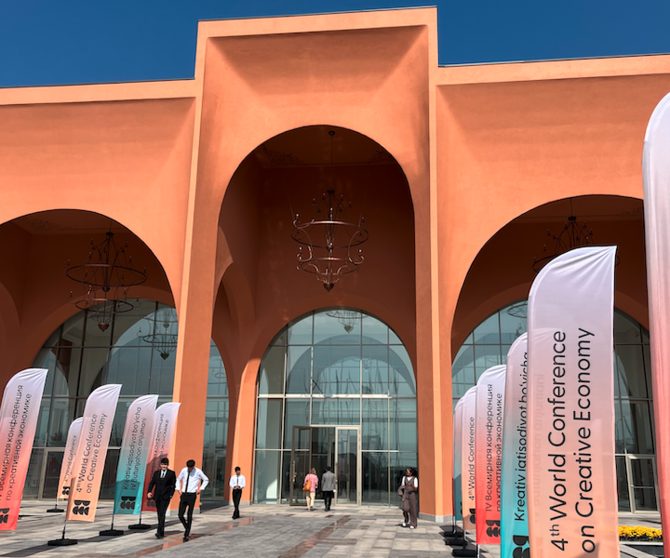

TASHKENT: Industry leaders from Saudi Arabia joined fashion icon Naomi Campbell and other prominent figures at a pivotal conference in Uzbekistan dedicated to the creative economy.
Taking place in Tashkent from Oct. 2 to 4, the forum serves as a platform for members of the global creative community to engage in essential discussions on sustainable development and innovation within artistic practices.
The conference also highlighted the promising future of the creative economy, a sector rapidly expanding worldwide. Currently, cultural and creative industries generate approximately $2.3 trillion annually and contribute 3.1 percent to the global GDP, with projections suggesting this could rise to 10 percent by 2030.
Organized by the Uzbekistan Art and Culture Development Foundation, Indonesia, the UN Conference on Trade and Development, and the World Intellectual Property Organization, this year’s event aimed to explore new avenues for the creative economy.
The 4th World Conference on Creative Economy showcased a robust Saudi presence, aimed at fostering collaboration under the theme: “Inclusively creative: A shifted reality.”
Saudi Arabia’s participation in the event underscores the country’s rising influence in the international creative landscape, aligning its initiatives with global movements in sustainability, creativity, and cultural diplomacy.
Although she was unable to attend in person due to unrest in the Middle East and North Africa region, Princess Nourah Al-Faisal— a key figure in the Kingdom’s creative community— underscored the significance of the discussions, referring to the conference as “an exciting and important platform.”
Speaking exclusively to Arab News, she emphasized: “It’s extremely important that, at a time like this, people come together to talk about creativity, youth empowerment, and the sustainability of the creative economy to develop a better world for future generations.”
She further expressed her regret at missing the event: “I am just so sorry that I was unable to make it. It’s such an exciting event, an important event to have, and so many important discussions and dialogues are taking place.”
Jeroen Frumau, lead consultant for Princess Nourah Al-Faisal’s consulting service, Adhlal, elaborated on her contributions during a panel discussion titled “Creative and sustainable — visions for a world that works for people and planet.”

Nora Al-Dabal. Supplied
Nora Al-Dabal, executive director for Arts and Creative Industries at the Royal Commission for AlUla, participated in another panel, “Innovation engines — creative clusters, fab-labs, and artist accelerators.”
She shared her motivation for being part of the discussions: “A lot of our work focuses on the Global South, and being here today with the creatives and the policymakers is very important.”
Al-Dabal added: “We do run a residency program in AlUla that is open for artists from all over the world. We strive to make sure it is inclusive.”
AlUla, renowned as one of the largest open living museums globally, has recently emerged as a significant hub for creatives in northwestern Saudi Arabia.
Ahmad Angawi, a prominent Saudi speaker and founder of Zawiya 97— described as a “creative hub located in the heart of historic Al-Balad, Jeddah”— also shared insights on the Kingdom’s leadership in the creative economy.
He expressed his satisfaction with the Saudi presence at the conference: “I was very pleased to see the Saudi presence here; we have Nora Al-Dabal from AlUla and, later, Mashael Al-Yahya from Misk Foundation.”
Angawi told Arab News that while Princess Nourah Al-Faisal was unable to attend, her planned participation signifies that “we are already leading in the creative economy.”
His work with the Al Makmad Foundation and Zawiya 97, alongside decades dedicated to reviving traditional Saudi crafts, underscores the Kingdom’s commitment to preserving traditional arts while embracing innovation.
“It’s always a pleasure to be here in Uzbekistan — it’s a rich history,” Angawi said, adding, “We have a beautiful connection of cultural exchange between Uzbekistan and Saudi. It’s always a great pleasure to highlight and show the commonality between us and them.”
Angawi went to say: “It’s a great time for creatives, for artists, for craftsmen, and for makers to be developing work … even the technology of AI is rooted in the crafts.”
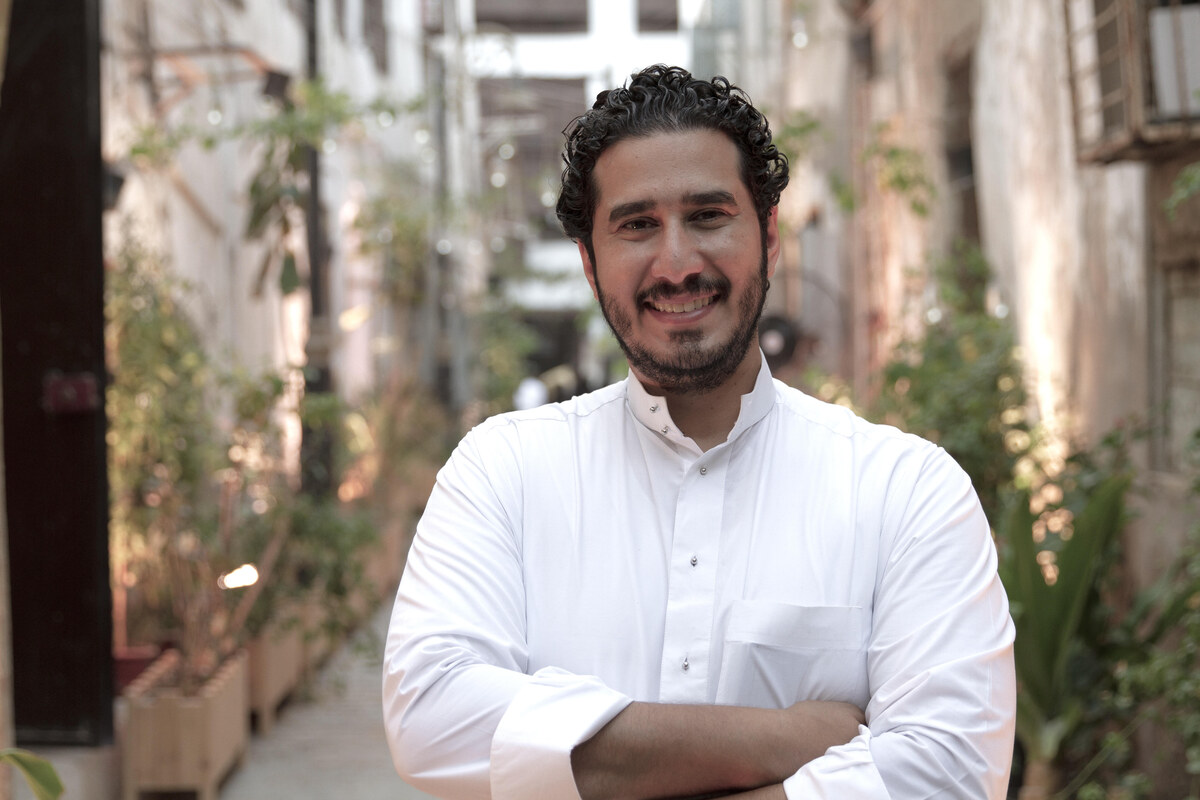
Ahmad Angawi. Supplied
Key participants at the WCCE included Saida Mirziyoyeva, adviser to the president of Uzbekistan, along with other influential figures. The sessions covered a broad spectrum of topics, including the integration of AI in the arts, the future of creative education, and the potential for art and culture to enhance diplomacy and urban development.
Gayane Umerova, chairperson of Uzbekistan’s Art and Culture Development Foundation, expressed her enthusiasm for the ongoing creative transformation: “We are living in a very exciting time for arts and culture,” she said. “Creators today are blurring the lines between business, arts, and technology, and WCCE comes at an opportune time for a global discussion on uplifting the next generation of creators.”

A panel discussion at the event, which was held in Uzbekistan for the first time. Supplied
Discussions at WCCE, established in 2018, emphasized the importance of mindful collaboration across industries and sectors to ensure equitable growth, particularly as creative fields increasingly intersect with technology and sustainability initiatives.
As the first WCCE held in Uzbekistan, the conference demonstrated the potential of the creative sector to drive sustainable development, job creation, and cultural enrichment on a global scale. The next biennial WCCE is set to return to its origins in Indonesia, where the inaugural event took place.


