WASHINGTON: President Joe Biden said Wednesday he will not support an Israeli strike on sites related to Tehran’s nuclear program in response to Iran’s missile attack on Israel.
“The answer is no,” Biden told reporters when asked if he would support such retaliation after Iran fired about 180 missiles at Israel on Tuesday.
Biden’s comments came after he and fellow Group of Seven leaders from Canada, France, Germany, Italy, Japan and the United Kingdom spoke by telephone about coordinating new sanctions against Iran.
The US and allies are scrambling to keep the Mideast conflict — sparked by Iran-backed Hamas militants’ in Gaza’s Oct. 7 attack on Israel— from spreading further. They are urging Israel to show restraint as it weighs retaliation against Iran for Tuesday’s attack.
Israel is now carrying out what it has described as limited ground operations across its northern border with Lebanon to dig out Hezbollah, another Iran-backed group, after carrying out a series of massive air strikes that killed the group’s leader, Hassan Nasrallah, and decimated its leadership.
Last month, thousands of explosives hidden in pagers and walkie-talkies used by Hezbollah detonated, killing dozens of people and maiming thousands, including many civilians. Israel is widely believed to be behind the attack
Biden stated his opposition to Israel hitting Iranian nuclear facilities as Israeli Prime Minister Benjamin Netanyahu weighed a range of options in how to respond to Tuesday’s attack. It was the second such attack by Iran on Israel in less than six months.
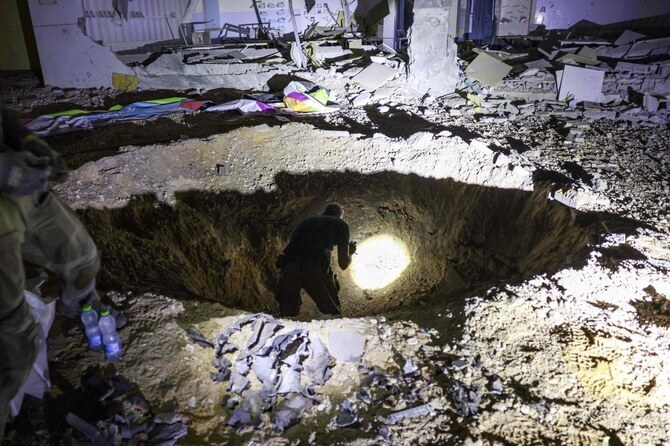
Israel’s choices range from a largely symbolic strike— similar to how Israel responded after Iran launched a barrage of missiles and attack drones in April— to hitting oil facilities and other infrastructure.
Targeting Iran’s controversial nuclear program is seen as perhaps the most provocative action that Israel could take. It’s one that the Democratic president believes could further enflame a Mideast conflict that he already worries could develop into a broader regional conflict.
The White House said in a statement that G7 leaders “unequivocally condemned Iran’s attack against Israel” and that Biden reaffirmed America’s “full solidarity and support to Israel and its people.”
Biden added that he supports Israel’s right to defend itself and “there are things that have to be done” in response to the Iranian barrage. He said he expected sanctions from the G7 nations to be announced soon.
“We will be discussing with the Israelis what they are going to do,” Biden told reporters before heading to the Carolinas to see the devastation caused by Hurricane Helene. “All seven of us agree that they have a right to respond.”
The office of Italian Premier Giorgia Meloni said in a statement that the leaders expressed “strong concern for the escalation of these last hours” and emphasized that “a conflict on a regional scale is in no one’s interest.” Italy holds the rotating presidency of the G7 group of industrialized democracies.
Biden said that he planned to speak with Netanyahu “relatively soon.”
Biden’s administration has signaled that it is urging Israel to display restraint in how it responds to Iran’s missile attack, which Biden said was “ineffective and defeated.”
The US military helped Israel defend against the attack that Iran carried out in retaliation for the killing of Tehran-backed leaders of Lebanese Hezbollah.
Deputy Secretary of State Kurt Campbell said there “must be a return message” to Iran. He said the US and Israel officials continue to discuss their response.
“At the same time, I think we recognize as important as the response of some kind should be, there is a recognition that the region is really balancing on a knife’s edge,” Campbell said at forum hosted by the Carnegie Endowment for International Peace, a Washington think tank.
Secretary of State Antony Blinken spoke on Wednesday with his counterparts Britain, France, Germany, and Italy to discuss the situation in the Middle East.


![]()

Biden won’t support a strike on Iran nuclear sites as Israel weighs response to Iran missile attack
Short Url
https://arab.news/jpzcy
Biden won’t support a strike on Iran nuclear sites as Israel weighs response to Iran missile attack
- “The answer is no,” Biden told reporters when asked if he would support such retaliation
- US and allies are urging Israel to show restraint as it weighs retaliation against Iran airstrikes
Latest updates




© 2026 SAUDI RESEARCH & PUBLISHING COMPANY, All Rights Reserved And subject to Terms of Use Agreement.