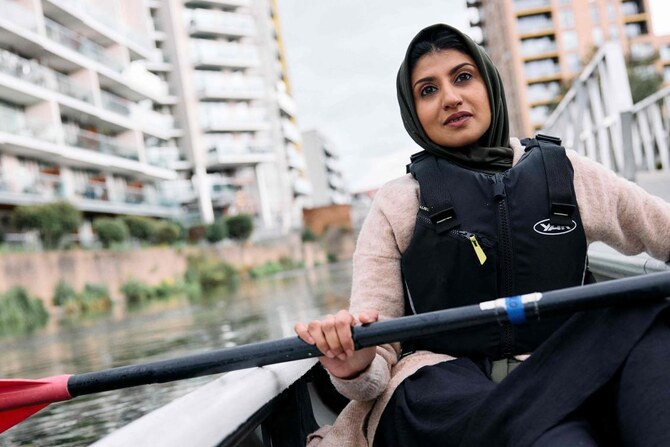
London: Paddle dipped gently below mossy water, Dilruba Begum guided the kayak and a trainee sat in front of her down a canal in east London.
“Out here, you can be anyone,” she whispered as she lifted the paddle up to allow the kayak to drift with the current.
Two years ago, when Dilruba, 43, was swamped with mothering duties, a friend told her about a free, women-only program to learn paddle sports near her home.
Now she is a qualified paddle sport instructor, after taking part in the program run by local housing and community regeneration body Poplar HARCA.
Dilruba and her fellow paddlers are breaking new ground, encouraging women from London’s less advantaged eastern neighborhoods to embrace water sports that many felt were inaccessible to ethnic minorities like them with stretched resources and limited leisure time.
The initiative has grown in the last two years from a pilot project with 18 women to a group of around 70.
Among them are women who are “working, some are full-time mums, some haven’t been out of the house in years,” Dilruba told AFP.
Nine of them, including Dilruba and Atiyya Zaman, 38, have qualified as instructors and started London’s first boat club with an all-female, Muslim committee.
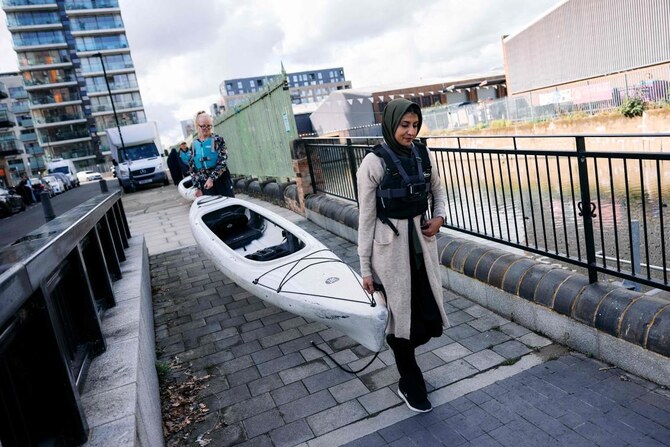
On a rain-soaked September afternoon, the pair led their first session, teaching a small group of women how to use kayaks and inflatable paddle boards.
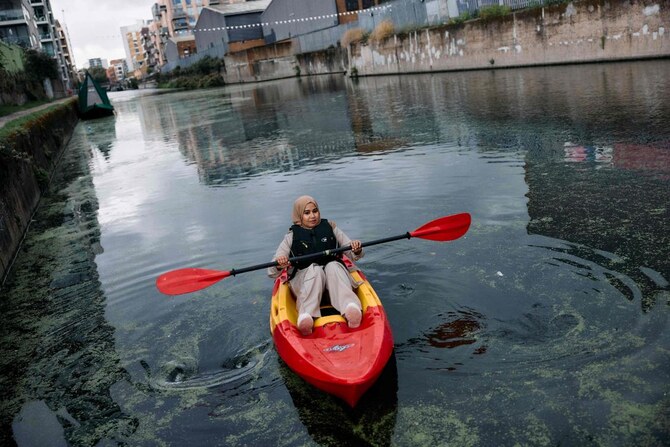
Life vests secured, they demonstrated different maneuvers to participants on a small pontoon before lowering themselves into kayaks to begin the session on Limehouse Cut.
The canal runs through Poplar and Bow in Tower Hamlets, one of the city’s most deprived and densely populated boroughs.
One aim of the initiative is to improve local people’s access to “blue spaces” in Poplar, which lies at the heart of 6.5 kilometers (3.7 miles) of uninterrupted waterways.
“I live next to the canal, and I used to see people going (on it) all the time. I did always wonder how it would feel if I could do that?” said Atiyya, bobbing up and down on an orange kayak.
Jenefa Hamid, from Poplar HARCA, said many people from black, Asian and minority ethnic (BAME) backgrounds that make up most of the local community “thought water sport was not something that’s typically for them.”
This could be due to a fear of drowning, as well as cultural and religious reasons. “I think it is just feeling socially excluded,” she added.
According to Sport England data from 2017 to 2019, less than one percent of Asian (excluding Chinese) adults participated in water sports, and all BAME communities were under-represented in swimming activities.
Some of the women in the group “haven’t even been in the water before,” said Atiyya.
“When I started, especially women within this community, we would never do this sort of thing.”
Making the program women-only and allowing different attire made it welcoming to local Muslim women.
Naseema Begum, 47, who was part of the initial cohort and is now an instructor, said there was a “taboo” preventing Asian women and those wearing headscarves from taking part in water sports.
Wearing a niqab, Naseema wanted to show that “you can wear anything and go in the water. As long as you’ve got the right equipment... anyone can take part.”
Women were also attracted by the affordability. Private boating clubs are “quite unaffordable if you’ve got a family to maintain,” said Naseema, adding that she could not justify spending the amount on her own “leisure.”
Naseema now chairs the “Oar and Explore” boat club. With Atiyya and Dilruba, they hope to raise enough funds to acquire their own boats and a storage space by a new pontoon planned for the area.
“The way I felt, the enjoyment and the confidence that I’ve built from this, I want to pass it on to others and tell them there’s more to life,” said Dilruba.
Part of the enjoyment for her was a rare chance to “just sit down with your thoughts, not think about anything else.”
Atiyya agreed. “During Covid, it was quite hard with three young children at home, and then with work, it was very stressful. This was a way to escape,” she said.
Dilruba credits the instructors for helping her become one herself — and opening up a new world.
“They have lifted us up and made us into some new people, with new experiences... new skills we never thought we would have,” she said.


![]()
![]()
![]()

Muslim women break taboos navigating east London’s waterways
Short Url
https://arab.news/whdnn
Muslim women break taboos navigating east London’s waterways
- The initiative has grown in the last two years from a pilot project with 18 women to a group of around 70

Latest updates


Recommended


© 2026 SAUDI RESEARCH & PUBLISHING COMPANY, All Rights Reserved And subject to Terms of Use Agreement.