



ISLAMABAD: Prime Minister Shehbaz Sharif on Wednesday urged the world to ensure a fair deal in assisting developing countries like Pakistan in coping with the adverse impacts of climate change, warning that loans for this purpose were debt traps which he described as “death traps.”
Sharif expressed these opinions while addressing an event, the Sustainable Development Goal (SDG) Moment 2024, on the sidelines of the 79th United Nations General Assembly (UNGA) Session in New York.
The high-level discussion week at the UNGA kicked off just a few hours before the prime minister spoke, with world leaders and policymakers attending debates and side events aimed at addressing the most pressing global issues.
Sharif attended a welcome reception hosted by UN Secretary-General Antonio Guterres for the participating heads of state and government. The Pakistani premier also participated in the inaugural UNGA session.
“We faced terrorism after 9/11 … and finally, we were able to beat them [the militants] hands down, but in the process, we lost $150 billion as our economic loss, and during [the 2022] floods lost $30 billion, and yet we are asked to borrow money, to pay borrowed money in loans,” Sharif said while addressing the SDG event.
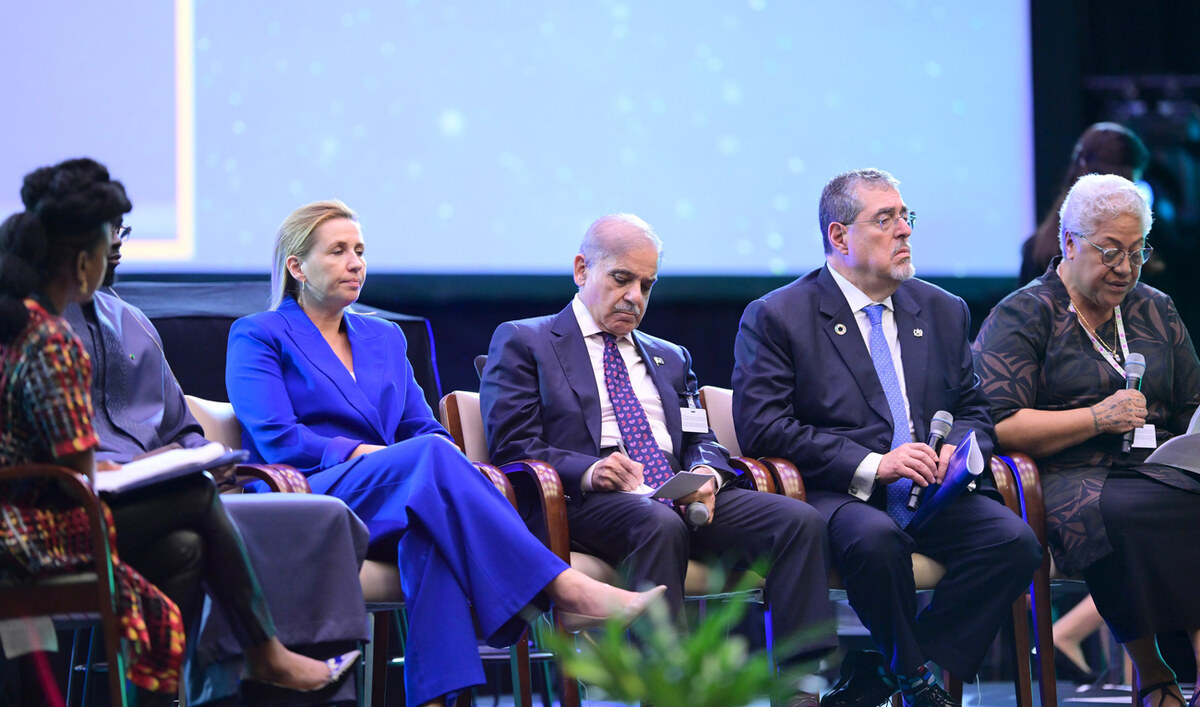
Pakistan Prime Minister Shehbaz Sharif gestures during a panel discussion with Fiame Naomi Mata’afa Prime Minister of Samoa, Bassirou Diomaye Faye President of Senegal, Mette Frederiksen Prime Minister of Denmark and Bernardo Arévalo President of Guatemala, convened by United Nations Secretary General on spearheading breakthroughs to reach the 2030 promise through just and inclusive transitions in SDG Moment in New York on September 24, 2024. (PMO)
“This vicious circle of debt traps, I call it a death trap, will not help at all the developing societies,” he continued. “So, we have to strike a fair deal.”
Pakistan witnessed unprecedented monsoon rains leading to flash floods in 2022, which were widely attributed to climate change despite contributing less than a fraction of a percent to global carbon emissions.
“Those who play with trillions [of dollars] and are responsible for these emissions, they have to share their responsibility and come to the help of these developing societies,” Sharif said, calling the current situation a result of an “unbalanced, unjust and unfair system [that] will lead to nowhere.”
Speaking about the issues faced by the country in the education sector, he noted that a large number of children were still out of school in Pakistan due to financing issues.
“Twenty-five million children even today are out of school [in Pakistan],” he said, calling it a “big challenge.”
However, he maintained that developing countries like Pakistan struggle to raise funds to meet the SDGs and catch up with the developing world.
BILATERAL MEETINGS
On the sidelines of the UNGA session, the prime minister also held a bilateral meeting with Turkish President Recep Tayyip Erdoğan.
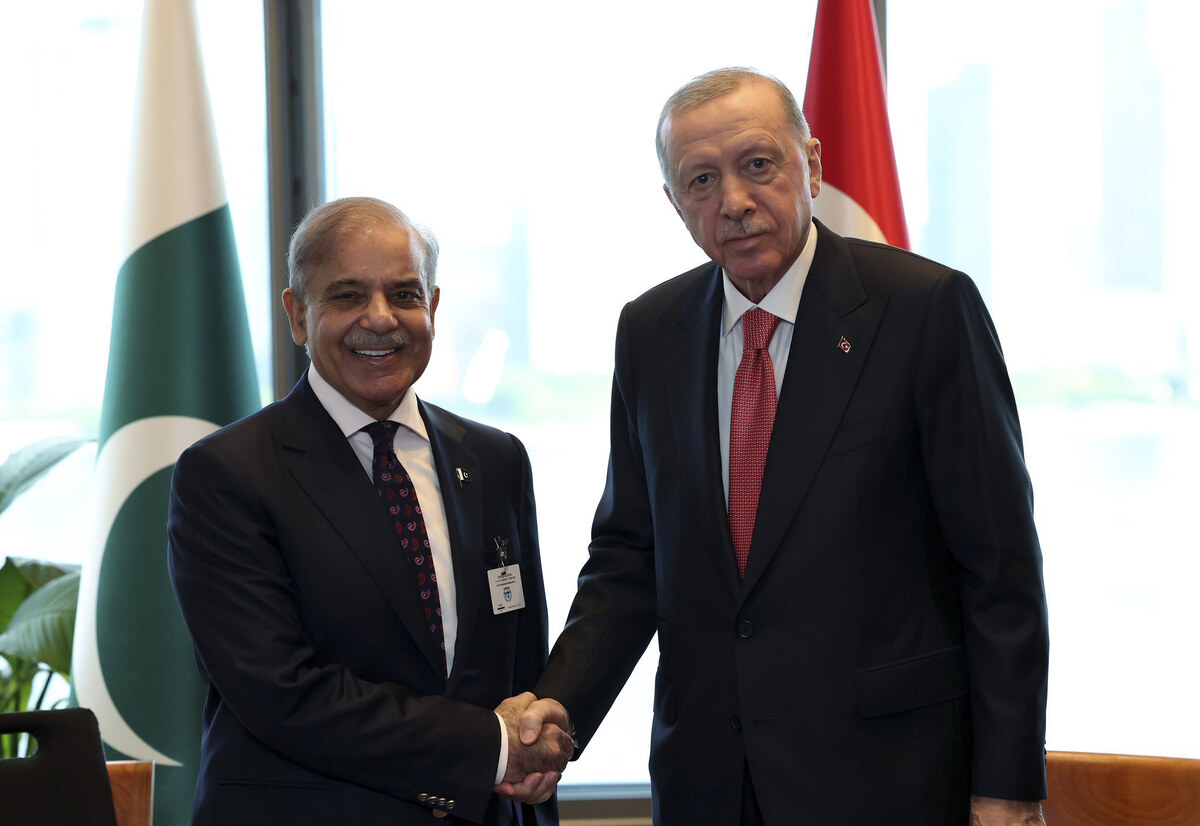
Pakistan Prime Minister Shehbaz Sharif (left) shakes hands with Turkish President Recep Tayyip Erdoğan on the sidelines of United National General Assembly meeting in New York on September 24, 2024. (PMO)
“Today, the president of Turkiye delivered a highly enthusiastic speech at the United Nations,” he told reporters after the meeting. “The way the Turkish president presented the issue of Palestine touched the hearts of everyone present in the hall.”
“I congratulated the president of Turkiye on his speech,” he added.
The prime minister said Pakistan and Turkiye enjoyed brotherly relations, adding that Erdoğan would soon visit the country.
He also met with President of Maldives Dr. Mohamed Muizzu and vowed to enhance cooperation with the island nation in various fields, including trade, tourism, education, investment and climate change.
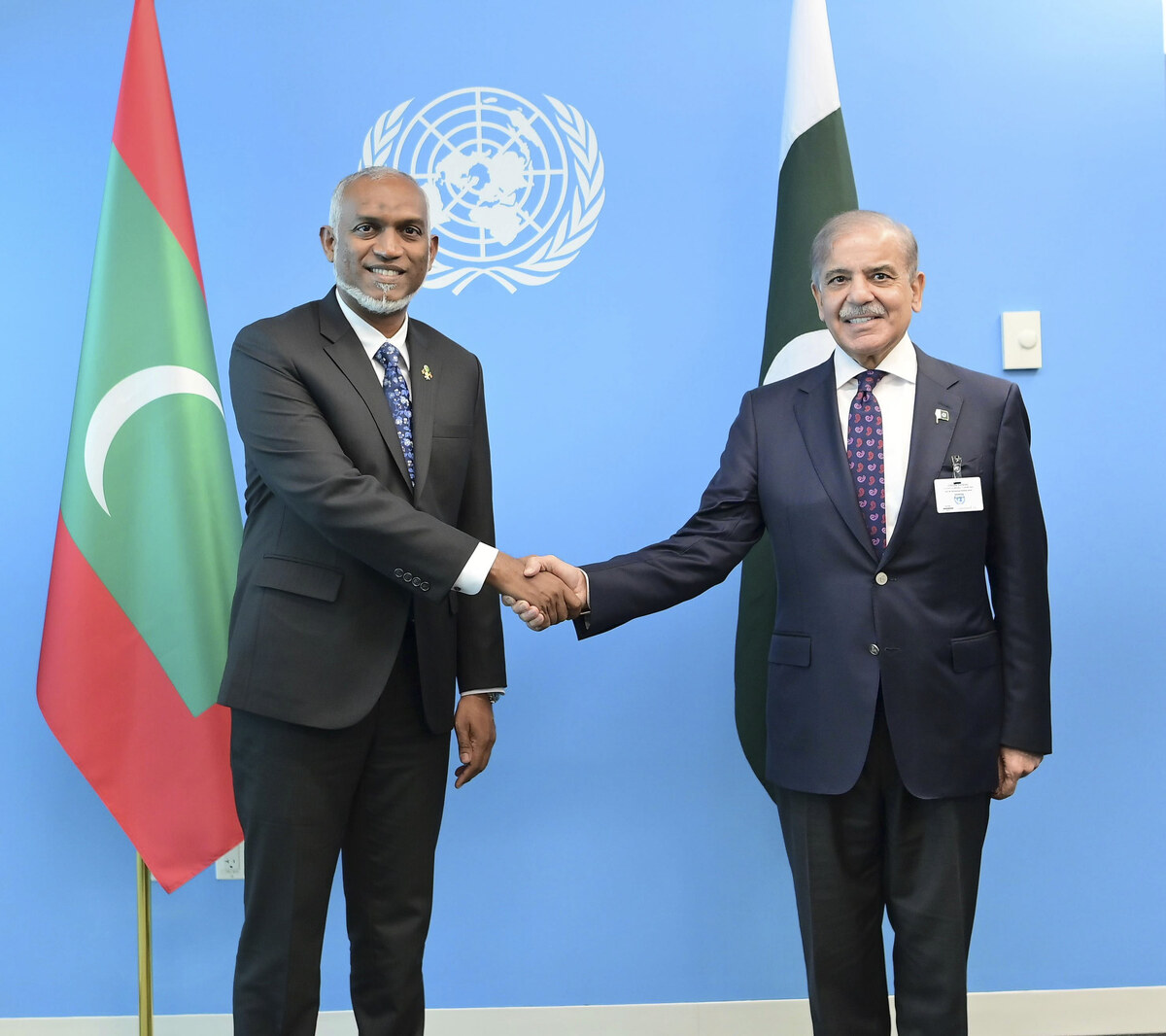
Pakistan Prime Minister Shehbaz Sharif (right) shakes hands with President of Maldives Dr. Mohamed Muizzu on the sidelines of United National General Assembly meeting in New York on September 24, 2024. (PMO)
The PM Office said in a statement that during the meeting, the two leaders underscored the deep-rooted ties between Pakistan and the Maldives.
“Both leaders agreed on the need to increase people-to-people exchanges and collaborative efforts to promote economic growth and sustainable development in their respective countries,” the statement added.
Sharif is scheduled to address the General Assembly on Friday.


