RIYADH: The commander of Iran’s overseas Quds Force has been dispatched to Baghdad to order Iran-backed factions to stop undermining Prime Minister Mohammed Shia Al-Sudani.
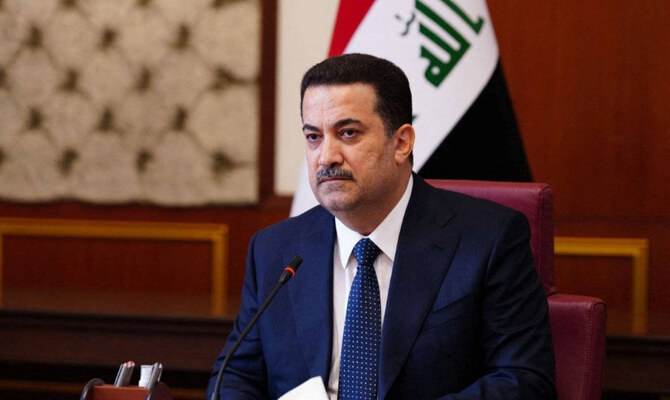
Sudani is facing allegations that his office spied on top Iraqi officials and rival politicians. The judiciary has opened an investigation into the claims, led by Faiq Zaidan, head of the Supreme Judicial Council, which could determine whether Sudani continues in his job.
Quds Force chief Esmail Qaani told Iraqi political leaders that stability in Iraq was vital amid an escalation in regional violence, and they should ease criticism of the prime minister.
Analysts say the move reflects concerns in Tehran about instability on its doorstep in Iraq, where Iran has long exerted influence through armed groups and political parties.
“At a crucial moment for Iran when it’s trying to respond to Israeli aggression, the Iraqi groups are infighting in a way that’s destabilizing. The last thing Iran wants now is a political mess in Iraq,” said Renad Mansour of the Chatham House think tank in London.

Iran tells politicians in Iraq to halt their infighting
https://arab.news/49jbm
Iran tells politicians in Iraq to halt their infighting
- Quds Force chief Esmail Qaani told Iraqi political leaders that stability in Iraq was vital amid an escalation in regional violence
Thousands of Gaza children suffer from famine conditions
- “The number of children admitted is five times higher than in February, so we need to see the numbers come down further”
GENEVA: Thousands of children have been admitted for treatment for acute malnutrition in Gaza since an October ceasefire that was supposed to enable a major increase in humanitarian aid, the UN children’s agency said on Tuesday.
UNICEF, the biggest provider of malnutrition treatment in Gaza, said that 9,300 children were treated for severe acute malnutrition in October, when the first phase of an agreement to end the two-year Israel-Hamas war came into effect.
FASTFACTS
• UNICEF, the biggest provider of malnutrition treatment in Gaza, said that 9,300 children were treated for severe acute malnutrition in October. • While this is down from a peak of over 14,000 in August, the number is still significantly higher than during a brief February-March ceasefire.
While this is down from a peak of over 14,000 in August, the number is still significantly higher than during a brief February-March ceasefire and indicates that aid flows remain insufficient, UNICEF spokesperson Tess Ingram told a Geneva press briefing by video link from Gaza.
“It’s still a shockingly high number,” she said.
“The number of children admitted is five times higher than in February, so we need to see the numbers come down further.” Ingram described meeting underweight babies weighing less than 1 kilogram born in hospitals “their tiny chests heaving with the effort of staying alive.”
UNICEF is able to import considerably more aid into the enclave than it was before the October 10 agreement but obstacles remain, she said, citing delays and denials of cargoes at crossings, route closures and ongoing security challenges.
“We have seen some improvement, but we continue to call for all of the available crossings into the Gaza Strip to be open,” she added. There are not enough commercial supplies entering Gaza, she added, saying that meat was still prohibitively expensive at around $20 a kilogram.
“Most families can’t access this, and that’s why we’re still seeing high rates of malnutrition,” she said.
In August, a UN-backed hunger monitor determined that famine conditions were affecting about half a million people — or a quarter of Gaza’s population.
Children were severly affected by hunger as the war progressed, with experts warning that the effects could cause lasting damage.


