
BEIRUT/JERUSALEM: An Israeli airstrike on Beirut killed a senior Hezbollah commander on Tuesday as cross-border rocket attacks by both sides increased fears of a full-fledged war in the Middle East and Lebanon said only Washington could help end the fighting.
Hezbollah early on Wednesday confirmed senior commander Ibrahim Qubaisi was killed by Israeli airstrikes on Tuesday on the Lebanese capital as Israel announced earlier. Israel said Qubaisi headed the group’s missile and rocket force.
Israel’s offensive since Monday morning has killed 569 people, including 50 children, and wounded 1,835 in Lebanon, Health Minister Firass Abiad told Al Jazeera Mubasher TV.
HIGHLIGHTS
• Israel kills Hezbollah commander in Beirut
• Lebanese health ministry says two-day death toll is 569
• UN Security Council to meet Wednesday
• Fears of a wider conflict are growing
The new offensive against Hezbollah has stoked fears that nearly a year of conflict between Israel and the militant Palestinian group Hamas in Gaza is escalating and could destabilize the Middle East. Britain urged its nationals to leave Lebanon and said it was moving 700 troops to Cyprus to help its citizens evacuate.
The UN Security Council said it would meet on Wednesday to discuss the conflict.
“Lebanon is at the brink. The people of Lebanon – the people of Israel – and the people of the world — cannot afford Lebanon to become another Gaza,” UN Secretary General Antonio Guterres said.
At the UN, which is holding its General Assembly this week, US President Joe Biden made a plea for calm. “Full-scale war is not in anyone’s interest. Even if a situation has escalated, a diplomatic solution is still possible,” he said.
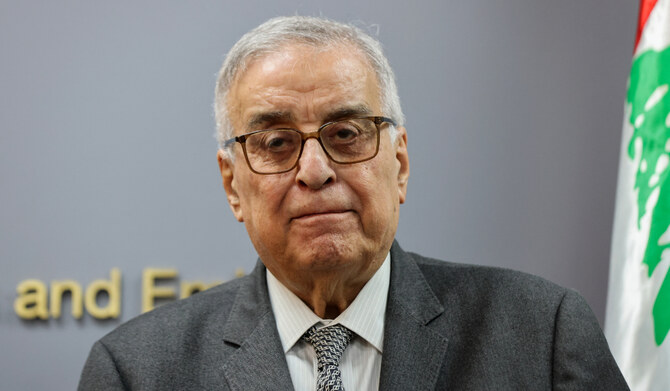
Lebanon’s Foreign Minister Abdallah Bou Habib criticized Biden’s address as “not strong, not promising” and said the US was the only country “that can really make a difference in the Middle East and with regard to Lebanon.” Washington is Israel’s longtime ally and biggest arms supplier.
The United States “is the key ... to our salvation,” he told an event in New York City hosted by the Carnegie Endowment for International Peace.
In Beirut, thousands of displaced people who fled from southern Lebanon were sheltering in schools and other buildings.
At the Technical Institute of Bir Hassan, volunteers brought water bottles, medicine and other supplies for the new arrivals.
In one classroom, 11-month-old Matila slept on a mattress while children elsewhere stood on chairs to pass time by scribbling on a whiteboard. Rima Ali Chahine, 50, said the shelter provided diapers, pastries and milk for the children.
“It’s a lot of pressure for grownups and children. They’re exhausted and stressed. They could not sleep,” she said. “The kids — they are living through terrible conditions.”
Early on Wednesday, an Israeli strike hit the seaside town of Jiyyeh, 75 km (46 miles) north of the border with Israel, two security sources said.
HEZBOLLAH WEAKENED, SAYS ISRAEL
Half a million people are estimated to have been displaced in Lebanon, said Bou Habib. He said Lebanon’s prime minister hoped to meet with US officials over the next two days.
The US and fellow mediators Qatar and Egypt have so far been unsuccessful in their efforts to negotiate a ceasefire in the nearly year-old war in Gaza between Israel and Hamas, a Hezbollah ally.
Iran’s President Masoud Pezeshkian, whose country and Israel are arch-enemies, told the UN General Assembly the international community must “secure a permanent ceasefire in Gaza and bring an end to the desperate barbarism of Israel in Lebanon, before it engulfs the region and the world.”
Israel’s military said its airforce conducted “extensive strikes” on Tuesday on Hezbollah targets across southern Lebanon, including weapons storage facilities and dozens of launchers that were aimed at Israeli territory.
Israeli Defense Minister Yoav Gallant said the attacks had weakened Hezbollah and would continue. Hezbollah “has suffered a sequence of blows to its command and control, its fighters, and the means to fight. These are all severe blows,” he told Israeli troops.
He accused the UN of shirking its responsibility to prevent Hezbollah’s attacks into Israel.
Hezbollah said it launched rockets at the Dado military base in northern Israel and attacked the Atlit naval base south of Haifa with drones, among other targets.
Suspected Israeli missiles were also launched at the Syrian port city of Tartous and were intercepted by Syrian air defenses, Syrian army sources said. The Israeli military declined to comment on the report.
Since the Gaza war started in October, Israel has intensified a years-long air campaign targeting Iran-aligned armed groups and their weapons transfers in Syria.
Funerals were held on Tuesday for people killed in Lebanon by Israel’s bombardment. In the coastal city of Saksakiyeh, Mohammed Helal was defiant as he mourned his daughter Jouri.
“We are not afraid. Even if they kill, dissect and destroy us,” he said.