



LAHORE: Former Prime Minister Imran Khan’s Pakistan Tehreek-e-Insaf (PTI) rally in Lahore abruptly ended after authorities cut the electricity supply shortly after the 6pm deadline, with the government calling the gathering a “flop show.”
After days of uncertainty, the Lahore administration on Friday evening allowed the PTI to hold the rally from 3-6pm in the Kahna area of the city, subject to compliance with 43 conditions, including that supporters would not cause unrest or chant anti-state slogans.
Thousands of people arrived in the city from different parts of Pakistan to attend the rally and demand the release of the ex-premier who has been in prison on multiple charges for over a year as the administration of Punjab, of which Lahore is the capital, asked organizers to strictly end the gathering by 6pm as agreed.
“With so much preparation, after taking so much time and making full effort, they [the PTI] were able to gather only a few people from across Pakistan,” Federal Minister of Information Attaullah Tarrar said in a televised statement. “If you take the aerial view of the venue of the rally, you will realize that it was a flop show.”
Speaking to Arab News, a district administration official said on condition of anonymity that the rally was agreed to be scheduled from 3pm to 6pm and the authorities gave Khan’s party another hour to wind up the gathering before cutting the power supply.
The authorities took the action as Chief Minister of Khyber Pakhtunkhwa (KP) Ali Amin Gandapur, who is also Khan’s close aide, arrived in the city and was on his way to the venue.
The KP administration’s spokesperson, Barrister Muhammad Ali Saif, said the Punjab government had blocked all the roads leading to the rally.
“The fear of the Punjab government is proof of the rally’s success,” he said, dismissing the “excuse” that the rally’s time was over.
“The closure of roads around the rally’s venue is a glaring proof of the Punjab government’s failure,” he added.
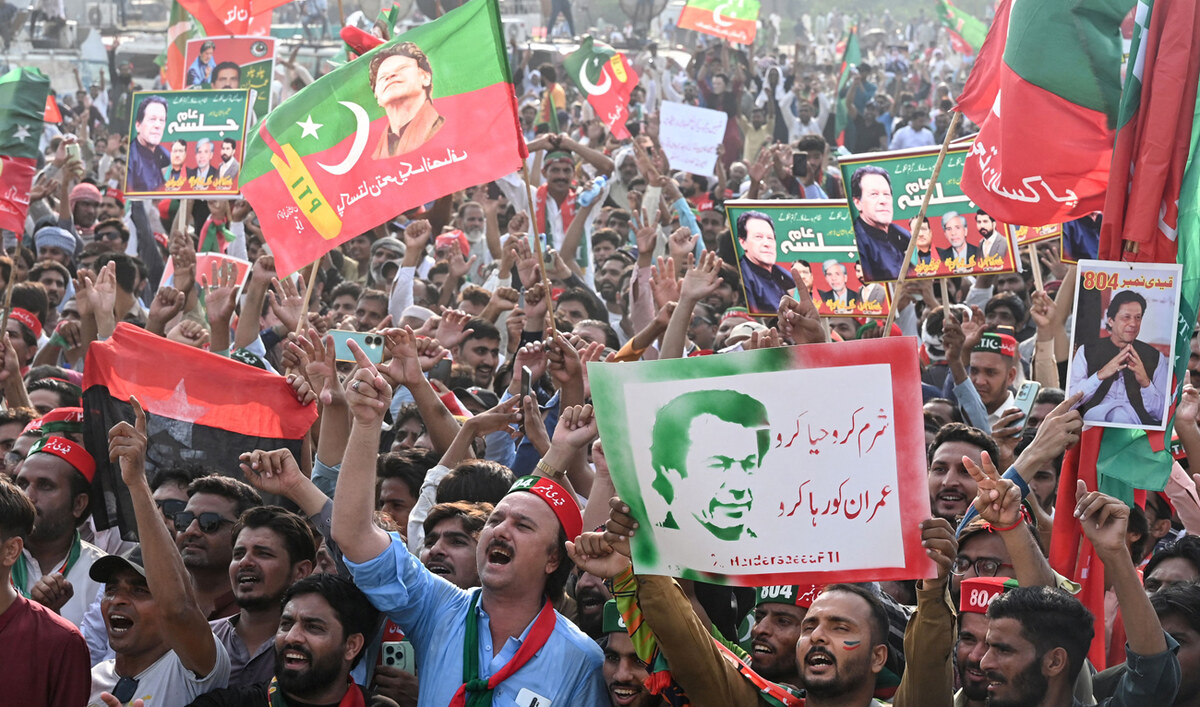
Supporters of Pakistan Tehreek-e-Insaf (PTI) party of former country’s prime minister Imran Khan, take part in a public rally on the outskirts of Lahore on September 21, 2024. (AFP)
However, Azma Bokhari, the Punjab provincial information minister, denied any road blockades during a news conference shortly before the 6pm deadline expired.
Bokhari maintained the PTI leadership had failed to mobilize people, saying there was only a small number of them at the venue.
“A total of 3,000 people from Punjab have joined the rally,” she said. “I can say it categorically that the PTI has been eliminated from Punjab.”
Earlier, television footage showed caravans of Khan supporters arriving in Lahore from various cities in KP, where the PTI has been in power, and elsewhere in Punjab to attend the rally, with long queues of vehicles forming on sections of the Islamabad-Lahore motorway reportedly due to road closures.
Most of Lahore remained open for traffic but access to a main thoroughfare, the Ring Road, leading to the venue, was blocked at a few locations as preparations were ongoing for the rally.
“Our demands are simple, only that the rule of law applies to Imran Khan’s cases,” Salman Akram Raja, PTI secretary-general, told Arab News at the venue of the rally. “Most [of the cases] have been discarded, so will the rest, as will the arrest.”
“There’s no basis for detaining the most popular political leader in the country,” he continued, adding: “History is on our side.”
Prior to that, the Punjab provincial administration had warned PTI leaders and workers not to indulge in any lawlessness.
“Nobody will be allowed to [violate the law],” Minister Bokhari said at a presser Saturday afternoon. “Organizers are responsible of ending the rally by 6pm.”
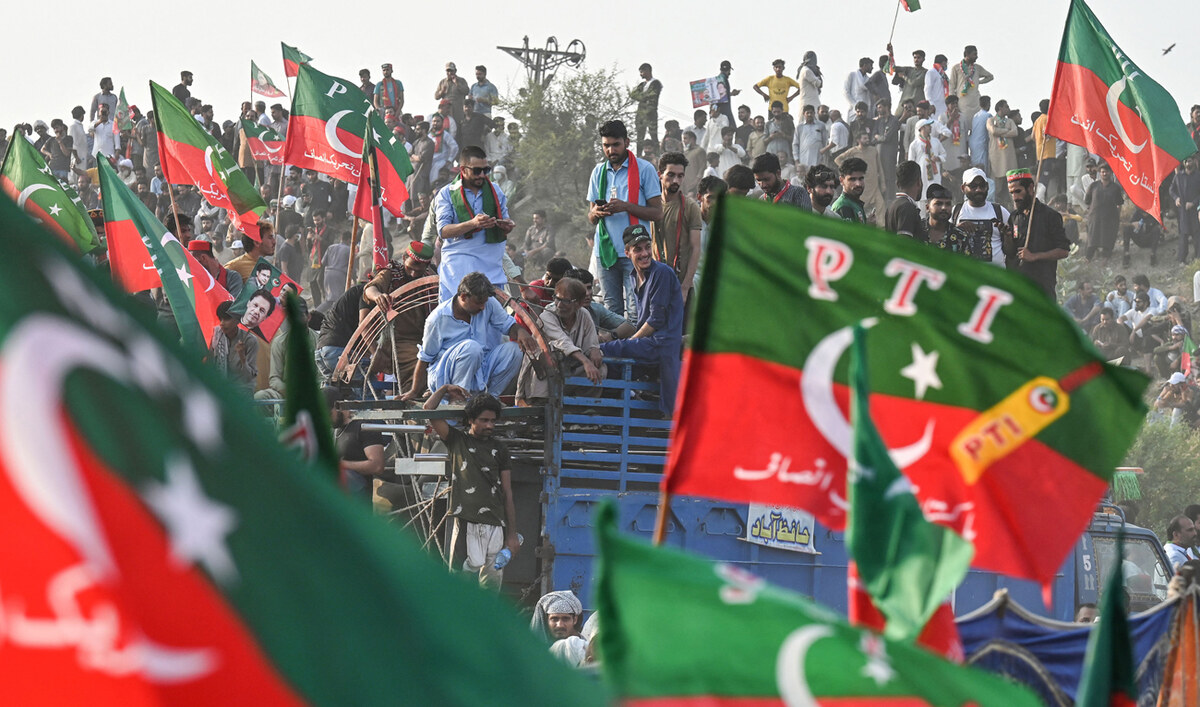
Supporters of Pakistan Tehreek-e-Insaf (PTI) party of former country’s prime minister Imran Khan, take part in a public rally on the outskirts of Lahore on September 21, 2024. (AFP)
She criticized the Khan-backed KP government for allegedly utilizing public resources for the rally and said the gathering could not help get him out of prison. She signaled to the possible arrest of suspects wanted in cases related to violence during PTI protests in May last year.
“The Punjab administration, under the supervision of the chief minister, is fully monitoring everything in the city and the province from the beginning of this rally till it disperses,” the minister said.
Only a day earlier, the PTI complained of a crackdown on supporters ahead of the rally, saying authorities had arrested dozens of PTI members and supporters. Punjab Police Director of Public Relations Syed Mubashar Hussain declined to comment on the arrests.


