ISLAMABAD: Pakistan’s President Asif Ali Zardari this week rejected the regional election in the internationally disputed Jammu and Kashmir region administered by India, calling on the international community to hold New Delhi accountable for alleged international rights violations in the area.
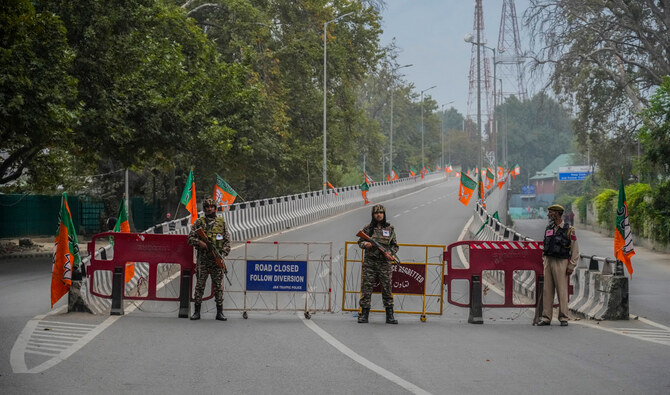
The three-phased regional election started in Jammu and Kashmir on Wednesday, with voters casting their ballots for the first time in a decade and in a new political setting after the Indian government stripped the region of its autonomy.
The election will be held in stages until Oct. 1 to elect a 90-member local assembly instead of remaining under the direct rule of New Delhi. The result will be announced on Oct. 8.
“President Asif Ali Zardari has categorically rejected the election for the Legislative Assembly of Indian Illegally Occupied Jammu and Kashmir, asserting that these polls are no substitute for Kashmiris’ right to self-determination,” state broadcaster Radio Pakistan reported on Wednesday.
Indian-administered Kashmir is part of the larger Kashmiri territory, which has been the subject of international dispute since the 1947 partition of the Indian subcontinent into Hindu-majority India and Muslim-majority Pakistan.
Both countries claim Kashmir in full and rule in part. Indian-administered Kashmir has, for decades, witnessed outbreaks of separatist insurgencies to resist control from the government in New Delhi.
Speaking to a delegation of migrants from Indian-administered Kashmir, Zardari said such an election is unacceptable to the people of Kashmir and called upon the international community to hold the Modi government accountable for the alleged human rights violations in the area.
“He further urged the need to take concrete steps toward conducting a plebiscite in line with relevant United Nations Security Council Resolutions,” the state broadcaster said.
Zardari reiterated Pakistan’s commitment to provide moral, political and diplomatic support to the people of Kashmir.
Indian-administered Kashmir has been without a local government since 2018 when Prime Minister Narendra Modi’s ruling Bharatiya Janata Party brought down a coalition government elected in 2014, forcing the assembly to dissolve.
A year later, Modi’s government repealed Article 370 of the Constitution, which granted the region its semi-autonomy and downgraded it from a state to a federally controlled territory.


![]()

Pakistan president rejects election in Indian-administered Kashmir
Short Url
https://arab.news/wqnxt
Pakistan president rejects election in Indian-administered Kashmir
- Asif Ali Zardari calls on international community to hold India accountable for alleged rights violations in Kashmir
- Election will be held in stages until Oct. 1 to elect 90-member assembly to represent internationally disputed area
Latest updates


© 2026 SAUDI RESEARCH & PUBLISHING COMPANY, All Rights Reserved And subject to Terms of Use Agreement.