

Saudi Arabia raises $690m in sukuk issuances in August

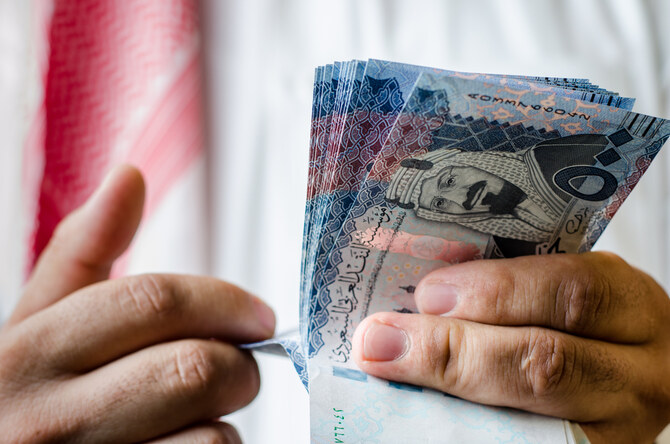
Sukuk is a Shariah-compliant debt product through which investors gain partial ownership of an issuer’s assets until maturity. Shutterstock
Short Url
Updated 17 September 2024
Follow

Saudi Arabia raises $690m in sukuk issuances in August

  • In August, the Kingdom issued sukuk worth SR6.01 billion
  • September issuance was divided into six tranches

RIYADH: Saudi Arabia’s National Debt Management Center has completed its riyal-denominated sukuk issuance for September at SR2.603 billion ($690 million). 

In August, the Kingdom issued sukuk worth SR6.01 billion, up from SR3.21 billion and SR4.4 billion in July and June, respectively.

The decline in sukuk issuances falls in line with a report released by American credit rating agency Fitch Ratings in August, which said that issuances are expected to slow down in the third quarter before picking up later in the year on the back of lower interest rates and oil prices. 

Sukuk, also known as Islamic bonds, are a Shariah-compliant debt product through which investors gain partial ownership of an issuer’s assets until maturity.

Establishing an unlimited riyal-denominated Islamic bond initiative under the NDMC is part of the Kingdom’s Sukuk Issuance Program, which started in 2017.

According to a statement released by NDMC, the September issuance was divided into six tranches. 

The first tranche was valued at SR255 million and is set to mature in 2027, while the second amounted to SR375 million, maturing in 2029.

The third tranche’s value stood at SR638 million, maturing in 2031, and the fourth was valued at SR1.02 billion, with a maturity date in 2034.

The fifth tranche had a size of SR202 million, maturing in 2036, followed by a sixth tranche valued at SR112 million due in 2039.

Earlier this month, another report released by global credit rating agency Moody’s said that the global sukuk market is poised for a strong performance in 2024, with issuance volumes expected to surpass those of 2023 despite a slowdown in the year’s second half.

According to the US-based firm, the issuance of Shariah-compliant bonds could reach between $200 billion and $210 billion this year, up from just under $200 billion in 2023.

The report said the growth is being fueled by robust sovereign issuance across the Gulf Cooperation Council and Southeast Asia, with Saudi Arabia playing a leading role.


Saudi Arabia leads outcome-based education to prepare future-ready generations: Harvard Business Review

A Harvard sign is seen at the Harvard University campus in Boston, Massachusetts, on May 27, 2025. (AFP)
Updated 10 February 2026
Follow

Saudi Arabia leads outcome-based education to prepare future-ready generations: Harvard Business Review

  • The Riyadh-based school group developed a strategy that links every classroom activity to measurable student competencies, aiming to graduate learners equipped for the digital economy and real-world contexts

RIYADH: Saudi Arabia’s education system is undergoing a sweeping transformation aligned with Vision 2030, shifting from traditional, input-focused methods to outcome-based education designed to equip students with future-ready skills, Harvard Business Review Arabic reported.

The transformation is being adopted and spearheaded by institutions such as Al-Nobala Private Schools, which introduced the Kingdom’s first national “learning outcomes framework,” aimed at preparing a generation of leaders and innovators for an AI-driven future, the report said.

Al-Nobala has leveraged international expertise to localize advanced learning methodologies.

The Riyadh-based school group developed a strategy that links every classroom activity to measurable student competencies, aiming to graduate learners equipped for the digital economy and real-world contexts. The school’s group approach combines traditional values with 21st-century skills such as critical thinking, communication, innovation and digital fluency.

According to the report, the shift addresses the growing gap between outdated models built for low-tech, resource-constrained environments and today’s dynamic world, where learners must navigate real-time information, virtual platforms, and smart technologies.

“This is not just about teaching content, it’s about creating impact,” the report noted, citing how Al-Nobala’s model prepares students to thrive in an AI-driven world while aligning with national priorities.

The report noted that Saudi Arabia’s Ministry of Education has paved the way for this shift by transitioning from a centralized controller to a strategic enabler, allowing schools such as Al-Nobala to tailor their curriculum to meet evolving market and societal needs. This is part of the long-term goal to place the Kingdom among the top 20 global education systems.

Al-Nobala’s work, the report stated, has succeeded in serving the broader national effort to link education outcomes directly to labor market demands, helping to fulfill the Vision 2030 pillar of building a vibrant society with a thriving economy driven by knowledge and innovation.

Last February, Yousef bin Abdullah Al-Benyan, Saudi Arabia’s minister of education, said that the Kingdom was making “an unprecedented investment in education,” with spending aligned to the needs of growth and development. He said that in 2025, education received the second-largest share of the state budget, totaling $53.5 billion.