

Saudi Arabia’s cultural renaissance under spotlight at Riyadh forum

1 / 10
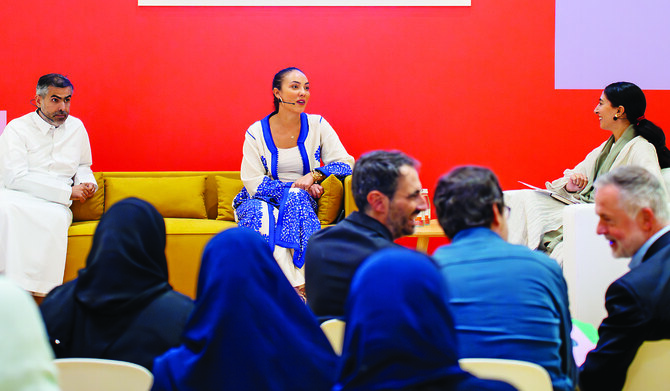
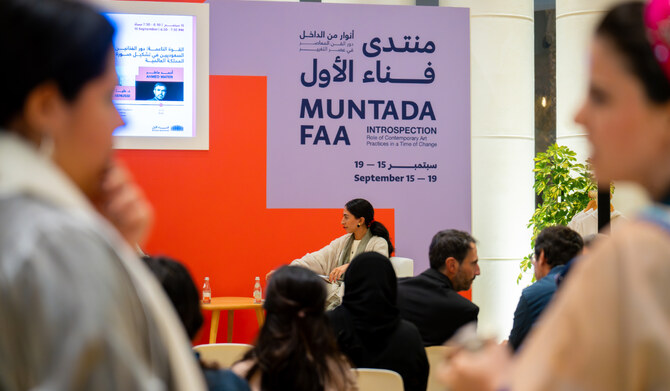
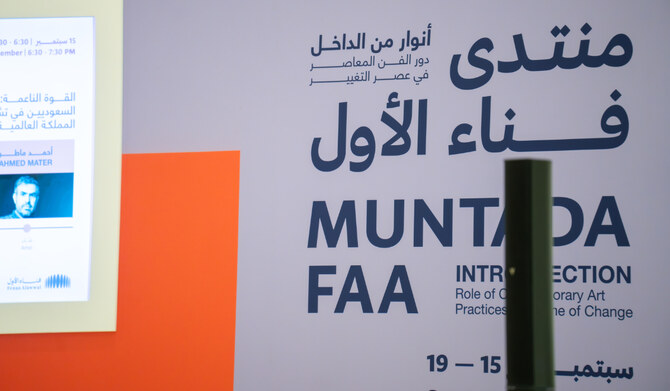
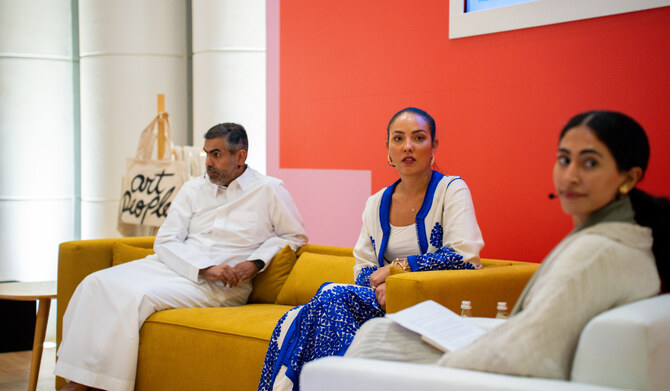
Muntada’s first panel was moderated by curator Sara Al-Mutlaq with speakers, Ahmed Mater, and Alia Al-Senussi, a cultural strategist. (AN photos by Abdulrhman Bin Shalhoub)
2 / 10
Muntada’s first panel was moderated by curator Sara Al-Mutlaq with speakers, Ahmed Mater, and Alia Al-Senussi, a cultural strategist. (AN photos by Abdulrhman Bin Shalhoub)
3 / 10
Muntada’s first panel was moderated by curator Sara Al-Mutlaq with speakers, Ahmed Mater, and Alia Al-Senussi, a cultural strategist. (AN photos by Abdulrhman Bin Shalhoub)
4 / 10
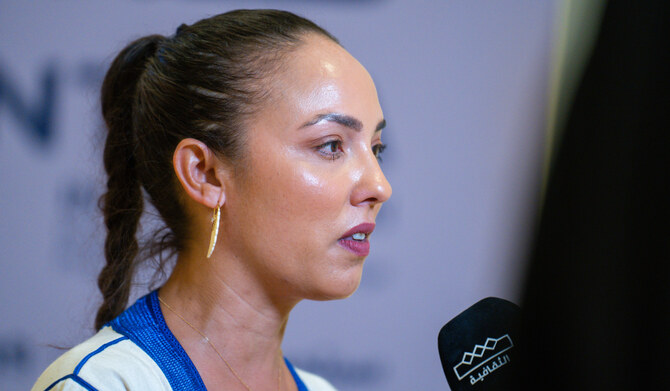
Alia Al-Senussi, a cultural strategist, art patron and academic. (AN photos by Abdulrhman Bin Shalhoub)
5 / 10
Muntada’s first panel was moderated by curator Sara Al-Mutlaq with speakers, Ahmed Mater, and Alia Al-Senussi, a cultural strategist. (AN photos by Abdulrhman Bin Shalhoub)
6 / 10
Muntada’s first panel was moderated by curator Sara Al-Mutlaq with speakers, Ahmed Mater, and Alia Al-Senussi, a cultural strategist. (AN photos by Abdulrhman Bin Shalhoub)
7 / 10
Muntada’s first panel was moderated by curator Sara Al-Mutlaq with speakers, Ahmed Mater, and Alia Al-Senussi, a cultural strategist. (AN photos by Abdulrhman Bin Shalhoub)
8 / 10
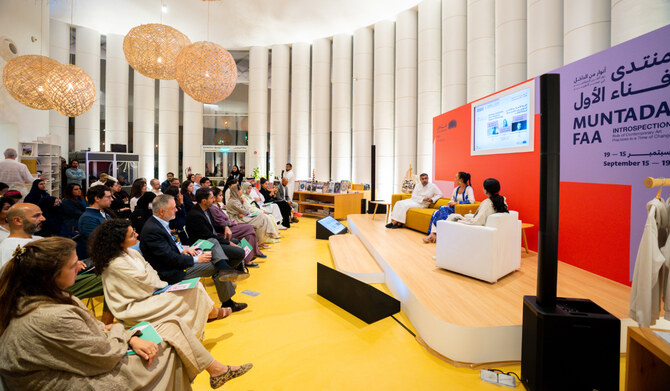
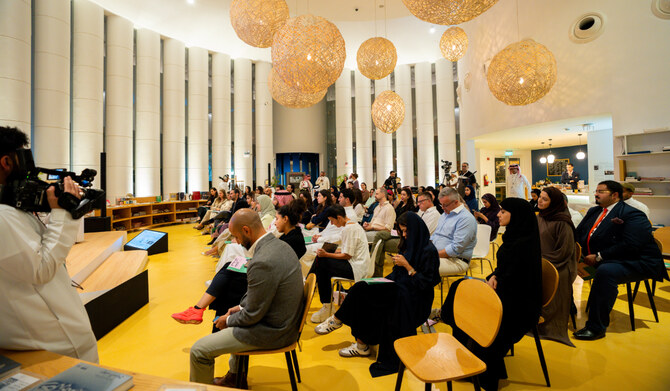
The venue is a part of Alawwal Bank's Riyadh branch in the landmark Diplomatic Quarter, designed by Omrania architecture. (AN photos by Abdulrhman Bin Shalhoub)
9 / 10
Muntada’s first panel was moderated by curator Sara Al-Mutlaq with speakers, Ahmed Mater, and Alia Al-Senussi, a cultural strategist. (AN photos by Abdulrhman Bin Shalhoub)
10 / 10
The venue is a part of Alawwal Bank's Riyadh branch in the landmark Diplomatic Quarter, designed by Omrania architecture. (AN photos by Abdulrhman Bin Shalhoub)
Short Url
Updated 16 September 2024
Follow

Saudi Arabia’s cultural renaissance under spotlight at Riyadh forum

  • Muntada gathering brings together 24 creatives to explore facets of Kingdom’s arts and culture developments

RIYADH: A five-day cultural forum organized by Fenaa Alawwal in Riyadh’s Diplomatic Quarter, and co-curated by Afikra, is exploring the theme “Introspection: the role of contemporary art practices in a time of change.”

The inaugural Muntada Forum of Contemporary Art Practices opened on Sunday night and will have five panel discussions during its run until Sept. 19.

There are 24 creatives exploring a diverse range of topics, which includes the role of Saudi Arabia’s artists in shaping the Kingdom’s global image.

There will be discussions on Saudi Arabia’s youth culture involving music, street art and fashion; the role of art professionals: navigating creativity in a structural setup; cultural hubs: the emergence of urban art districts; and the intersection of food and art.

The bumper-to-bumper traffic in Riyadh was not a deterrent for art enthusiasts, curators and interested locals from attending the opening at the building built in 1988.

The venue was designed by Omrania architecture company, as a part of Alawwal Bank’s Riyadh branch in the landmark Diplomatic Quarter.
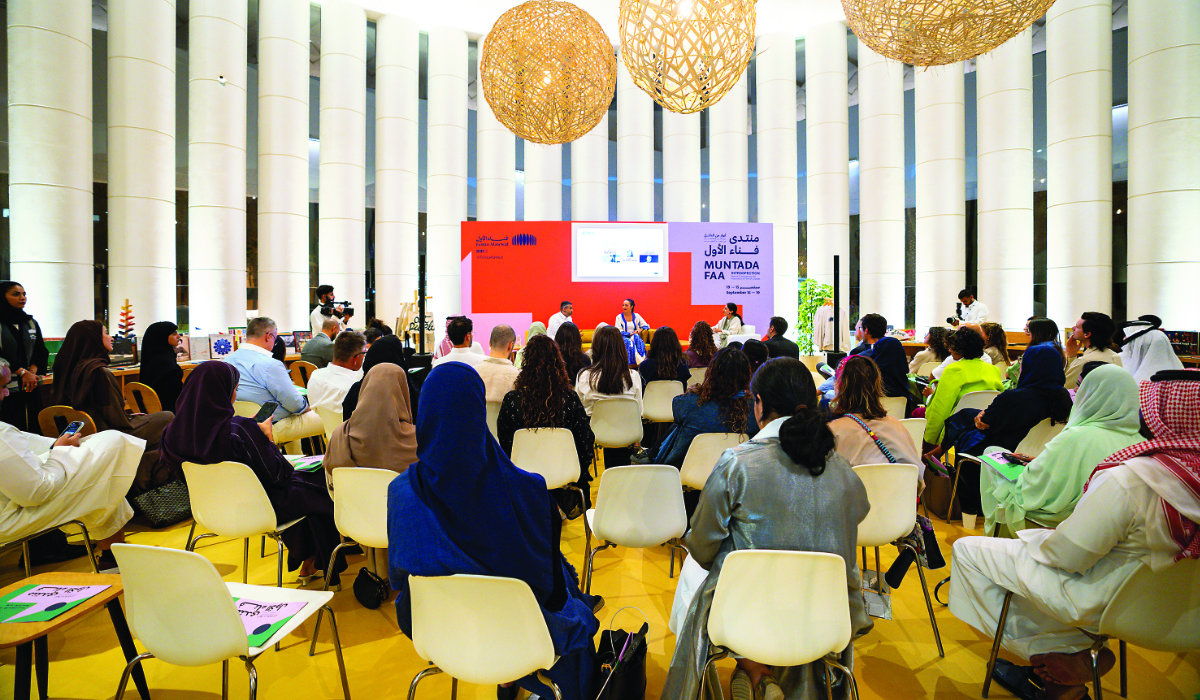


The forum includes discussions on Saudi Arabia’s youth culture involving music, street art and fashion. (AN photos by Abdulrhman Bin Shalhoub)

Every seat was occupied during the first panel which was titled “Soft power: Saudi artists’ role in shaping the Kingdom’s global image.”

It was moderated by curator Sara Al-Mutlaq with speakers, Ahmed Mater, a doctor-turned-artist, and Alia Al-Senussi, a cultural strategist, art patron and academic.

Al-Senussi told Arab News after the talk: “What we have really been able to embrace is the idea, (as) Ahmed Mater said, that it’s up to the artist to remove the power from the conversation.

HIGHLIGHTS

• The inaugural Muntada Forum of Contemporary Art Practices opened on Sunday night and will have five panel discussions during its run until Sept. 19.

• Muntada will conclude with a performance by culinary storyteller and social media sensation Nadir Nahdi.

• The first panel was titled ‘Soft power: Saudi artists’ role in shaping the Kingdom’s global image.’

“And soft power, in its kind of whole and holistic way, is really about translating who people are to the rest of the world.”

Mater, who is working on a new book slated for publication later this year, discussed how events over the past 45 years, starting with 1979 — his birth year — changed the course of the world, a topic which he will explore in his latest work.

He explained that each decade since 1979 has had events with major ramifications on the local and international fronts, which included the revolution in Iran and the seizure of Makkah.
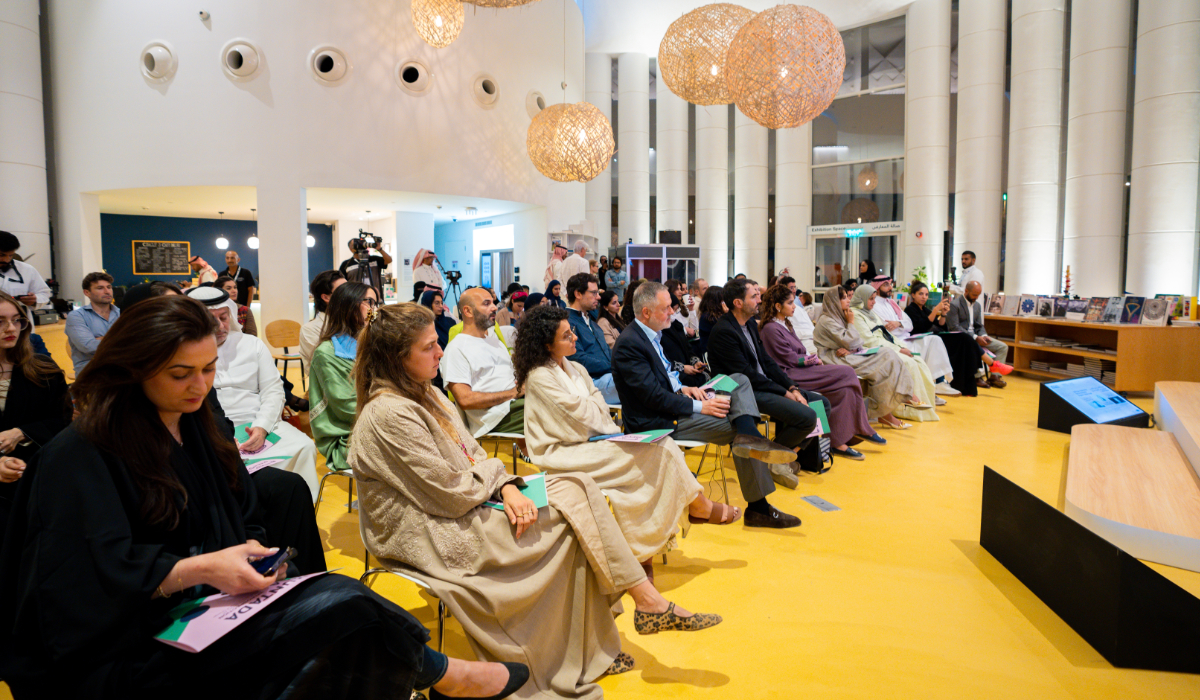


The venue is a part of Alawwal Bank's Riyadh branch in the landmark Diplomatic Quarter, designed by Omrania architecture. (AN photos by Abdulrhman Bin Shalhoub)

He also referred to events from the 1980s up to the present day, which include the Gulf War, 9/11, the Arab Spring and the rise of social media, as well as the COVID-19 pandemic.

“There was a big change happening in Saudi Arabia during these decades. I spoke about art as a mirror for sociopolitical events and the culture of changing and that’s what shapes our narrative, our story, our strength — by telling our story that shapes our life and our memory,” Mater told Arab News.

On opening night, curator Maya El-Khalil and Saudi Arabia artist Moath Alofi offered their insights in their keynote speeches.

Other speakers to come include Hala Al-Hedeithy from the Music Commission, Gigi Arabia, the founding director of Heavy Arabia; Nada Al-Helabi from MDLBEAST; and Mikey Muhanna, the founder and executive director of Afikra.

Other participants include Lulwah Al-Homoud, curator and artist; Oliver Farrell from Misk Art; Mayada Badr, CEO of the Culinary Arts Commission; and Sybel Vazquez from the Diriyah Biennale Foundation.

There will also be a kitchen lab dedicated to speaking about and celebrating all things food, hosted by celebrity chef Joe Barza.

Muntada will conclude with a performance by culinary storyteller and social media sensation Nadir Nahdi.


Wrapping up Year of Handicrafts at AlUla’s Winter at Tantora

Updated 9 sec ago
Follow

Wrapping up Year of Handicrafts at AlUla’s Winter at Tantora

  • Annual festival takes place until Jan. 10

ALULA: AlUla’s Old Town has sprung into life with Winter at Tantora — the annual festival which runs until Jan. 10 — as cooler temperatures settle over the region.

The three-week event contains workshops, concerts and gastronomic experiences which have transformed the historic landscape into a vibrant cultural gathering point, catering to locals and visitors alike.

Winter at Tantora takes its name from the traditional sundial, or the tantora, once used to mark the agricultural calendar.

The actual tantora is still perched atop what is now Dar Tantora The House Hotel, which was named as one of Time magazine’s “World’s Greatest Places” in 2024.

One of the festival’s most atmospheric offerings is Shorfat Tantora, where live music fills Al-Jadidah Arts District as musicians perform from balconies, blending traditional rhythms with contemporary beats.

The open-air experience invites audiences to gather and witness music’s unifying power on Thursday and Friday nights between 8:30 p.m. and 10:30 p.m. It ends on Jan. 2.

Since this year’s festival also highlights Saudi Arabia’s rich artisanal heritage — in line with the Ministry of Culture’s designation of 2025 as the Year of Handicrafts — there are plenty of crafts to be seen.

The festival spirit was also reflected this week at the outdoor Thanaya venue, a short drive from Old Town, where Emirati superstar Ahlam Al-Shamsi, who is known as Ahlam, took to the stage.

Her name, which means “dream” in Arabic, felt particularly fitting as the audience was immersed in her craft on the crisp, cool night with AlUla’s ancient rock formations as a backdrop. With wind billowing over the sky, she was perhaps the brightest star of the night.

Ahlam told the crowd: “In the Year of Handicrafts we celebrate human creativity through the hands that craft and the spirit that creates.

“The weather has been chilly over the last two days, but you (the audience) radiate warmth.”

With craft stations and food trucks nearby, Ahlam represented a modern twist weaved into the ongoing oral storytelling tradition.

Back in Old Town, people enjoyed the Art Walk tour and snaked through the labyrinth of painted mudbrick homes, murals and traditions while being guided by a local storyteller.

The Old Town Culinary Voyage merges storytelling and tasting. It spotlights traditional flavors and culture through aromas, spices and tastings.

Walking through the dusty, uneven rocky ground, visitors come across the ancient “Incense Road,” a well-known trade route central to pre-Islamic history and a main stage for global exchange.

A key stop in a network of ancient caravan routes, the road connected southern parts of Arabia, where frankincense and myrrh were produced, to the Mediterranean world.

These routes made incense one of the most valuable commodities of the ancient world. Parts of the route are now UNESCO World Heritage Sites.