

Tributes paid to Safeya Binzagr, the ‘mother of Saudi art’

1 / 2
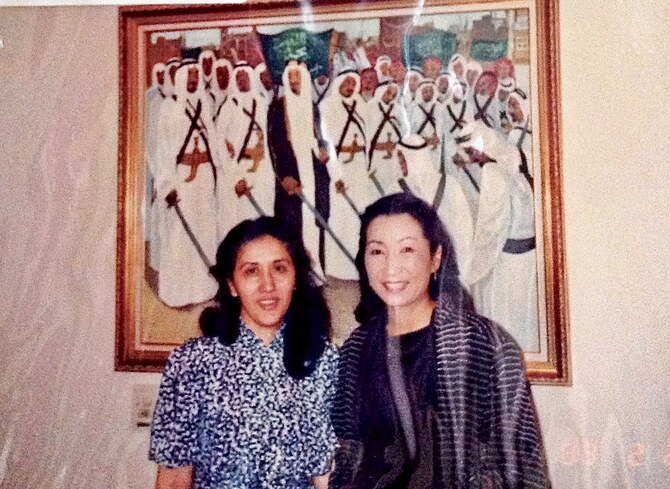
Late Safeya Binzagr and Professor Katakura Kunio, the former Japanese ambassador to Egypt, Iraq, and the UAE. (National Museum of Ethnology, Japan & Kanakawa Foundation)
2 / 2
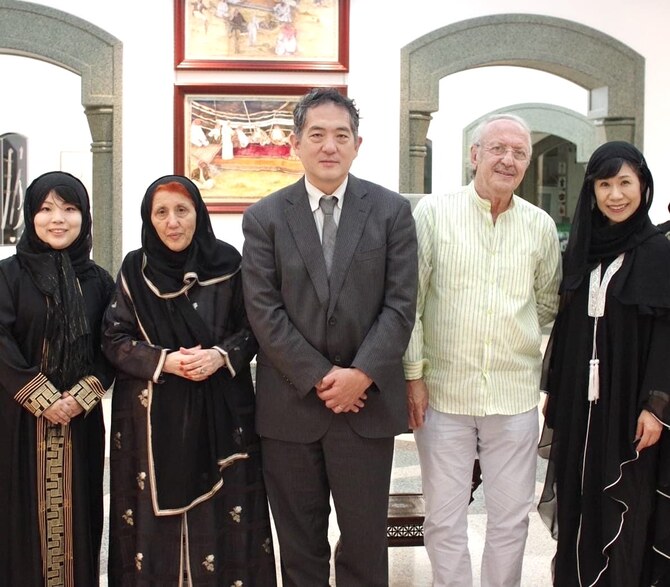
A photo taken during the last visit of the Katakura Foundation members to the late Safeya Binzagr museum in Jeddah. (National Museum of Ethnology, Japan)
Short Url
Updated 15 September 2024
Follow

Tributes paid to Safeya Binzagr, the ‘mother of Saudi art’

  • Safeya Binzagr helped bridge the cultural link between Japan and Saudi Arabia

TOKYO: Katakura Kunio, the former Japanese ambassador to Egypt, Iraq, and the UAE, has paid tribute to Safeya Binzagr, who passed away last week, emphasizing the profound impact of her contributions to enhancing Japan’s cultural ties with Saudi Arabia.

Binzagr, known as the “mother” of Saudi Arabia’s fine art movement and a symbol of Vision 2030, helped bridge the cultural link between Japan and Saudi Arabia and was the aunt of current Saudi Ambassador to Japan Dr. Ghazi Faisal Binzagr.

Katakura, chairman of Japan’s Foundation for Desert Culture, fondly recalled Safeya’s “warm and encouraging nature” toward him and his late wife, Motoko.

“Her support was instrumental in Motoko’s cultural anthropological fieldwork in Wadi Fatima,” he said. “She always welcomed the foundation’s follow-up missions with open arms, fostering a deep and personal connection with us.”

Katakura said Binzagr was not only a gifted artist whose work inspired many but also a cherished friend and mentor. Her passion for creativity and dedication to her paintings left an indelible mark, and her artistic legacy will continue to inspire future generations.

Ambassador Binzagr commented: “Building a cultural bridge is the core for creating a distinguished future between two countries and I strive, as an ambassador, to support this because it creates an opportunity for common interests to rise to a common outlook and mutually supportive values.

“The mission carried out by my late aunt will continue (in) the making of a new era. She was one of the pillars that paved the way for this through her dedication to building and promoting the culture of the arts for future generations. The Kingdom considers her the mother of the cultural heritage of creative fine arts.”

The ambassador said there are ongoing efforts to further collaboration between Japan’s Foundation for Desert Culture and prominent foundations in the Kingdom to build upon the cultural ties between the two countries.


Minzal brings Saudi traditions to life in Diriyah

Updated 07 January 2026
Follow

Minzal brings Saudi traditions to life in Diriyah

  • From leather crafts and archery to Saudi coffee, Minzal offers a lesson in ‘Sloum Al-Arab’

RIYADH: This season of Minzal places social norms and traditional etiquette at its center, with tents set up to teach what is locally known as “Sloum Al-Arab” alongside gatherings for coffee, dinner and stargazing around campfires.

“Sloum Al-Arab” refers to the unwritten customers and values that have shaped Arab and Bedouin society for centuries, including generosity, coffee preparation, courage and archery. 

In Saudi Arabia, these traditions are closely ties to cultural identity and religious belief. 

Leather products and the making of leather goods is one of the crafts featured at Minzal this year and is one of the oldest crafts still practiced in the kingdom.

“The most difficult thing I faced to work on was camel leather because it is a little tough,” Nada Samman, a leather trainer and craftsman at Minzal, told Arab News. 

Minzal continues to evolve with each season, offering activities that highlight Bedouin values, traditional skills and sports. (AN photo by Haifa Alshammari)

“The work on leather is wonderful whether it is goat leather, cow leather, Sawakni sheep, and of course, camel leather. At Minzal, we are offering multiple handicraft workshops, most specifically the leather handicrafts. We want visitors to spend time at something useful and fun."

Samman explained the workshops allowed participants to preserve heritage while engaging in meaning, hands on activities. 

Faisal Al-Khaled, a visual artist and craftsman specializing in Saudi designs at Minzal, shared a similar goal: “I want people to have, by the end of this experience, a unique and traditional art piece created by them, and that I know I helped them to preserve this craft.”

Minzal, which has been organized for several years now, continues to evolve with each season, offering activities that highlight Bedouin values, traditional skills and sports. Archery is a key feature, reflecting its deep roots in Arab and Islamic history.

Mohammed Al-Sharif, a certified archery player and coach with the Saudi Archery Federation since 2028, said the sport was closely connected to Saudi culture. It was encouraged by the Prophet Muhammad, which led people to learn and teach it through generations.

“Our traditional bow is considered one of the most important and widely used bows in Arab culture,” Al-Sharif said. “We have several styles, and professional archers specializing in traditional bow shooting … There are various types of archery, such as horseback archery and standing archery, where bow sizes vary according to specific needs, such as types used for hunting and others used during warfare.”

He explained that archery was historically part of daily life, used for protection and hunting. 

Saudi coffee also plays a significant role in the Minzal experience, with live demonstrations. One of the most frequently consumed beverages in the Kingdom, it is a symbol of hospitality and generosity.

Ahmed Al-Shuaibi explained how it was prepared at the Sloum tent, first by roasting the beans and then allowing them to cool. The beans are ground with spices in a Nigr.

“Coffee is passed from our grandparents,” he added. “In significant majlis, you see them offering our local coffee and not other types of coffee. We organized this corner so that young generations can visit and learn this.”